
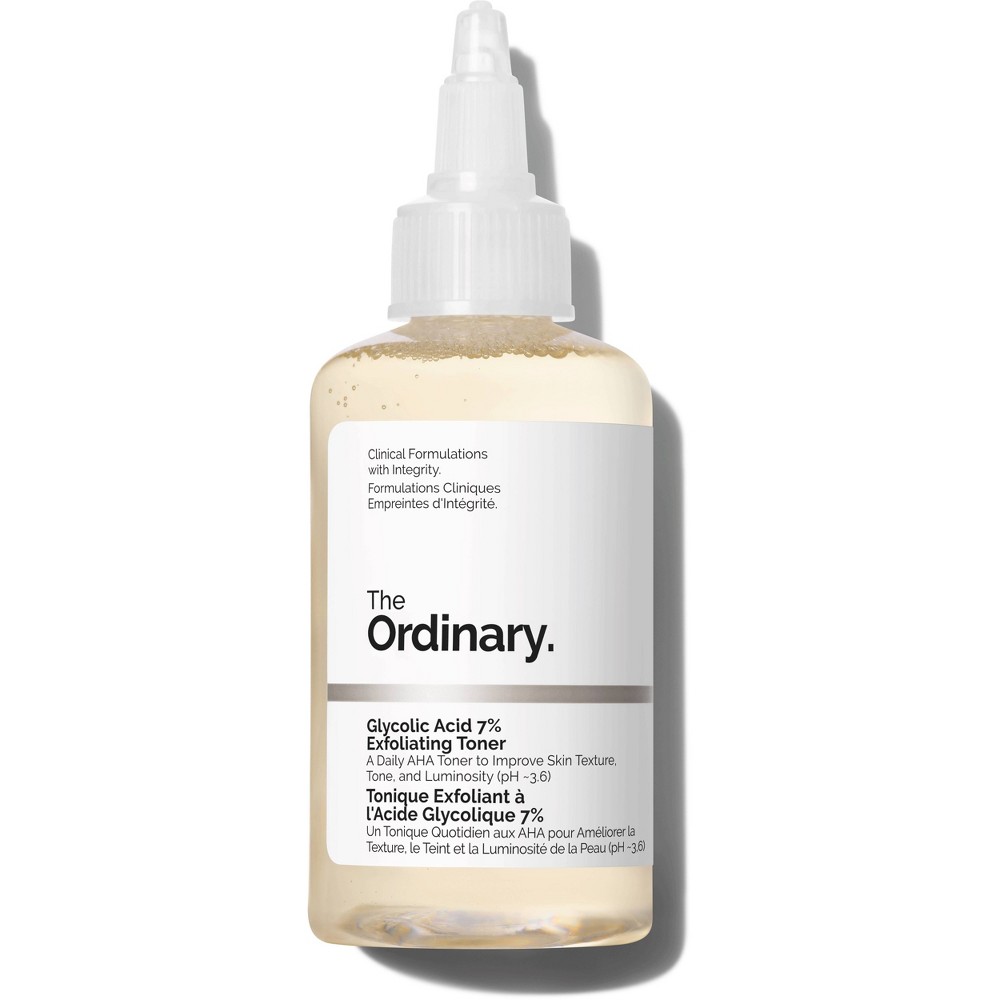

The Ordinary Glycolic Acid 7% Exfoliating and Brightening Daily Toner - 3.38 fl oz - Ulta Beauty
Summary
This toner contains beneficial ingredients like glycolic acid, aloe vera, and ginseng extract, which provide exfoliating, hydrating, and antioxidant benefits. However, it also includes potentially irritating compounds such as triethanolamine and hexyl nicotinate, which can cause skin sensitivity. The presence of synthetic additives and the overall processing level contribute to a moderate score, reflecting both the positive and negative aspects of the formulation.
At a glance
Key ingredients 42
AquaNeutral
Aqua, or water, is used as a solvent in many skincare products. It is typically purified to remove contaminants, ensuring safety and effectiveness. No significant interactions or concerns are associated with its use in this product.
See more about Aqua →Glycolic AcidGood
Glycolic acid is an alpha hydroxy acid (AHA) known for its exfoliating properties. It is derived from sugar cane and helps to remove dead skin cells, promoting a brighter complexion. Its small molecular size allows for deeper penetration, enhancing its effectiveness.
Risks
May cause irritation or sensitivity, especially in high concentrations or with prolonged use.
Benefits
Promotes skin renewal and improves texture by exfoliating the outer layer of skin.
Rosa Damascena Flower WaterGood
Rosa Damascena Flower Water is known for its soothing and anti-inflammatory properties. It is obtained through steam distillation of rose petals, preserving its natural benefits. This ingredient is often used to calm irritated skin and provide a pleasant fragrance.
Benefits
Provides soothing effects and a natural fragrance, enhancing the sensory experience of the product.
Centaurea Cyanus Flower WaterGood
Centaurea Cyanus Flower Water is valued for its anti-inflammatory and astringent properties. It is extracted from cornflower petals, often used to soothe and tone the skin. This ingredient is particularly beneficial for sensitive skin types.
Benefits
Helps to soothe and tone the skin, making it suitable for sensitive skin types.
Aloe Barbadensis Leaf WaterVery Good
Aloe Barbadensis Leaf Water is derived from the aloe vera plant, known for its hydrating and soothing properties. It is processed to retain its natural polysaccharides, which help to moisturize and calm the skin. This ingredient is highly regarded for its ability to support skin healing.
Benefits
Provides hydration and soothing effects, supporting skin healing and comfort.
PropanediolNeutral
Propanediol is a glycol used as a solvent and skin-conditioning agent. It is often derived from corn sugar fermentation, offering a natural alternative to petroleum-based glycols. It enhances the absorption of other ingredients without significant health concerns.
Benefits
Improves the absorption of active ingredients and provides a smooth texture to the product.
GlycerinVery Good
Glycerin is a humectant that attracts moisture to the skin, helping to maintain hydration. It is typically derived from plant oils and is known for its ability to improve skin barrier function. This ingredient is widely used for its moisturizing properties.
Benefits
Enhances skin hydration and supports the skin's natural barrier function.
TriethanolamineBad
Triethanolamine is used to adjust pH and stabilize emulsions in skincare products. It is a synthetic compound that can form nitrosamines, which are potential carcinogens, under certain conditions. Its use is generally limited to low concentrations to minimize risks.
Risks
Potential formation of nitrosamines, which are carcinogenic, especially with prolonged exposure.
Aminomethyl PropanolBad
Aminomethyl Propanol is used as a pH adjuster in cosmetic formulations. It is a synthetic compound that can cause irritation in sensitive individuals. Its safety is contingent on concentration limits set by regulatory bodies.
Risks
May cause skin irritation, particularly in sensitive individuals.
Panax Ginseng Root ExtractGood
Panax Ginseng Root Extract is known for its antioxidant and anti-aging properties. It is extracted from the ginseng root, which is rich in ginsenosides that help to revitalize and energize the skin. This ingredient is often used to improve skin elasticity and reduce the appearance of wrinkles.
Benefits
Provides antioxidant protection and supports skin vitality and elasticity.
Tasmannia Lanceolata Fruit/Leaf ExtractGood
Tasmannia Lanceolata Fruit/Leaf Extract is known for its anti-inflammatory and antioxidant properties. It is derived from the Tasmanian pepper plant and helps to soothe and protect the skin from environmental stressors. This ingredient is beneficial for reducing redness and irritation.
Benefits
Helps to soothe skin and provides antioxidant protection against environmental damage.
Aspartic AcidNeutral
Aspartic Acid is an amino acid used in skincare for its conditioning properties. It is naturally occurring and helps to maintain skin hydration and elasticity. This ingredient is generally considered safe and non-irritating.
Benefits
Supports skin hydration and elasticity through its conditioning properties.
AlanineNeutral
Alanine is an amino acid that serves as a skin-conditioning agent. It is naturally found in the body and helps to maintain skin moisture balance. This ingredient is typically well-tolerated and safe for use in skincare products.
Benefits
Contributes to maintaining skin moisture balance and overall skin health.
GlycineNeutral
Glycine is an amino acid that acts as a skin-conditioning agent. It is naturally present in the skin and helps to improve skin texture and hydration. This ingredient is generally safe and non-irritating.
Benefits
Enhances skin texture and hydration, supporting overall skin health.
SerineNeutral
Serine is an amino acid used for its moisturizing properties in skincare. It is naturally occurring and helps to maintain skin hydration and smoothness. This ingredient is considered safe and effective for improving skin texture.
Benefits
Supports skin hydration and smoothness, enhancing overall skin texture.
ValineNeutral
Valine is an amino acid that functions as a skin-conditioning agent. It is naturally found in the body and contributes to maintaining skin hydration and elasticity. This ingredient is generally safe and non-irritating.
Benefits
Helps maintain skin hydration and elasticity, supporting overall skin health.
IsoleucineNeutral
Isoleucine is an amino acid used for its skin-conditioning properties. It is naturally occurring and helps to maintain skin hydration and elasticity. This ingredient is typically well-tolerated and safe for use in skincare products.
Benefits
Contributes to maintaining skin hydration and elasticity, supporting overall skin health.
ProlineNeutral
Proline is an amino acid that acts as a skin-conditioning agent. It is naturally present in the skin and helps to improve skin texture and hydration. This ingredient is generally safe and non-irritating.
Benefits
Enhances skin texture and hydration, supporting overall skin health.
ThreonineNeutral
Threonine is an amino acid used for its moisturizing properties in skincare. It is naturally occurring and helps to maintain skin hydration and smoothness. This ingredient is considered safe and effective for improving skin texture.
Benefits
Supports skin hydration and smoothness, enhancing overall skin texture.
HistidineNeutral
Histidine is an amino acid that functions as a skin-conditioning agent. It is naturally found in the body and contributes to maintaining skin hydration and elasticity. This ingredient is generally safe and non-irritating.
Benefits
Helps maintain skin hydration and elasticity, supporting overall skin health.
PhenylalanineNeutral
Phenylalanine is an amino acid used for its skin-conditioning properties. It is naturally occurring and helps to maintain skin hydration and elasticity. This ingredient is typically well-tolerated and safe for use in skincare products.
Benefits
Contributes to maintaining skin hydration and elasticity, supporting overall skin health.
Glutamic AcidNeutral
Glutamic Acid is an amino acid that acts as a skin-conditioning agent. It is naturally present in the skin and helps to improve skin texture and hydration. This ingredient is generally safe and non-irritating.
Benefits
Enhances skin texture and hydration, supporting overall skin health.
ArginineNeutral
Arginine is an amino acid used for its moisturizing properties in skincare. It is naturally occurring and helps to maintain skin hydration and smoothness. This ingredient is considered safe and effective for improving skin texture.
Benefits
Supports skin hydration and smoothness, enhancing overall skin texture.
PcaNeutral
PCA, or pyrrolidone carboxylic acid, is a naturally occurring component of the skin's natural moisturizing factor. It helps to maintain skin hydration and elasticity. This ingredient is generally safe and non-irritating.
Benefits
Helps maintain skin hydration and elasticity, supporting overall skin health.
Sodium PcaNeutral
Sodium PCA is a humectant that attracts moisture to the skin, helping to maintain hydration. It is a naturally occurring component of the skin's natural moisturizing factor. This ingredient is widely used for its moisturizing properties.
Benefits
Enhances skin hydration and supports the skin's natural barrier function.
Sodium LactateNeutral
Sodium Lactate is a humectant and pH regulator derived from the fermentation of sugar. It helps to maintain skin hydration and improve texture. This ingredient is generally safe and effective for use in skincare products.
Benefits
Supports skin hydration and smoothness, enhancing overall skin texture.
FructoseNeutral
Fructose is a simple sugar used as a humectant in skincare products. It helps to attract moisture to the skin, maintaining hydration. This ingredient is generally safe and non-irritating.
Benefits
Enhances skin hydration and supports the skin's natural barrier function.
GlucoseNeutral
Glucose is a simple sugar that acts as a humectant in skincare formulations. It helps to attract moisture to the skin, maintaining hydration. This ingredient is generally safe and non-irritating.
Benefits
Enhances skin hydration and supports the skin's natural barrier function.
SucroseNeutral
Sucrose is a disaccharide sugar used as a humectant and exfoliant in skincare. It helps to attract moisture to the skin and can provide gentle exfoliation. This ingredient is generally safe and non-irritating.
Benefits
Enhances skin hydration and provides gentle exfoliation, improving skin texture.
UreaGood
Urea is a humectant and keratolytic agent that helps to maintain skin hydration and exfoliate dead skin cells. It is naturally occurring in the skin and enhances moisture retention. This ingredient is beneficial for improving skin texture and hydration.
Benefits
Supports skin hydration and exfoliation, improving overall skin texture and smoothness.
Hexyl NicotinateBad
Hexyl Nicotinate is used as a vasodilator in skincare products, promoting blood flow to the skin. It can cause redness and irritation, particularly in sensitive individuals. Its use is generally limited to low concentrations to minimize risks.
Risks
May cause redness and irritation, especially in sensitive skin types.
DextrinNeutral
Dextrin is a polysaccharide used as a binding agent in skincare formulations. It is derived from starch and helps to improve the texture and stability of products. This ingredient is generally safe and non-irritating.
Benefits
Improves product texture and stability, enhancing the overall formulation.
Citric AcidNeutral
Citric Acid is used as a pH adjuster and exfoliant in skincare products. It is naturally found in citrus fruits and helps to maintain the acidity of formulations. This ingredient is generally safe when used in appropriate concentrations.
Risks
May cause irritation in sensitive skin types, particularly in high concentrations.
Benefits
Helps to adjust pH and provides mild exfoliation, improving skin texture.
Polysorbate 20Neutral
Polysorbate 20 is an emulsifier used to stabilize formulations and improve texture. It is derived from sorbitol and fatty acids, helping to blend oil and water components. This ingredient is generally considered safe and non-irritating.
Benefits
Improves product stability and texture, enhancing the overall formulation.
Gellan GumNeutral
Gellan Gum is a gelling agent used to thicken and stabilize skincare formulations. It is produced through the fermentation of sugars and helps to improve product texture. This ingredient is generally safe and non-irritating.
Benefits
Enhances product texture and stability, improving the overall formulation.
Trisodium Ethylenediamine DisuccinateNeutral
Trisodium Ethylenediamine Disuccinate is a chelating agent used to improve the stability of formulations. It binds metal ions, preventing them from affecting product performance. This ingredient is generally considered safe and non-irritating.
Benefits
Improves product stability by binding metal ions, enhancing overall formulation performance.
Sodium ChlorideNeutral
Sodium Chloride, or table salt, is used as a thickening agent in skincare products. It helps to improve the texture and viscosity of formulations. This ingredient is generally safe and non-irritating.
Benefits
Enhances product texture and viscosity, improving the overall formulation.
Hexylene GlycolNeutral
Hexylene Glycol is used as a solvent and viscosity agent in skincare formulations. It helps to improve the texture and spreadability of products. This ingredient is generally considered safe and non-irritating.
Benefits
Improves product texture and spreadability, enhancing the overall formulation.
Potassium SorbateNeutral
Potassium Sorbate is a preservative used to prevent microbial growth in skincare products. It is a salt of sorbic acid and is effective in low concentrations. This ingredient is generally considered safe and non-irritating.
Benefits
Prevents microbial growth, enhancing product safety and shelf life.
Sodium BenzoateNeutral
Sodium Benzoate is a preservative used to inhibit microbial growth in skincare formulations. It is a salt of benzoic acid and is effective in low concentrations. This ingredient is generally considered safe and non-irritating.
Benefits
Prevents microbial growth, enhancing product safety and shelf life.
1.2-HexanediolNeutral
1.2-Hexanediol is used as a solvent and preservative booster in skincare products. It helps to improve the stability and efficacy of formulations. This ingredient is generally considered safe and non-irritating.
Benefits
Enhances product stability and efficacy, improving overall formulation performance.
Caprylyl GlycolNeutral
Caprylyl Glycol is used as a skin-conditioning agent and preservative booster in skincare formulations. It helps to improve the texture and stability of products. This ingredient is generally considered safe and non-irritating.
Benefits
Enhances product texture and stability, improving overall formulation performance.
Processing
Ultra-Processed Foods
Get the full breakdown in the Scout app
Scan any product to see lab results, healthy alternatives, and your personalized analysis.
Download on theApp Store