
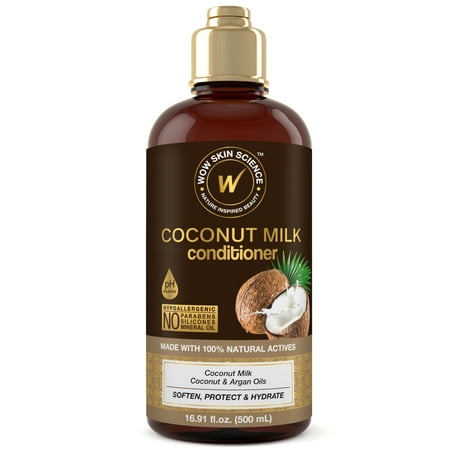
WOW Skin Science Coconut Milk Conditioner 16.9 oz
Summary
This conditioner contains beneficial ingredients like coconut milk, argan oil, and aloe vera, which are known for their nourishing and moisturizing properties. However, the presence of synthetic fragrance and phenoxyethanol, which can cause irritation, slightly detracts from its overall safety profile. Despite these concerns, the product remains largely beneficial due to its rich, natural ingredients that support hair health.
At a glance
Key ingredients 31
Coconut MilkVery Good
Coconut milk is rich in vitamins and fatty acids that nourish the hair. It helps to moisturize and strengthen hair strands. Its natural properties make it a beneficial ingredient for hair conditioning.
Risks
There are minimal risks associated with coconut milk, though some individuals may experience allergies.
Benefits
Coconut milk provides deep hydration and can improve hair elasticity and shine.
Argan OilVery Good
Argan oil is known for its high content of antioxidants, essential fatty acids, and vitamin E. It helps to hydrate and soften hair. This oil is often used to enhance hair elasticity and restore shine.
Risks
Argan oil is generally safe, but overuse can lead to greasy hair.
Benefits
It provides deep conditioning and helps to repair damaged hair.
Aloe VeraGood
Aloe vera is a natural moisturizer that soothes and hydrates the scalp. It contains enzymes that promote healthy hair growth. Its anti-inflammatory properties make it suitable for sensitive scalps.
Risks
Aloe vera is generally safe, but some people may experience allergic reactions.
Benefits
It helps to reduce dandruff and promotes a healthy scalp environment.
Nettle Leaf ExtractGood
Nettle leaf extract is rich in vitamins and minerals that support hair health. It is known to help reduce hair loss and improve hair strength. This extract can also enhance hair shine and volume.
Risks
Nettle leaf extract is generally safe, but excessive use may cause scalp irritation.
Benefits
It strengthens hair and may help in reducing hair shedding.
Saw Palmetto ExtractGood
Saw palmetto extract is believed to block DHT, a hormone linked to hair loss. It is often used in hair care products to promote hair growth. This extract can help maintain hair density.
Risks
Saw palmetto is generally safe, but it may cause mild scalp irritation in some individuals.
Benefits
It supports hair growth and helps in maintaining hair thickness.
Purified WaterNeutral
Purified water is used as a solvent in hair care products. It helps to dissolve other ingredients and provides a base for the formulation. Water is essential for hydration but does not have direct conditioning benefits.
Risks
There are no risks associated with purified water.
Benefits
It acts as a carrier for other beneficial ingredients.
Cetyl AlcoholGood
Cetyl alcohol is a fatty alcohol used as an emulsifier and thickener. It helps to soften and condition the hair. Unlike drying alcohols, it is beneficial for hair health.
Risks
Cetyl alcohol is generally safe, but excessive use may cause buildup.
Benefits
It provides a smooth texture and enhances the conditioning effect.
Isopropyl MyristateNeutral
Isopropyl myristate is used to enhance the absorption of other ingredients. It provides a smooth application and helps to reduce greasiness. This ingredient is commonly used in cosmetic formulations.
Risks
It may cause skin irritation in sensitive individuals.
Benefits
It improves the spreadability of the conditioner.
Polyquaternium-7Neutral
Polyquaternium-7 is a conditioning agent that helps to reduce static and frizz. It provides a smooth feel to the hair. This ingredient is often used in hair care products for its detangling properties.
Risks
There are minimal risks, but it may cause buildup with excessive use.
Benefits
It enhances hair manageability and reduces frizz.
Hydrogenated PolyisobuteneNeutral
Hydrogenated polyisobutene is used as an emollient and moisturizer. It provides a silky feel and helps to lock in moisture. This ingredient is often used to improve the texture of hair care products.
Risks
It may cause buildup on the hair with prolonged use.
Benefits
It enhances the smoothness and softness of the hair.
Behentrimonium ChlorideNeutral
Behentrimonium chloride is a conditioning agent that helps to detangle and soften hair. It is effective in reducing static and improving hair manageability. This ingredient is commonly used in conditioners for its smoothing properties.
Risks
It may cause irritation if used in high concentrations.
Benefits
It improves hair texture and reduces tangling.
GlycerinGood
Glycerin is a humectant that attracts moisture to the hair. It helps to keep hair hydrated and soft. This ingredient is beneficial for maintaining moisture balance in hair care products.
Risks
Glycerin is generally safe, but it may cause stickiness in high humidity.
Benefits
It enhances hair hydration and prevents dryness.
Coconut OilVery Good
Coconut oil is rich in fatty acids that nourish and condition the hair. It helps to reduce protein loss and improve hair strength. This oil is widely used for its deep conditioning properties.
Risks
Coconut oil is generally safe, but overuse can lead to greasy hair.
Benefits
It provides intense moisture and enhances hair shine.
PhenoxyethanolBad
Phenoxyethanol is a preservative used to prevent microbial growth. It is considered a safer alternative to parabens. However, it can cause irritation in some individuals.
Risks
It may cause skin irritation and allergic reactions in sensitive individuals.
Benefits
It helps to extend the shelf life of the product.
Capryloyl GlycineNeutral
Capryloyl glycine is used for its antimicrobial properties. It helps to maintain the product's stability and prevent spoilage. This ingredient is often used in cosmetic formulations for its preservative effects.
Risks
There are minimal risks associated with capryloyl glycine.
Benefits
It helps to preserve the product and maintain its efficacy.
Undecylenoyl GlycineNeutral
Undecylenoyl glycine is used for its antimicrobial and skin-conditioning properties. It helps to maintain the product's stability and prevent microbial growth. This ingredient is often used in personal care products for its preservative effects.
Risks
There are minimal risks associated with undecylenoyl glycine.
Benefits
It helps to preserve the product and maintain its efficacy.
Sodium BenzoateNeutral
Sodium benzoate is a preservative used to prevent microbial growth. It is commonly used in cosmetic products for its antimicrobial properties. This ingredient helps to extend the shelf life of the product.
Risks
It may cause skin irritation in sensitive individuals.
Benefits
It helps to maintain product freshness and prevent spoilage.
Cetostearyl AlcoholGood
Cetostearyl alcohol is a fatty alcohol used as an emulsifier and thickener. It helps to soften and condition the hair. Unlike drying alcohols, it is beneficial for hair health.
Risks
Cetostearyl alcohol is generally safe, but excessive use may cause buildup.
Benefits
It provides a smooth texture and enhances the conditioning effect.
Sodium PCAGood
Sodium PCA is a humectant that helps to retain moisture in the hair. It is derived from amino acids and is known for its hydrating properties. This ingredient is beneficial for maintaining moisture balance in hair care products.
Risks
Sodium PCA is generally safe, but it may cause irritation in very sensitive individuals.
Benefits
It enhances hair hydration and prevents dryness.
Guar Hydroxypropyltrimonium ChlorideNeutral
Guar hydroxypropyltrimonium chloride is a conditioning agent that helps to reduce static and improve hair manageability. It is derived from guar gum and is used for its detangling properties. This ingredient is often used in hair care products for its smoothing effects.
Risks
There are minimal risks, but it may cause buildup with excessive use.
Benefits
It enhances hair smoothness and reduces frizz.
Avocado OilVery Good
Avocado oil is rich in vitamins and fatty acids that nourish and condition the hair. It helps to moisturize and strengthen hair strands. This oil is often used for its deep conditioning properties.
Risks
Avocado oil is generally safe, but overuse can lead to greasy hair.
Benefits
It provides intense moisture and enhances hair shine.
Sweet Almond OilVery Good
Sweet almond oil is known for its high content of vitamins and fatty acids. It helps to soften and condition the hair. This oil is often used to enhance hair elasticity and restore shine.
Risks
Sweet almond oil is generally safe, but overuse can lead to greasy hair.
Benefits
It provides deep conditioning and helps to repair damaged hair.
Sodium Lauroyl LactylateNeutral
Sodium lauroyl lactylate is a mild surfactant used for its cleansing properties. It helps to remove dirt and oil from the hair. This ingredient is often used in hair care products for its gentle cleansing effects.
Risks
There are minimal risks associated with sodium lauroyl lactylate.
Benefits
It provides gentle cleansing without stripping natural oils.
FragranceBad
Fragrance is used to impart a pleasant scent to the product. It is often a mixture of various aromatic compounds. However, synthetic fragrances can cause irritation and allergic reactions.
Risks
Fragrance may cause skin irritation and allergic reactions in sensitive individuals.
Benefits
It provides a pleasant scent to the product.
Shea ButterVery Good
Shea butter is a natural fat extracted from the nuts of the shea tree. It is known for its moisturizing and conditioning properties. This ingredient helps to soften and smooth the hair.
Risks
Shea butter is generally safe, but overuse can lead to greasy hair.
Benefits
It provides deep hydration and enhances hair softness.
D-PanthenolGood
D-Panthenol, also known as provitamin B5, is used for its moisturizing and conditioning properties. It helps to improve hair elasticity and shine. This ingredient is beneficial for maintaining healthy hair.
Risks
D-Panthenol is generally safe, but it may cause buildup with excessive use.
Benefits
It enhances hair strength and reduces breakage.
Jojoba OilVery Good
Jojoba oil is a liquid wax that closely resembles the natural oils of the scalp. It helps to moisturize and condition the hair. This oil is often used for its balancing properties.
Risks
Jojoba oil is generally safe, but overuse can lead to greasy hair.
Benefits
It provides moisture and helps to balance scalp oil production.
Castor OilVery Good
Castor oil is known for its high ricinoleic acid content, which provides deep conditioning. It helps to strengthen and thicken hair strands. This oil is often used to promote hair growth.
Risks
Castor oil is generally safe, but overuse can lead to greasy hair.
Benefits
It enhances hair thickness and promotes growth.
Tocopheryl AcetateGood
Tocopheryl acetate is a form of vitamin E used for its antioxidant properties. It helps to protect hair from environmental damage. This ingredient is beneficial for maintaining healthy hair.
Risks
Tocopheryl acetate is generally safe, but it may cause irritation in very sensitive individuals.
Benefits
It provides antioxidant protection and enhances hair health.
Sodium GluconateNeutral
Sodium gluconate is used as a chelating agent to improve product stability. It helps to prevent discoloration and degradation of the product. This ingredient is often used in cosmetic formulations for its stabilizing effects.
Risks
There are minimal risks associated with sodium gluconate.
Benefits
It helps to maintain product stability and efficacy.
Sodium HydroxideNeutral
Sodium hydroxide is used to adjust the pH of cosmetic formulations. It helps to maintain the stability and effectiveness of the product. This ingredient is commonly used in small amounts for pH balancing.
Risks
In high concentrations, sodium hydroxide can be irritating, but it is used in safe amounts in cosmetics.
Benefits
It helps to maintain the desired pH level of the product.
Processing
Processed Foods
Get the full breakdown in the Scout app
Scan any product to see lab results, healthy alternatives, and your personalized analysis.
Download on theApp Store