
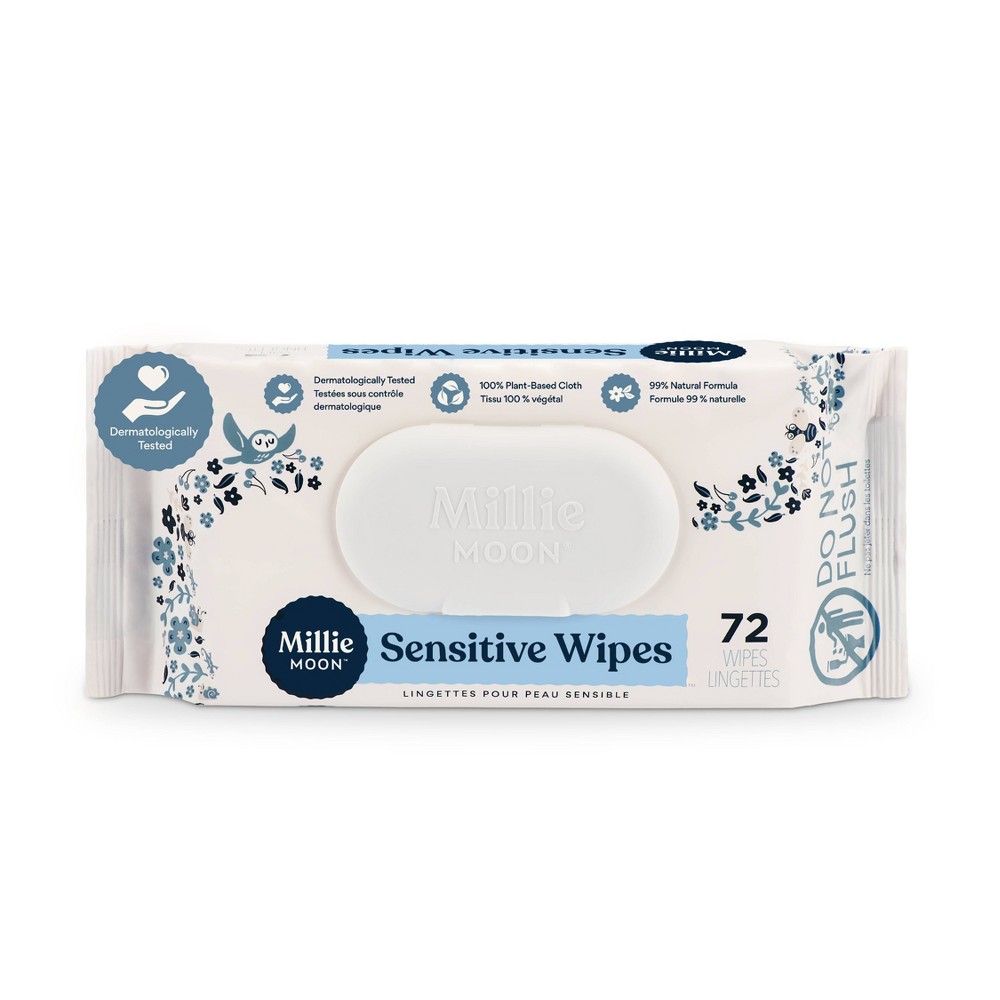
Millie Moon Sensitive Wipes - 72ct: Whole Body & Diaper Area, Latex-Free, Viscose
Analysis updated August 2026 · How Scout scores
At a glance
Summary
This product contains beneficial ingredients such as avocado oil, aloe vera, and calendula extract, which are known for their moisturizing and soothing properties. However, the presence of sodium benzoate, a preservative that can cause irritation in sensitive skin, and the overall ultra-processed nature of the product limit its score. Despite the inclusion of natural ingredients, the processing level and use of additives prevent a higher rating.
Key ingredients 10
PERSEA GRATISSIMA (AVOCADO) OILVery Good
Avocado oil is rich in fatty acids and vitamins, making it an excellent moisturizer and skin conditioner. It is known for its nourishing and anti-inflammatory properties. It is beneficial for dry and sensitive skin.
Risks
There is a low risk of allergic reactions, though it is generally well-tolerated.
Benefits
Avocado oil deeply moisturizes the skin and provides essential nutrients for skin health.
ALOE BARBADENSIS LEAF JUICEVery Good
Aloe vera is known for its soothing and hydrating properties, making it ideal for sensitive skin. It contains vitamins and antioxidants that promote skin healing and reduce inflammation. It is widely used for its calming effects on irritated skin.
Risks
Aloe vera is generally safe, but some individuals may experience allergic reactions.
Benefits
Aloe vera soothes and hydrates the skin, reducing redness and irritation.
CALENDULA OFFICINALIS FLOWER EXTRACTVery Good
Calendula extract is known for its anti-inflammatory and healing properties. It is used to soothe irritated skin and promote healing. It is beneficial for sensitive and damaged skin.
Risks
Calendula is generally safe, but allergic reactions are possible in sensitive individuals.
Benefits
Calendula extract helps soothe and heal the skin, reducing inflammation and irritation.
GLYCERINGood
Glycerin is a humectant that attracts moisture to the skin, helping to keep it hydrated. It is widely used in skincare for its moisturizing properties. It is considered safe and effective for all skin types.
Risks
There are minimal risks associated with glycerin, though it may cause irritation in very rare cases.
Benefits
Glycerin helps to maintain skin hydration and improve skin barrier function.
GLUCONOLACTONEGood
Beneficial ingredient — whole-food or functional value in this product class.
Risks
There is a low risk of irritation, but it is generally well-tolerated.
Benefits
Gluconolactone gently exfoliates and hydrates the skin, improving texture and appearance.
AQUA (WATER)Neutral
Water is a universal solvent and is used as a base in many cosmetic products. It helps dissolve other ingredients and provides hydration. It is generally safe and non-reactive.
Risks
There are no significant risks associated with water in cosmetic formulations.
Benefits
Water helps to hydrate the skin and acts as a carrier for other beneficial ingredients.
SODIUM CITRATENeutral
Sodium citrate is used as a buffering agent to maintain the pH balance of cosmetic products. It helps stabilize formulations and is generally considered safe. It does not provide direct skin benefits but supports product stability.
Risks
There are no significant risks associated with sodium citrate in cosmetic formulations.
Benefits
Sodium citrate helps maintain the stability and effectiveness of the product.
CITRIC ACIDNeutral
Citric acid is used to adjust the acidity of cosmetic products and can act as a mild exfoliant. It helps maintain product stability and is generally safe in low concentrations. It does not provide significant direct benefits in this formulation.
Risks
In high concentrations, citric acid can cause skin irritation, but it is typically used in safe amounts.
Benefits
Citric acid helps maintain the pH balance of the product and can mildly exfoliate the skin.
POLYGLYCERYL-4 CAPRATENeutral
Polyglyceryl-4 caprate is an emulsifier that helps blend oil and water-based ingredients. It is derived from natural sources and is considered safe for use in cosmetics. It does not provide direct skin benefits but aids in product formulation.
Risks
There are no significant risks associated with polyglyceryl-4 caprate.
Benefits
It helps improve the texture and consistency of the product.
SODIUM BENZOATEBad
Sodium benzoate is a preservative used to prevent microbial growth in cosmetic products. While effective, it can cause skin irritation in some individuals. It is generally considered safe in low concentrations but can be problematic for sensitive skin.
Risks
Sodium benzoate may cause irritation or allergic reactions, especially in sensitive individuals.
Benefits
It helps preserve the product by preventing microbial growth, extending shelf life.
Get the full breakdown in the Scout appTake Scout shopping
Scan any product to see lab results, healthy alternatives, and your personalized analysis.
Download on theApp Store GET IT ONGoogle PlayAmazon pricing & content
CERTAIN CONTENT THAT APPEARS ON THIS SITE COMES FROM AMAZON. THIS CONTENT IS PROVIDED “AS IS” AND IS SUBJECT TO CHANGE OR REMOVAL AT ANY TIME.