
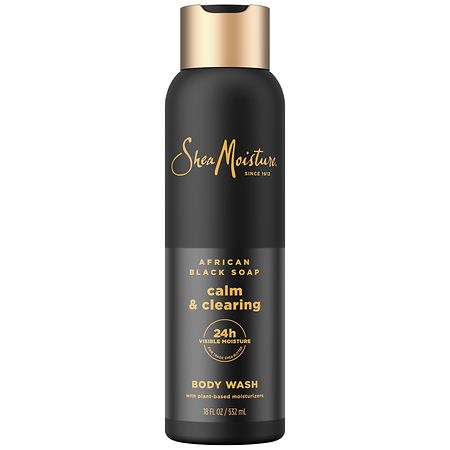
SheaMoisture Body Wash for Women African Black Soap Calm and Clearing 18 oz
Analysis updated September 2026 · How Scout scores
At a glance
Summary
This body wash contains beneficial ingredients such as aloe vera, shea butter, and coconut oil, which provide moisturizing and soothing properties. However, the presence of fragrance and coumarin, both potential allergens, detracts from its overall safety profile. The product also includes several additives, which contribute to a moderate level of processing.
Key ingredients 30
ALOE BARBADENSIS LEAF JUICE POWDERVery Good
Aloe vera is known for its soothing and moisturizing properties. It is often used to calm irritated skin and provide hydration. It is a natural ingredient with a long history of safe use.
Risks
Aloe vera is generally safe, but some individuals may experience allergic reactions.
Benefits
Aloe vera provides soothing and anti-inflammatory benefits, making it ideal for sensitive skin.
BUTYROSPERMUM PARKII (SHEA) BUTTERVery Good
Shea butter is a natural fat extracted from the nuts of the shea tree. It is known for its moisturizing and anti-inflammatory properties. It is widely used in skincare for its nourishing benefits.
Risks
Shea butter is generally safe, but some individuals may experience allergic reactions.
Benefits
It deeply moisturizes the skin and provides anti-inflammatory benefits.
COCOS NUCIFERA (COCONUT) OILVery Good
Coconut oil is a natural oil known for its moisturizing and antimicrobial properties. It is used in cosmetics to hydrate and protect the skin.
Risks
Coconut oil can clog pores in some individuals, leading to acne.
Benefits
It provides deep hydration and has antimicrobial properties.
AVENA SATIVA (OAT) MEAL EXTRACTVery Good
Oatmeal extract is known for its soothing and anti-inflammatory properties. It is often used to calm irritated skin and provide relief from itching.
Risks
Oatmeal extract is generally safe, but some individuals may experience allergic reactions.
Benefits
It soothes and calms irritated skin, making it ideal for sensitive skin.
JOJOBA ESTERSVery Good
Jojoba esters are derived from jojoba oil and are used for their moisturizing properties. They are similar to the skin's natural oils and help maintain skin hydration.
Risks
Jojoba esters are generally safe with minimal risk of irritation.
Benefits
They provide excellent moisturizing benefits and help maintain skin's natural barrier.
TOCOPHEROLVery Good
Tocopherol, or Vitamin E, is an antioxidant that helps protect the skin from free radical damage. It is widely used in skincare for its protective and moisturizing properties.
Risks
Tocopherol is generally safe, but high concentrations may cause skin irritation.
Benefits
It provides antioxidant protection and helps maintain skin moisture.
SODIUM COCOYL ISETHIONATEGood
Sodium cocoyl isethionate is a mild surfactant derived from coconut oil. It is used to create a creamy lather and cleanse the skin gently. It is less irritating than traditional sulfates.
Risks
There are minimal risks, but it may cause mild irritation in sensitive individuals.
Benefits
It provides effective cleansing while being gentle on the skin.
GLYCERINGood
Glycerin is a humectant that attracts moisture to the skin. It helps to keep the skin hydrated and soft. It is a well-tolerated ingredient with a long history of safe use.
Risks
Glycerin is generally safe, but excessive use may lead to a sticky feeling on the skin.
Benefits
It provides excellent moisturizing properties and helps maintain skin hydration.
POTASSIUM SHEA BUTTERATEGood
Potassium shea butterate is a soap derived from shea butter. It is used for its cleansing and moisturizing properties. It is considered a gentle ingredient for skincare.
Risks
There are minimal risks associated with its use.
Benefits
It provides gentle cleansing and moisturizing benefits.
SODIUM LAUROYL ISETHIONATEGood
Sodium lauroyl isethionate is a mild surfactant used for its cleansing properties. It is less irritating than traditional sulfates and is considered safe for use in cosmetics.
Risks
There are minimal risks, but it may cause mild irritation in sensitive individuals.
Benefits
It provides effective cleansing while being gentle on the skin.
IRON OXIDES (CI 77499)Good
Beneficial ingredient — whole-food or functional value in this product class.
Risks
There are minimal risks associated with their use.
Benefits
They provide natural color to the product without synthetic dyes.
WATER (AQUA)Neutral
Water is a common solvent used in cosmetic formulations. It helps to dissolve other ingredients and provides a base for the product. It is generally considered safe and non-irritating.
Risks
There are no significant risks associated with water in cosmetics.
Benefits
Water hydrates the skin and helps in the application of the product.
COCAMIDOPROPYL BETAINENeutral
Cocamidopropyl betaine is a mild surfactant derived from coconut oil. It is used to create foam and cleanse the skin without stripping natural oils. It is generally considered safe for use in cosmetics.
Risks
Some individuals may experience skin irritation or allergic reactions.
Benefits
It provides gentle cleansing and helps maintain the skin's natural moisture balance.
POTASSIUM COCOATENeutral
Potassium cocoate is a soap derived from coconut oil. It is used as a cleansing agent in cosmetics. It is generally considered safe and effective.
Risks
There are minimal risks, but it may cause mild irritation in sensitive individuals.
Benefits
It provides effective cleansing without being too harsh on the skin.
POTASSIUM PALM KERNELATENeutral
Potassium palm kernelate is a soap derived from palm kernel oil. It is used as a cleansing agent in cosmetics. It is generally considered safe and effective.
Risks
There are minimal risks, but it may cause mild irritation in sensitive individuals.
Benefits
It provides effective cleansing and helps create a stable lather.
GUAR HYDROXYPROPYLTRIMONIUM CHLORIDENeutral
This ingredient is a conditioning agent derived from guar gum. It is used to improve the texture and feel of the product on the skin.
Risks
There are minimal risks, but it may cause mild irritation in sensitive individuals.
Benefits
It enhances the texture and feel of the product, providing a smooth application.
STEARIC ACIDNeutral
Stearic acid is a fatty acid used as an emulsifier and thickener in cosmetics. It helps stabilize formulations and improve texture.
Risks
There are minimal risks, but it may cause mild irritation in sensitive individuals.
Benefits
It helps stabilize and thicken formulations, improving product texture.
PALMITIC ACIDNeutral
Palmitic acid is a fatty acid used as an emulsifier and thickener in cosmetics. It helps stabilize formulations and improve texture.
Risks
There are minimal risks, but it may cause mild irritation in sensitive individuals.
Benefits
It helps stabilize and thicken formulations, improving product texture.
CELLULOSENeutral
Cellulose is a natural polymer used as a thickener and stabilizer in cosmetics. It is generally considered safe and non-irritating.
Risks
There are minimal risks associated with its use.
Benefits
It helps thicken and stabilize formulations, improving product consistency.
CELLULOSE GUMNeutral
Cellulose gum is a thickening agent derived from cellulose. It is used to improve the texture and stability of cosmetic formulations.
Risks
There are minimal risks associated with its use.
Benefits
It helps thicken and stabilize formulations, improving product consistency.
SODIUM SODIUM GLUCONATENeutral
Sodium gluconate is a chelating agent used to improve the stability of cosmetic formulations. It is generally considered safe and non-irritating.
Risks
There are minimal risks associated with its use.
Benefits
It helps stabilize formulations by binding metal ions, improving product longevity.
LAURIC ACIDNeutral
Lauric acid is a fatty acid used as an emulsifier and surfactant in cosmetics. It is generally considered safe and effective.
Risks
There are minimal risks, but it may cause mild irritation in sensitive individuals.
Benefits
It helps stabilize formulations and provides mild cleansing properties.
METHYL LAUROYL TAURATENeutral
Methyl lauroyl taurate is a mild surfactant used for its cleansing properties. It is generally considered safe and effective in cosmetics.
Risks
There are minimal risks, but it may cause mild irritation in sensitive individuals.
Benefits
It provides effective cleansing without being too harsh on the skin.
PPG-9Neutral
PPG-9 is a synthetic polymer used as an emollient and thickener in cosmetics. It is generally considered safe for use in skincare products.
Risks
There are minimal risks associated with its use.
Benefits
It helps improve the texture and feel of the product, providing a smooth application.
CAPRYLYL GLYCOLNeutral
Caprylyl glycol is a humectant and preservative used to improve the moisture content and shelf life of cosmetics. It is generally considered safe for use in skincare products.
Risks
There are minimal risks associated with its use.
Benefits
It helps maintain skin hydration and extends product shelf life.
COUMARINNeutral
Coumarin is a fragrance ingredient used to impart a sweet scent to cosmetics. It is generally considered safe at low concentrations.
Risks
High concentrations may cause skin irritation or allergic reactions.
Benefits
It provides a pleasant scent to the product, enhancing user experience.
SODIUM BENZOATEBad
Synthetic preservative that can form benzene in the presence of vitamin C.
Risks
High concentrations may cause skin irritation, but it is safe at cosmetic levels.
Benefits
It helps extend the shelf life of the product by preventing microbial contamination.
CARAMELBad
Processed additive flagged under Scout's ingredient doctrine.
Risks
There are minimal risks associated with its use.
Benefits
It provides a natural color to the product without synthetic dyes.
SODIUM STEAROYL LACTYLATEBad
Processed additive flagged under Scout's ingredient doctrine.
Risks
There are minimal risks associated with its use.
Benefits
It helps stabilize formulations and improve product texture.
FRAGRANCE (PARFUM)Very Bad
Fragrance is often added to cosmetics for scent but can cause skin irritation and allergic reactions. It is a common cause of contact dermatitis.
Risks
Fragrance can cause skin irritation and allergic reactions, especially in sensitive individuals.
Benefits
It provides a pleasant scent to the product, enhancing user experience.
Get the full breakdown in the Scout appTake Scout shopping
Scan any product to see lab results, healthy alternatives, and your personalized analysis.
Download on theApp Store GET IT ONGoogle PlayAmazon pricing & content
Amazon price as of . Product prices and availability are accurate as of the date/time indicated and are subject to change. Any price and availability information displayed on Amazon.com at the time of purchase will apply to the purchase of this product.
CERTAIN CONTENT THAT APPEARS ON THIS SITE COMES FROM AMAZON. THIS CONTENT IS PROVIDED “AS IS” AND IS SUBJECT TO CHANGE OR REMOVAL AT ANY TIME.