
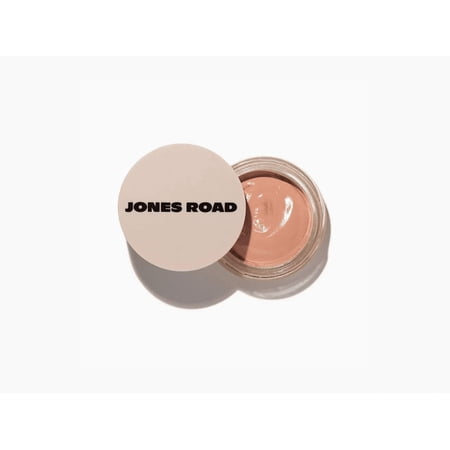
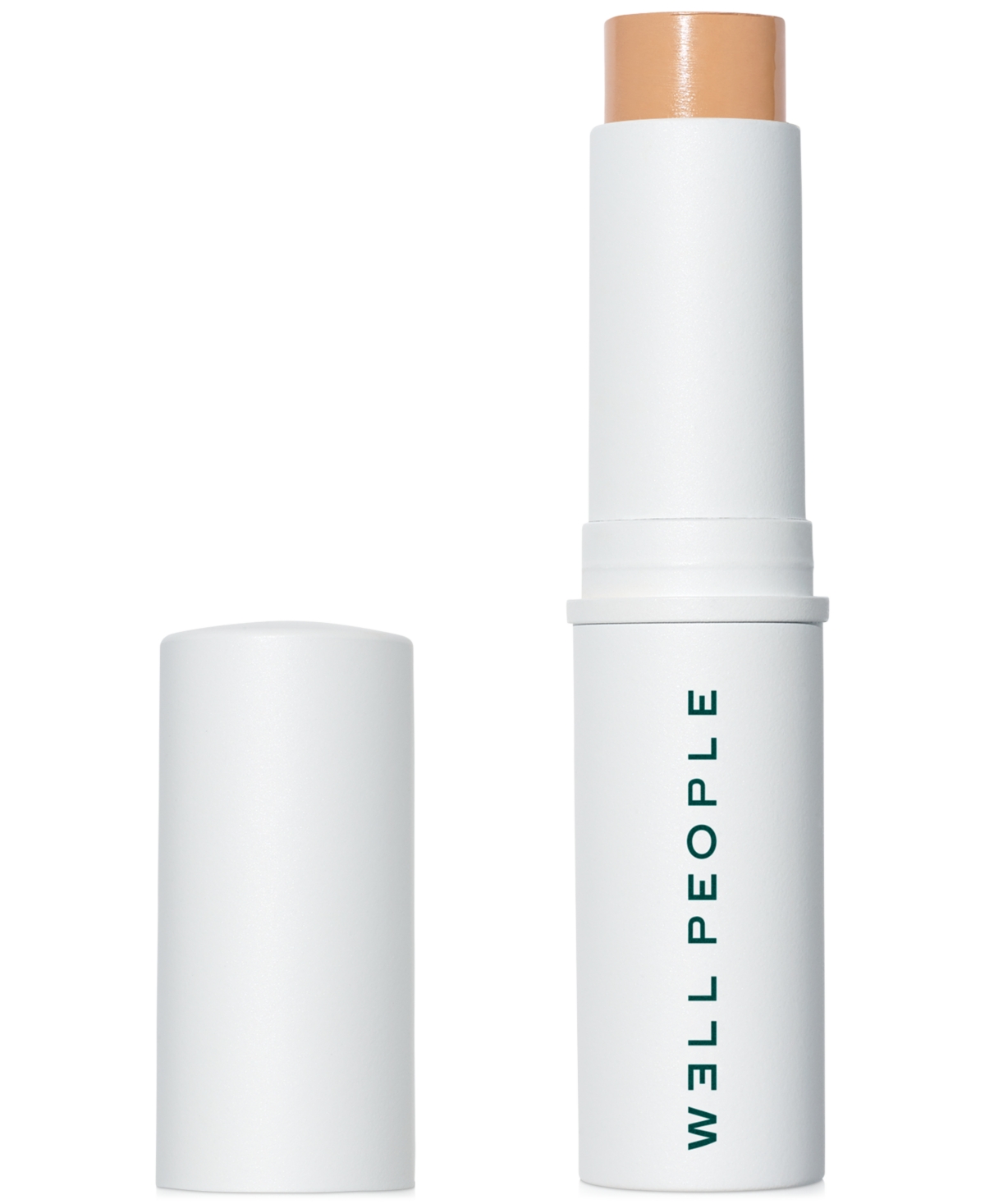
Jones Road What The Foundation (Light) YHUJ373-1 1.2346 Ounce
Analysis updated August 2026 · How Scout scores
At a glance
Summary
This foundation contains several beneficial ingredients such as sodium hyaluronate, titanium dioxide, and various natural oils, which provide hydration and nourishment to the skin. However, the presence of multiple fragrance components like citronellol, geraniol, and linalool, which are potential allergens and can cause skin irritation, negatively impacts its safety profile. The product is moderately processed, which further influences its overall rating.
Key ingredients 39
Caprylic/Capric TriglycerideVery Good
Caprylic/Capric Triglyceride is an emollient derived from coconut oil and glycerin. It helps to moisturize and replenish the skin without leaving a greasy residue. It is well-tolerated and non-irritating.
Risks
There are no significant risks associated with this ingredient.
Benefits
Provides lightweight moisture and improves skin texture.
Simmondsia Chinensis Seed OilVery Good
Simmondsia Chinensis Seed Oil, commonly known as Jojoba Oil, is a natural oil that closely resembles the skin's natural sebum. It is highly moisturizing and helps to balance oil production. It is well-tolerated and non-comedogenic.
Risks
There are no significant risks associated with this ingredient.
Benefits
Deeply moisturizes and balances skin oil levels.
Olea Europaea (Olive) Fruit OilVery Good
Olea Europaea (Olive) Fruit Oil is a natural oil rich in antioxidants and fatty acids. It provides deep hydration and nourishment to the skin. It is beneficial for improving skin elasticity and reducing inflammation.
Risks
There are no significant risks associated with this ingredient.
Benefits
Offers deep hydration and antioxidant protection.
Ricinus Communis (Castor) Seed OilVery Good
Ricinus Communis (Castor) Seed Oil is a natural oil known for its moisturizing and conditioning properties. It is rich in fatty acids and helps to nourish and protect the skin. It is well-tolerated and beneficial for dry skin.
Risks
There are no significant risks associated with this ingredient.
Benefits
Deeply moisturizes and conditions the skin.
Sodium HyaluronateGood
Sodium Hyaluronate is a salt form of hyaluronic acid, known for its excellent hydrating properties. It can hold up to 1000 times its weight in water, making it a powerful moisturizer. It is beneficial for maintaining skin hydration and elasticity.
Risks
There are minimal risks associated with its use, primarily related to rare allergic reactions.
Benefits
It significantly enhances skin hydration and reduces the appearance of fine lines.
MicaGood
Beneficial ingredient — whole-food or functional value in this product class.
Risks
Inhalation of mica particles can be a concern in loose powder forms.
Benefits
Provides a shimmering effect to enhance the appearance of the skin.
Iron Oxides (CI 77491/CI 77492/CI 77499)Good
Beneficial ingredient — whole-food or functional value in this product class.
Risks
There are no significant risks associated with iron oxides.
Benefits
Provide natural-looking color to cosmetic products.
Tocopheryl AcetateGood
Tocopheryl Acetate is a form of Vitamin E, known for its antioxidant properties. It helps to protect the skin from free radical damage and improve skin health. It is beneficial for maintaining skin moisture and elasticity.
Risks
There are no significant risks associated with this ingredient.
Benefits
Provides antioxidant protection and improves skin health.
Water/Aqua/EauNeutral
Water is a common solvent used in cosmetics to dissolve other ingredients. It helps in the application and absorption of the product. It does not have any direct benefits or risks.
Risks
There are no significant risks associated with water in cosmetics.
Benefits
Water helps in the even distribution of other ingredients.
Biosaccharide Gum-1Neutral
Biosaccharide Gum-1 is a polysaccharide that provides moisturizing and soothing properties. It is often used to improve the texture of cosmetic products. It is generally considered safe with no significant risks.
Risks
There are no known significant risks associated with this ingredient.
Benefits
It can help to hydrate and soothe the skin.
Titanium Dioxide (CI 77891)Neutral
Standard formulation ingredient — neither beneficial nor harmful at typical use.
Risks
Inhalation of nano-sized particles can be a concern, but this is not applicable in cream formulations.
Benefits
Offers broad-spectrum UV protection and acts as a whitening agent.
C12-15 Alkyl BenzoateNeutral
C12-15 Alkyl Benzoate is an emollient that helps to improve the texture and spreadability of cosmetic products. It is considered safe for use in cosmetics. It does not have significant benefits or risks.
Risks
There are no significant risks associated with this ingredient.
Benefits
Enhances the texture and feel of cosmetic formulations.
Caprylic/Capric/Succinic TriglycerideNeutral
Caprylic/Capric/Succinic Triglyceride is an emollient that helps to moisturize and condition the skin. It is derived from natural sources and is considered safe. It does not have significant benefits or risks.
Risks
There are no significant risks associated with this ingredient.
Benefits
Provides moisture and improves skin feel.
PropanediolNeutral
Propanediol is a glycol used as a solvent and humectant in cosmetics. It helps to improve the texture and moisture retention of products. It is generally considered safe with no significant risks.
Risks
There are no significant risks associated with this ingredient.
Benefits
Enhances moisture retention and product texture.
Coco-Caprylate/CaprateNeutral
Coco-Caprylate/Caprate is an emollient derived from coconut oil. It helps to improve the spreadability and feel of cosmetic products. It is considered safe and non-irritating.
Risks
There are no significant risks associated with this ingredient.
Benefits
Enhances the texture and application of products.
Diisostearyl MalateNeutral
Diisostearyl Malate is an emollient that provides a smooth and silky feel to cosmetic products. It is used to improve the texture and spreadability of formulations. It is considered safe with no significant risks.
Risks
There are no significant risks associated with this ingredient.
Benefits
Improves the texture and feel of cosmetic products.
C9-12 AlkaneNeutral
C9-12 Alkane is a hydrocarbon used as an emollient and solvent in cosmetics. It helps to improve the texture and spreadability of products. It is considered safe with no significant risks.
Risks
There are no significant risks associated with this ingredient.
Benefits
Enhances the texture and application of cosmetic products.
Polyhydroxystearic AcidNeutral
Polyhydroxystearic Acid is used as a thickening agent in cosmetics. It helps to stabilize emulsions and improve product texture. It is considered safe with no significant risks.
Risks
There are no significant risks associated with this ingredient.
Benefits
Stabilizes emulsions and improves product texture.
Hydrogenated Castor OilNeutral
Hydrogenated Castor Oil is used as an emollient and thickening agent in cosmetics. It helps to improve the texture and stability of formulations. It is considered safe with no significant risks.
Risks
There are no significant risks associated with this ingredient.
Benefits
Enhances texture and stability of cosmetic products.
Helianthus Annuus (Sunflower) Seed WaxNeutral
Helianthus Annuus (Sunflower) Seed Wax is used as a thickening agent and emollient in cosmetics. It helps to improve the texture and stability of formulations. It is considered safe with no significant risks.
Risks
There are no significant risks associated with this ingredient.
Benefits
Enhances texture and stability of cosmetic products.
Stearalkonium HectoriteNeutral
Stearalkonium Hectorite is used as a thickening and suspending agent in cosmetics. It helps to stabilize formulations and improve texture. It is considered safe with no significant risks.
Risks
There are no significant risks associated with this ingredient.
Benefits
Stabilizes formulations and improves texture.
Euphorbia Cerifera (Candelilla) WaxNeutral
Euphorbia Cerifera (Candelilla) Wax is used as a thickening agent and emollient in cosmetics. It helps to improve the texture and stability of formulations. It is considered safe with no significant risks.
Risks
There are no significant risks associated with this ingredient.
Benefits
Enhances texture and stability of cosmetic products.
Polyglyceryl-3 DiisostearateNeutral
Polyglyceryl-3 Diisostearate is an emulsifier used to stabilize formulations and improve texture. It is derived from natural sources and is considered safe. It does not have significant benefits or risks.
Risks
There are no significant risks associated with this ingredient.
Benefits
Stabilizes formulations and improves texture.
Polyglyceryl-3 PolyricinoleateNeutral
Polyglyceryl-3 Polyricinoleate is an emulsifier used to stabilize formulations and improve texture. It is derived from natural sources and is considered safe. It does not have significant benefits or risks.
Risks
There are no significant risks associated with this ingredient.
Benefits
Stabilizes formulations and improves texture.
Copernicia Cerifera (Carnauba) WaxNeutral
Copernicia Cerifera (Carnauba) Wax is used as a thickening agent and emollient in cosmetics. It helps to improve the texture and stability of formulations. It is considered safe with no significant risks.
Risks
There are no significant risks associated with this ingredient.
Benefits
Enhances texture and stability of cosmetic products.
Silica SilylateNeutral
Silica Silylate is used as a thickening and anti-caking agent in cosmetics. It helps to improve the texture and stability of formulations. It is considered safe with no significant risks.
Risks
There are no significant risks associated with this ingredient.
Benefits
Improves texture and stability of cosmetic products.
Sodium ChlorideNeutral
Sodium Chloride, commonly known as salt, is used as a thickening agent in cosmetics. It helps to improve the texture and stability of formulations. It is considered safe with no significant risks.
Risks
There are no significant risks associated with this ingredient.
Benefits
Enhances texture and stability of cosmetic products.
Pelargonium Graveolens OilNeutral
Pelargonium Graveolens Oil, also known as Geranium Oil, is used for its fragrance and potential skin benefits. It is considered safe but can cause irritation in sensitive individuals. It is known for its balancing and soothing properties.
Risks
May cause irritation in sensitive individuals.
Benefits
Provides a pleasant fragrance and potential skin benefits.
Polyglyceryl-6 PolyricinoleateNeutral
Polyglyceryl-6 Polyricinoleate is an emulsifier used to stabilize formulations and improve texture. It is derived from natural sources and is considered safe. It does not have significant benefits or risks.
Risks
There are no significant risks associated with this ingredient.
Benefits
Stabilizes formulations and improves texture.
TriethoxycaprylylsilaneNeutral
Triethoxycaprylylsilane is a silicone-based ingredient used to improve the texture and spreadability of cosmetics. It is considered safe with no significant risks. It helps to enhance the application and feel of products.
Risks
There are no significant risks associated with this ingredient.
Benefits
Improves texture and application of cosmetic products.
Zingiber Officinale (Ginger) Root OilNeutral
Zingiber Officinale (Ginger) Root Oil is used for its fragrance and potential skin benefits. It is considered safe but can cause irritation in sensitive individuals. It is known for its warming and soothing properties.
Risks
May cause irritation in sensitive individuals.
Benefits
Provides a warming sensation and potential skin benefits.
SilicaNeutral
Silica is used as a thickening and anti-caking agent in cosmetics. It helps to improve the texture and stability of formulations. It is considered safe with no significant risks.
Risks
There are no significant risks associated with this ingredient.
Benefits
Improves texture and stability of cosmetic products.
CitronellolBad
Citronellol is a fragrance component that can cause allergic reactions in sensitive individuals. It is used for its pleasant scent but can be irritating to the skin. It is considered a potential allergen.
Risks
May cause skin irritation or allergic reactions in sensitive individuals.
Benefits
Provides a floral scent to cosmetic products.
GeraniolBad
Geraniol is a fragrance ingredient that can cause skin irritation and allergic reactions. It is used for its rose-like scent but is a known allergen. It is regulated in cosmetics due to its potential to cause sensitization.
Risks
Can cause skin irritation and allergic reactions.
Benefits
Adds a pleasant floral fragrance to products.
LinaloolBad
Linalool is a fragrance ingredient that can cause skin irritation and allergic reactions. It is commonly used for its floral scent but is a known allergen. It is subject to restrictions in cosmetics due to its sensitizing potential.
Risks
May cause skin irritation or allergic reactions.
Benefits
Provides a pleasant floral aroma to cosmetics.
LimoneneBad
Limonene is a fragrance ingredient that can oxidize and cause skin irritation. It is used for its citrus scent but can be a skin sensitizer. It is regulated in cosmetics due to its potential to cause allergic reactions.
Risks
Can cause skin irritation and allergic reactions upon oxidation.
Benefits
Adds a fresh citrus scent to products.
CitralBad
Citral is a fragrance component that can cause skin irritation and allergic reactions. It is used for its lemon scent but is a known allergen. It is regulated in cosmetics due to its potential to cause sensitization.
Risks
May cause skin irritation or allergic reactions.
Benefits
Provides a lemon-like fragrance to cosmetics.
PhenoxyethanolBad
Processed additive flagged under Scout's ingredient doctrine.
Risks
May cause irritation in sensitive individuals.
Benefits
Prevents microbial growth and extends product shelf life.
LecithinBad
Processed additive flagged under Scout's ingredient doctrine.
Risks
There are no significant risks associated with this ingredient.
Benefits
Stabilizes formulations and conditions the skin.
Get the full breakdown in the Scout appTake Scout shopping
Scan any product to see lab results, healthy alternatives, and your personalized analysis.
Download on theApp Store GET IT ONGoogle PlayAmazon pricing & content
Amazon price as of . Product prices and availability are accurate as of the date/time indicated and are subject to change. Any price and availability information displayed on Amazon.com at the time of purchase will apply to the purchase of this product.
CERTAIN CONTENT THAT APPEARS ON THIS SITE COMES FROM AMAZON. THIS CONTENT IS PROVIDED “AS IS” AND IS SUBJECT TO CHANGE OR REMOVAL AT ANY TIME.