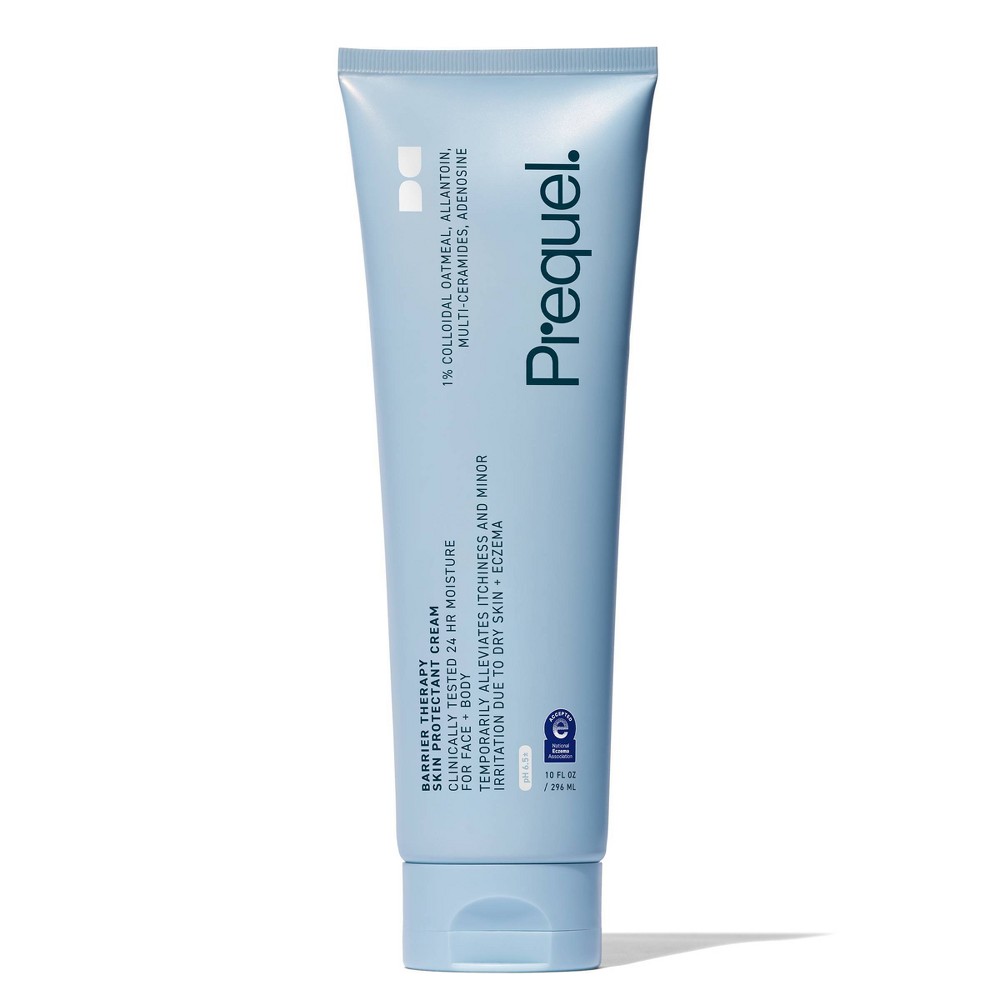
Prequel Barrier Therapy Facial Treatment - 11oz
At a glance
Summary
This facial treatment contains a variety of beneficial ingredients such as colloidal oatmeal, safflower oil, and shea butter, which are known for their soothing, moisturizing, and anti-inflammatory properties. The inclusion of multiple ceramides supports skin barrier function and hydration. However, the presence of phenoxyethanol, a preservative that can cause irritation in sensitive individuals, slightly impacts the overall ingredient safety. Its plastic packaging can shed microplastics into the product and lowers its score.
Key ingredients 9
Colloidal OatmealVery Good
Colloidal oatmeal is known for its soothing and anti-inflammatory properties, making it beneficial for sensitive skin. It helps to relieve itching and irritation caused by various skin conditions. It is also a natural moisturizer that can improve skin barrier function.
Risks
There are minimal risks associated with colloidal oatmeal, though rare allergic reactions can occur.
Benefits
It provides significant relief for dry, itchy, and irritated skin, enhancing skin hydration and barrier protection.
Carthamus Tinctorius Seed OilVery Good
Carthamus Tinctorius Seed Oil, or safflower oil, is rich in linoleic acid, which helps to maintain the integrity of the outer skin layer. It is a natural emollient that can improve skin texture and appearance. Its antioxidant properties also help protect the skin from environmental stressors.
Risks
There is a low risk of allergic reactions, particularly for those with nut allergies.
Benefits
It enhances skin hydration and elasticity, providing a protective barrier against environmental damage.
Butyrospermum Parkii ButterVery Good
Butyrospermum Parkii Butter, commonly known as shea butter, is a natural fat extracted from the nuts of the shea tree. It is highly moisturizing and contains vitamins A and E, which promote skin health. Its anti-inflammatory properties make it suitable for soothing irritated skin.
Risks
Rarely, individuals may experience allergic reactions to shea butter.
Benefits
It deeply moisturizes and nourishes the skin, improving elasticity and reducing inflammation.
Ceramide APVery Good
Ceramide AP is a type of lipid that helps to restore the skin's natural barrier, preventing moisture loss. It is essential for maintaining skin hydration and integrity. Ceramides are naturally found in the skin and are crucial for healthy skin function.
Risks
There are minimal risks associated with ceramides, as they are naturally occurring in the skin.
Benefits
It strengthens the skin barrier, enhancing hydration and protecting against environmental damage.
Ceramide EOSVery Good
Ceramide EOS is another form of ceramide that plays a vital role in maintaining skin barrier function. It helps to lock in moisture and protect the skin from external irritants. Ceramides are beneficial for all skin types, especially dry and sensitive skin.
Risks
There are minimal risks, as ceramides are biocompatible with the skin.
Benefits
It improves skin hydration and resilience, reducing dryness and irritation.
Ceramide EOPVery Good
Ceramide EOP is crucial for maintaining the skin's lipid barrier, which is essential for retaining moisture. It helps to repair and protect the skin from environmental damage. Ceramides are beneficial for enhancing skin health and preventing dryness.
Risks
There are minimal risks, as ceramides are naturally present in the skin.
Benefits
It enhances skin barrier function, improving hydration and reducing sensitivity.
GlycerinGood
Glycerin is a humectant that attracts moisture to the skin, helping to keep it hydrated. It is a common ingredient in skincare products due to its ability to improve skin barrier function. It is generally well-tolerated and suitable for all skin types.
Risks
There are minimal risks, though excessive use can lead to a sticky feeling on the skin.
Benefits
It effectively hydrates the skin, enhancing its smoothness and suppleness.
DimethiconeBad
Occlusive silicone film-former — flagged under clean-beauty doctrine.
Risks
It may cause breakouts or irritation in sensitive or acne-prone skin.
Benefits
It provides a protective barrier that locks in moisture and improves skin texture.
PhenoxyethanolBad
Phenoxyethanol is a preservative used to prevent microbial growth in cosmetics. While it is effective, it can cause skin irritation and allergic reactions in some individuals. It is considered a safer alternative to parabens but still poses some risks.
Risks
It may cause irritation or allergic reactions, particularly in sensitive skin.
Benefits
It effectively preserves the product, extending its shelf life and preventing contamination.
Get the full breakdown in the Scout appTake Scout shopping
Scan any product to see lab results, healthy alternatives, and your personalized analysis.
Are you Prequel? Fix an error Get the badge Get tested