
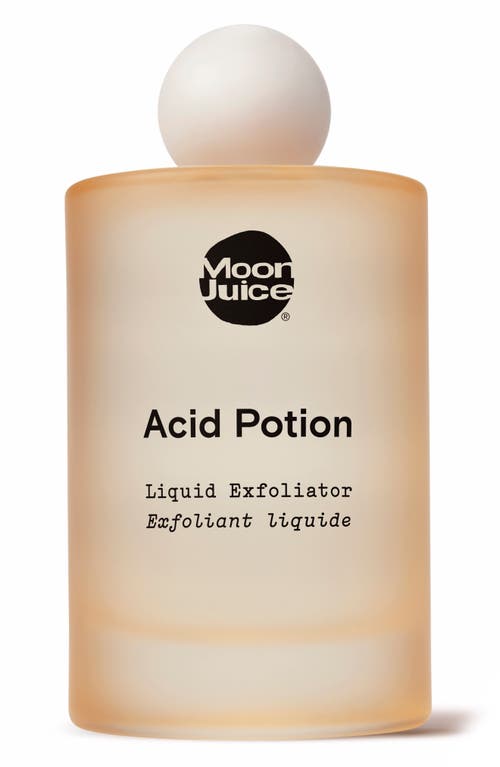

Moon Juice Acid Potion Resurfacing Exfoliator
Analysis updated August 2026 · How Scout scores
At a glance
Summary
This exfoliator contains beneficial ingredients like glycolic acid, niacinamide, and salicylic acid, which are known for their exfoliating and skin-improving properties. However, the presence of sodium hydroxide, a strong alkaline agent, and the use of multiple acids can be harsh on sensitive skin. The product is moderately processed, which limits its score despite the inclusion of natural extracts and oils.
Key ingredients 20
Oryza Sativa (Rice) Bran OilVery Good
Rice Bran Oil is a natural oil rich in antioxidants and fatty acids. It nourishes and hydrates the skin, improving elasticity and texture. It is suitable for all skin types and provides anti-aging benefits.
Risks
Very low risk of irritation.
Benefits
Nourishes and hydrates the skin, providing antioxidant protection.
TocopherolVery Good
Tocopherol, or Vitamin E, is a powerful antioxidant. It protects the skin from free radical damage and improves moisture retention. It is beneficial for skin health and anti-aging.
Risks
Very low risk of irritation.
Benefits
Protects against oxidative stress and enhances skin hydration.
TocotrienolsVery Good
Tocotrienols are a form of Vitamin E with strong antioxidant properties. They help protect the skin from environmental damage and improve skin health. They are effective in anti-aging formulations.
Risks
Very low risk of irritation.
Benefits
Provides potent antioxidant protection and supports skin health.
Glycolic AcidGood
Glycolic Acid is an alpha hydroxy acid (AHA) known for its exfoliating properties. It helps remove dead skin cells and promotes cell turnover. It is effective in improving skin texture and tone.
Risks
May cause irritation or sensitivity, especially in high concentrations.
Benefits
Improves skin texture, reduces fine lines, and enhances skin radiance.
Phytic AcidGood
Phytic Acid is a natural antioxidant and chelating agent. It helps in exfoliating the skin and reducing hyperpigmentation. It is gentle and suitable for sensitive skin.
Risks
Minimal risk of irritation compared to other acids.
Benefits
Provides gentle exfoliation and brightens the skin.
NiacinamideGood
Niacinamide is a form of Vitamin B3 with multiple skin benefits. It improves skin barrier function, reduces inflammation, and minimizes pores. It is well-tolerated by most skin types.
Risks
Rarely causes mild irritation or redness.
Benefits
Enhances skin barrier, reduces redness, and improves overall skin appearance.
Salicylic AcidGood
Salicylic Acid is a beta hydroxy acid (BHA) known for its ability to penetrate pores and exfoliate. It is effective in treating acne and reducing blackheads. It is well-suited for oily and acne-prone skin.
Risks
Can cause dryness or irritation if overused.
Benefits
Clears pores, reduces acne, and improves skin clarity.
AllantoinGood
Allantoin is a skin-soothing agent that promotes healing. It helps to calm irritated skin and improve moisture retention. It is non-irritating and suitable for sensitive skin.
Risks
Very low risk of irritation.
Benefits
Soothes and protects the skin, promoting healing.
Ganoderma Lucidum ExtractGood
Ganoderma Lucidum Extract, also known as Reishi mushroom, is rich in antioxidants. It helps protect the skin from environmental stressors and improves skin resilience. It is beneficial for anti-aging and skin health.
Risks
Minimal risk of allergic reaction.
Benefits
Provides antioxidant protection and enhances skin health.
GlycerinGood
Glycerin is a well-known humectant that attracts moisture to the skin. It helps maintain skin hydration and improves skin barrier function. It is safe and effective for all skin types.
Risks
Very low risk of irritation.
Benefits
Hydrates and protects the skin, enhancing moisture retention.
Salvia Sclarea (Clary) OilGood
Clary Oil is an essential oil with calming and anti-inflammatory properties. It helps soothe irritated skin and balance oil production. It is beneficial for acne-prone and sensitive skin.
Risks
May cause irritation in sensitive individuals.
Benefits
Calms and balances the skin, reducing inflammation.
WaterNeutral
Water is a common solvent used in cosmetic formulations. It helps dissolve other ingredients and provides a base for the product. It is generally considered safe and non-reactive.
Risks
There are no significant risks associated with water in cosmetics.
Benefits
Water hydrates the skin and helps in the application of the product.
Sodium HydroxideNeutral
Sodium Hydroxide is used to adjust the pH of cosmetic products. It is effective in small amounts to ensure product stability. It is generally safe when used in low concentrations.
Risks
Can be irritating in high concentrations.
Benefits
Helps maintain the desired pH level of the product.
PropanediolNeutral
Propanediol is a glycol used as a solvent and skin-conditioning agent. It enhances the absorption of other ingredients. It is considered safe and non-irritating.
Risks
Low risk of irritation or allergic reaction.
Benefits
Improves skin hydration and enhances ingredient penetration.
Glycereth-7 Trimethyl EtherNeutral
Glycereth-7 Trimethyl Ether is a synthetic humectant. It helps retain moisture in the skin. It is generally considered safe for use in cosmetics.
Risks
Minimal risk of irritation.
Benefits
Provides moisture retention and improves skin feel.
Lactic AcidNeutral
Standard formulation ingredient — neither beneficial nor harmful at typical use.
Risks
May cause mild irritation or sensitivity.
Benefits
Exfoliates, hydrates, and improves skin texture.
Polyglyceryl-10 OleateNeutral
Polyglyceryl-10 Oleate is an emulsifier used to stabilize formulations. It helps blend oil and water components. It is considered safe for use in cosmetics.
Risks
Minimal risk of irritation.
Benefits
Stabilizes product formulation and improves texture.
Citric AcidNeutral
Citric Acid is used to adjust the pH of cosmetic products. It also provides mild exfoliation and antioxidant benefits. It is generally safe when used in appropriate concentrations.
Risks
Can cause irritation if used in high concentrations.
Benefits
Helps maintain product stability and provides mild exfoliation.
Lonicera Caprifolium (Honeysuckle) Flower ExtractNeutral
Honeysuckle Flower Extract is used for its soothing and anti-inflammatory properties. It helps calm the skin and reduce redness. It is generally considered safe for use in cosmetics.
Risks
Minimal risk of irritation.
Benefits
Soothes and calms the skin, reducing inflammation.
Lonicera Japonica (Honeysuckle) Flower ExtractNeutral
Similar to Lonicera Caprifolium, this extract provides soothing and anti-inflammatory benefits. It is used to calm the skin and reduce irritation. It is safe for use in cosmetic formulations.
Risks
Minimal risk of irritation.
Benefits
Calms and soothes the skin, providing anti-inflammatory effects.
Processing
Processed Foods
Get the full breakdown in the Scout appTake Scout shopping
Scan any product to see lab results, healthy alternatives, and your personalized analysis.
Download on theApp Store GET IT ONGoogle PlayAmazon pricing & content
Amazon price as of . Product prices and availability are accurate as of the date/time indicated and are subject to change. Any price and availability information displayed on Amazon.com at the time of purchase will apply to the purchase of this product.
CERTAIN CONTENT THAT APPEARS ON THIS SITE COMES FROM AMAZON. THIS CONTENT IS PROVIDED “AS IS” AND IS SUBJECT TO CHANGE OR REMOVAL AT ANY TIME.