
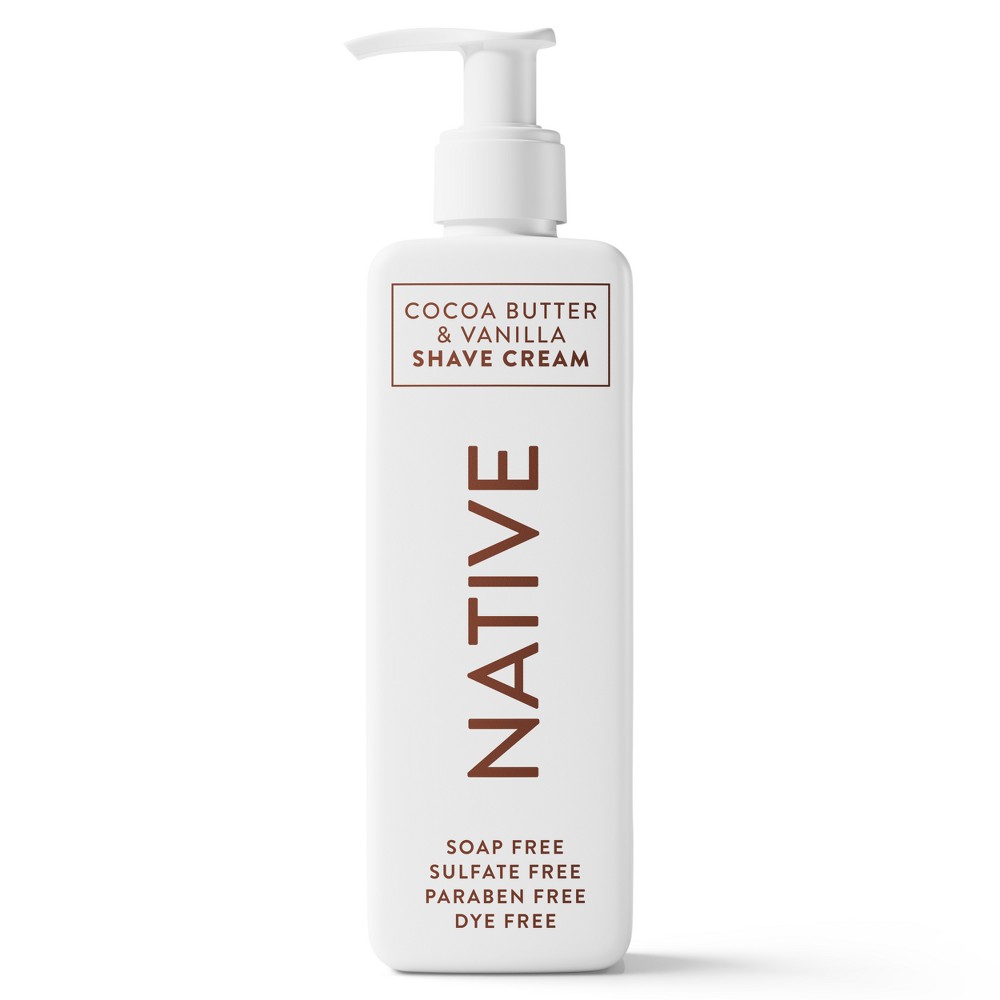





Native Cocoa Butter & Vanilla Shaving Cream - 7.6 fl oz
NativeAnalysis updated August 2026 · How Scout scores
At a glance
Summary
This shaving cream contains beneficial ingredients like shea butter and cocoa butter, which are known for their moisturizing and skin-nourishing properties. However, the presence of 'fragrance' as an ingredient is a concern due to potential skin irritation and sensitivity issues. The product is moderately processed, which limits its score despite the inclusion of natural oils and butters.
Key ingredients 13
Butyrospermum Parkii (Shea) ButterVery Good
Shea Butter is a natural fat extracted from the nuts of the shea tree. It is highly moisturizing and contains vitamins A and E, which are beneficial for skin health. It is known for its anti-inflammatory and healing properties.
Risks
There is a low risk of allergic reactions, particularly for those with nut allergies.
Benefits
Shea Butter deeply moisturizes and nourishes the skin, improving elasticity and reducing inflammation.
Theobroma Cacao (Cocoa) Seed ButterVery Good
Cocoa Butter is a natural fat extracted from cocoa beans. It is rich in fatty acids and antioxidants, providing excellent moisturizing properties. It helps to improve skin elasticity and reduce the appearance of scars.
Risks
There is a low risk of allergic reactions, particularly for those with cocoa allergies.
Benefits
Cocoa Butter deeply moisturizes and nourishes the skin, improving texture and hydration.
Sodium Cocoyl AlaninateGood
Sodium Cocoyl Alaninate is a mild surfactant derived from coconut oil and alanine. It is used for its gentle cleansing properties and is less irritating than traditional sulfates. It is suitable for sensitive skin types.
Risks
There are minimal risks associated with this ingredient, though some individuals may experience mild irritation.
Benefits
It provides gentle cleansing without stripping the skin of its natural oils.
WaterNeutral
Water is a common solvent used in cosmetic formulations. It helps dissolve other ingredients and provides a base for the product. It does not have any direct benefits or risks associated with its use in cosmetics.
Risks
There are no significant risks associated with water in cosmetics.
Benefits
Water helps in the application and absorption of other ingredients.
Cocamidopropyl BetaineNeutral
Cocamidopropyl Betaine is a surfactant derived from coconut oil. It is used to create foam and improve the texture of the product. It is generally considered mild and non-irritating.
Risks
Some individuals may experience skin irritation or allergic reactions.
Benefits
It helps in cleansing the skin while maintaining a gentle formulation.
Citric AcidNeutral
Citric Acid is used to adjust the pH of cosmetic products. It can also act as a mild exfoliant, helping to remove dead skin cells. It is generally safe in low concentrations.
Risks
High concentrations can cause skin irritation or sensitivity.
Benefits
It helps maintain the stability and effectiveness of the product by balancing pH levels.
Glyceryl Caprylate/CaprateNeutral
Glyceryl Caprylate/Caprate is an emollient and emulsifier derived from glycerin and fatty acids. It helps to stabilize formulations and improve skin feel. It is generally considered safe and non-irritating.
Risks
There are minimal risks associated with this ingredient.
Benefits
It enhances the texture and moisturizing properties of the product.
Hydroxypropyl Starch PhosphateNeutral
Hydroxypropyl Starch Phosphate is a modified starch used as a thickening agent in cosmetics. It helps to improve the texture and stability of the product. It is generally considered safe and non-irritating.
Risks
There are minimal risks associated with this ingredient.
Benefits
It enhances the texture and consistency of the product.
Sodium SalicylateNeutral
Sodium Salicylate is a salt of salicylic acid used as a preservative and anti-inflammatory agent. It is generally considered safe in low concentrations. It can help soothe irritated skin.
Risks
High concentrations may cause skin irritation or sensitivity.
Benefits
It provides anti-inflammatory benefits and helps preserve the product.
Guar Hydroxypropyltrimonium ChlorideNeutral
Guar Hydroxypropyltrimonium Chloride is a conditioning agent derived from guar gum. It helps to improve the texture and manageability of hair and skin. It is generally considered safe and non-irritating.
Risks
There are minimal risks associated with this ingredient.
Benefits
It enhances the conditioning properties of the product, improving skin feel.
Xanthan GumNeutral
Xanthan Gum is a natural thickening agent used to stabilize cosmetic formulations. It helps to improve the texture and consistency of the product. It is generally considered safe and non-irritating.
Risks
There are minimal risks associated with this ingredient.
Benefits
It enhances the texture and stability of the product.
Sodium BenzoateBad
Synthetic preservative that can form benzene in the presence of vitamin C.
Risks
In rare cases, it may cause skin irritation or allergic reactions.
Benefits
It prevents spoilage and maintains product safety by inhibiting microbial growth.
FragranceVery Bad
Fragrance is used to impart a pleasant scent to cosmetic products. However, it can be a mixture of various chemicals, some of which may cause skin irritation or allergic reactions. It is often criticized for its potential to cause sensitivity.
Risks
Fragrance can cause allergic reactions and skin irritation, especially in sensitive individuals.
Benefits
It provides a pleasant scent to the product, enhancing user experience.
Get the full breakdown in the Scout appTake Scout shopping
Scan any product to see lab results, healthy alternatives, and your personalized analysis.
Download on theApp Store GET IT ONGoogle Play