
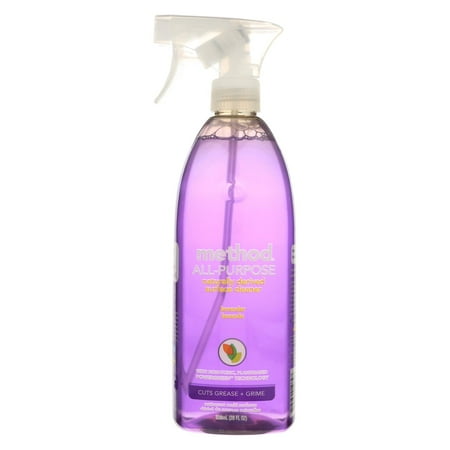
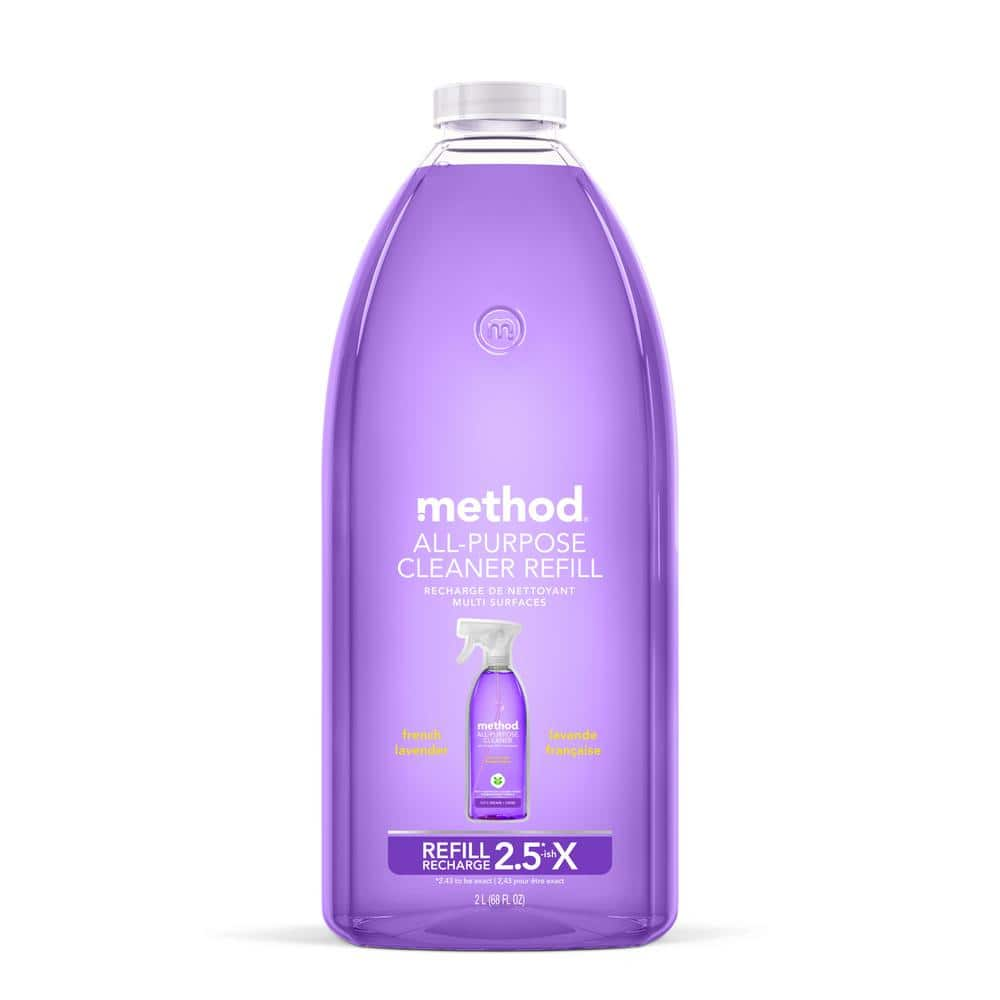
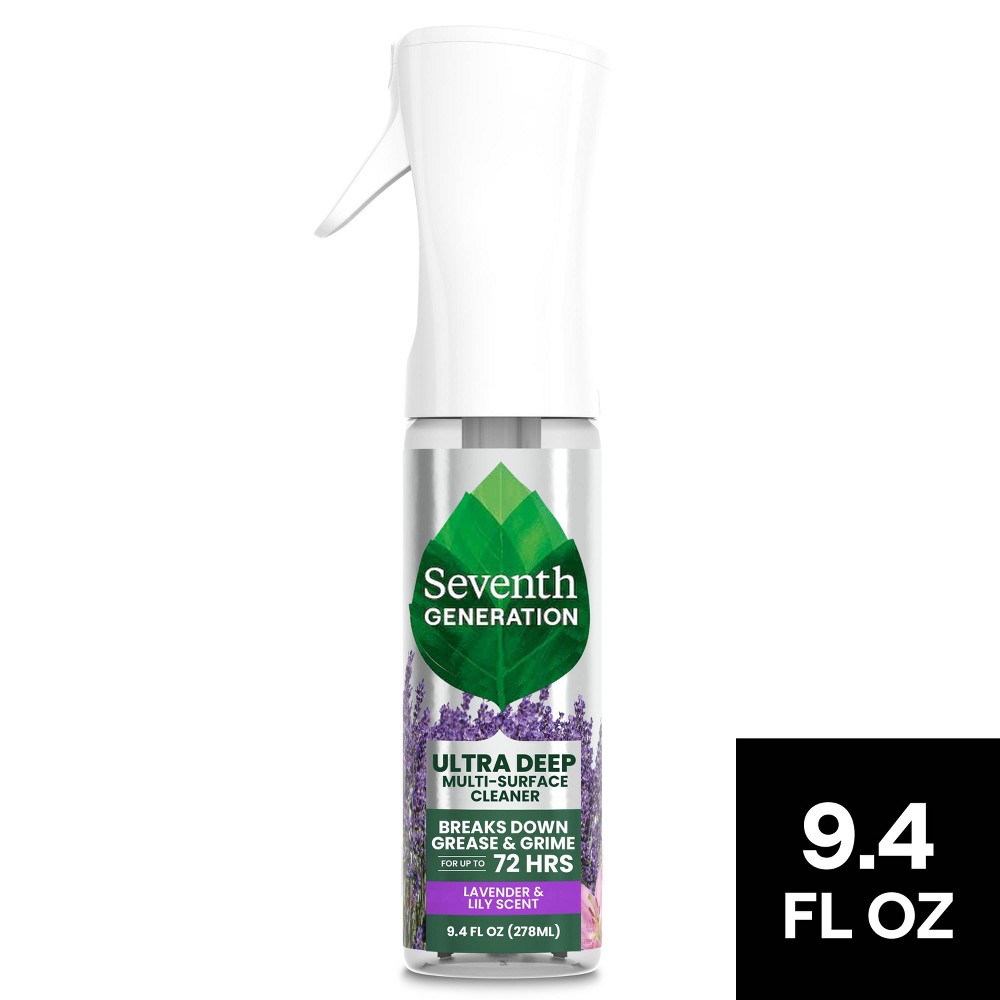
Method - All-purpose Cleaner - Lavender - Case Of 8 - 28 Fl Oz.
Summary
This all-purpose cleaner contains plant-derived surfactants like decyl glucoside and lauryl glucoside, which are considered safer and more environmentally friendly. The inclusion of citric acid and biodegradable ingredients further supports its eco-friendly profile. However, the presence of synthetic fragrance and the processed nature of the product slightly reduce its overall rating.
At a glance
Key ingredients 13
water
Water is a universal solvent and is used as a base in many cleaning products. It helps dissolve other ingredients and facilitates the cleaning process. It is generally considered safe and non-toxic.
Risks
There are no significant risks associated with water in cleaning products.
Benefits
Water is essential for diluting other ingredients and ensuring they are evenly distributed.
decyl glucoside
Decyl glucoside is a mild, plant-derived surfactant used for its gentle cleansing properties. It is derived from glucose and coconut oil, making it biodegradable and environmentally friendly. It is considered safe for use in cleaning products.
Risks
There are minimal risks associated with decyl glucoside, though some individuals may experience mild irritation.
Benefits
It is a gentle surfactant that effectively cleans without stripping surfaces or causing irritation.
lauryl glucoside
Lauryl glucoside is a non-ionic surfactant derived from natural sources like coconut oil and glucose. It is used for its ability to create foam and enhance the cleaning power of products. It is biodegradable and considered safe for use.
Risks
Lauryl glucoside is generally safe, but in rare cases, it may cause mild skin irritation.
Benefits
It is effective in cleaning and foaming, making it a valuable ingredient in eco-friendly cleaning products.
citric acid
Citric acid is a natural acid found in citrus fruits and is used in cleaning products for its ability to break down stains and remove limescale. It is biodegradable and considered safe for use. It also acts as a pH adjuster in formulations.
Risks
Citric acid can cause mild skin irritation if not properly diluted.
Benefits
It is effective in removing mineral deposits and enhancing the cleaning power of products.
laureth-7
Laureth-7 is a synthetic surfactant used to improve the texture and spreadability of cleaning products. It is derived from ethoxylated lauryl alcohol. It is effective in reducing surface tension and enhancing cleaning performance.
Risks
Laureth-7 may contain trace amounts of 1,4-dioxane, a potential carcinogen, due to the ethoxylation process.
Benefits
It helps in creating a smooth and even application of the product, improving its cleaning efficiency.
potassium citrate
Potassium citrate is a potassium salt of citric acid used as a buffering agent in cleaning products. It helps maintain the stability and effectiveness of the formulation. It is generally considered safe and non-toxic.
Risks
There are no significant risks associated with potassium citrate in cleaning products.
Benefits
It helps in maintaining the pH balance of the product, ensuring optimal performance.
potassium hydroxide
Potassium hydroxide is a strong alkaline compound used to adjust the pH of cleaning products. It helps in breaking down organic matter and enhancing cleaning efficiency. It is effective but must be handled with care due to its caustic nature.
Risks
Potassium hydroxide can cause skin and eye irritation and should be used with caution.
Benefits
It is effective in breaking down tough stains and enhancing the cleaning power of products.
corn and coconut derived biodegradable surfactants
These surfactants are derived from natural sources like corn and coconut, making them biodegradable and environmentally friendly. They are used for their gentle yet effective cleaning properties. They are considered safe and non-toxic.
Risks
There are minimal risks associated with these surfactants, though some individuals may experience mild irritation.
Benefits
They provide effective cleaning while being gentle on surfaces and the environment.
corn-based cleaning salt
Corn-based cleaning salt is used as an abrasive agent to enhance the scrubbing power of cleaning products. It is derived from natural sources and is biodegradable. It is considered safe for use in cleaning formulations.
Risks
There are no significant risks associated with corn-based cleaning salt.
Benefits
It enhances the scrubbing power of the product, making it effective in removing tough stains.
soda ash
Soda ash, also known as sodium carbonate, is used as a water softener and cleaning booster in cleaning products. It helps in breaking down grease and stains. It is effective but should be used with caution due to its alkaline nature.
Risks
Soda ash can cause skin and eye irritation if not handled properly.
Benefits
It enhances the cleaning power of products by softening water and breaking down stains.
potassium hydrate
Potassium hydrate, also known as potassium hydroxide, is used to adjust the pH of cleaning products. It helps in breaking down organic matter and enhancing cleaning efficiency. It is effective but must be handled with care due to its caustic nature.
Risks
Potassium hydrate can cause skin and eye irritation and should be used with caution.
Benefits
It is effective in breaking down tough stains and enhancing the cleaning power of products.
fragrance oil
Fragrance oil is used to impart a pleasant scent to cleaning products. It is a synthetic or natural blend of aromatic compounds. While it enhances the sensory experience, it may contain allergens.
Risks
Fragrance oils can cause allergic reactions and may contain synthetic compounds that are not environmentally friendly.
Benefits
It provides a pleasant scent, improving the user experience of the product.
color
Color is added to cleaning products for aesthetic purposes, making them visually appealing. It is typically a synthetic dye. While it does not affect cleaning performance, it enhances product appeal.
Risks
Synthetic colors may cause allergic reactions and are not always environmentally friendly.
Benefits
It enhances the visual appeal of the product, making it more attractive to consumers.
Processing
Processed Foods
Get the full breakdown in the Scout app
Scan any product to see lab results, healthy alternatives, and your personalized analysis.
Download on theApp Store