
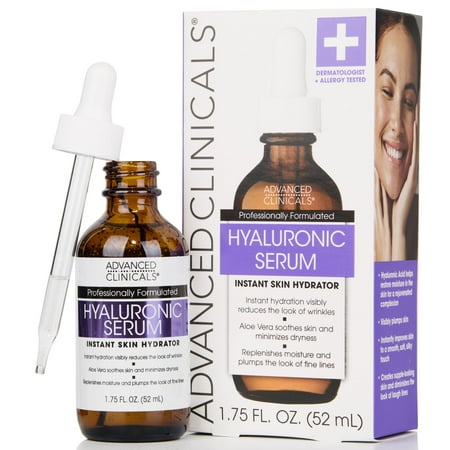
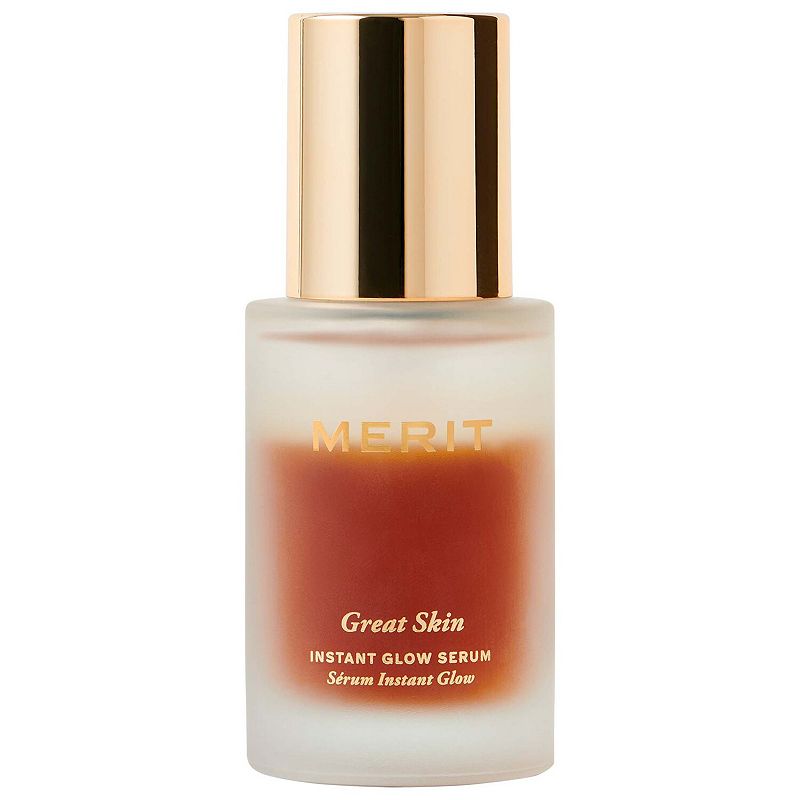
Advanced Clinicals Hyaluronic Acid Face Serum for Hydrating Dry Skin. 1.75 fl oz
Summary
This serum contains beneficial skin actives like hyaluronic acid, which is known for its hydrating properties. However, the presence of synthetic preservatives and emulsifiers slightly lowers its score. The product is processed, but it avoids major harmful ingredients, making it a mostly safe choice for skincare.
At a glance
Key ingredients 21
Water (Aqua)
Water is a universal solvent and is used as a base in many cosmetic formulations. It helps dissolve other ingredients and provides hydration. It is generally considered safe and non-irritating.
Risks
There are no significant risks associated with water in cosmetics.
Benefits
Water hydrates the skin and helps in the absorption of other beneficial ingredients.
Ethoxydiglycol
Ethoxydiglycol is a solvent that helps dissolve other ingredients and improve the texture of the product. It is commonly used in cosmetics for its ability to enhance the penetration of active ingredients. It is generally considered safe in low concentrations.
Risks
In rare cases, it may cause skin irritation or allergic reactions.
Benefits
It improves the delivery of active ingredients into the skin.
Glycerin
Glycerin is a humectant that attracts moisture to the skin, helping to keep it hydrated. It is a common ingredient in skincare products due to its moisturizing properties. It is considered safe and effective for most skin types.
Risks
There are minimal risks, though it can be sticky in high concentrations.
Benefits
Glycerin helps maintain skin hydration and improves skin barrier function.
Pyrus Malus (Apple) Fruit Extract
Apple fruit extract is rich in antioxidants and vitamins, which can help protect the skin from environmental damage. It is used in cosmetics for its nourishing and anti-aging properties. It is generally considered safe for topical use.
Risks
There is a low risk of allergic reactions in sensitive individuals.
Benefits
It provides antioxidant protection and helps improve skin texture.
PEG‐12 Dimethicone
PEG-12 Dimethicone is a silicone-based polymer that provides a smooth application and enhances the texture of the product. It is used to improve the spreadability and feel of skincare products. It is generally considered safe for use in cosmetics.
Risks
There is a potential risk of skin irritation in sensitive individuals.
Benefits
It provides a silky texture and helps lock in moisture.
Aloe Barbadensis Leaf Juice
Aloe vera is known for its soothing and moisturizing properties, making it a popular ingredient in skincare. It helps calm irritated skin and provides hydration. It is considered safe and beneficial for most skin types.
Risks
Rarely, it may cause allergic reactions in sensitive individuals.
Benefits
Aloe vera soothes and hydrates the skin, reducing redness and irritation.
Chondrus Crispus Extract
Chondrus Crispus, also known as Irish moss, is used for its thickening and moisturizing properties. It helps improve the texture of the product and provides hydration to the skin. It is generally considered safe for use in cosmetics.
Risks
There are minimal risks associated with its use.
Benefits
It helps thicken formulations and provides moisture to the skin.
Sodium Hyaluronate
Sodium Hyaluronate is a form of hyaluronic acid that is used for its excellent moisturizing properties. It can hold up to 1000 times its weight in water, making it highly effective at hydrating the skin. It is considered safe and beneficial for all skin types.
Risks
There are no significant risks associated with its use.
Benefits
It provides intense hydration and helps plump the skin, reducing the appearance of fine lines.
Sodium Carboxymethyl Beta-Glucan
This ingredient is used for its skin-soothing and moisturizing properties. It helps improve the skin's barrier function and provides hydration. It is generally considered safe for use in cosmetics.
Risks
There are minimal risks, though it may cause irritation in very sensitive skin.
Benefits
It soothes the skin and enhances moisture retention.
Camellia Sinensis Leaf Extract
Green tea extract is rich in antioxidants and is used for its anti-inflammatory and anti-aging properties. It helps protect the skin from environmental damage and soothes irritation. It is considered safe and beneficial for most skin types.
Risks
There is a low risk of irritation in sensitive individuals.
Benefits
It provides antioxidant protection and helps reduce signs of aging.
Epilobium Angustifolium Flower/Leaf/Stem Extract
This extract is known for its anti-inflammatory and soothing properties. It is used in skincare to calm irritated skin and reduce redness. It is generally considered safe for use in cosmetics.
Risks
There are minimal risks associated with its use.
Benefits
It helps soothe and calm the skin, reducing inflammation.
Tocopheryl Acetate
Tocopheryl Acetate is a form of Vitamin E, used for its antioxidant properties. It helps protect the skin from free radical damage and supports skin health. It is considered safe and beneficial for most skin types.
Risks
There is a low risk of skin irritation in sensitive individuals.
Benefits
It provides antioxidant protection and helps improve skin texture.
Xanthan Gum
Xanthan Gum is used as a thickening agent and stabilizer in cosmetic formulations. It helps improve the texture and consistency of the product. It is generally considered safe for use in cosmetics.
Risks
There are minimal risks associated with its use.
Benefits
It stabilizes formulations and enhances product texture.
Fragrance
Fragrance is used to impart a pleasant scent to cosmetic products. However, it can be a common irritant and allergen for sensitive skin. It is often criticized for its potential to cause skin reactions.
Risks
Fragrance can cause skin irritation and allergic reactions, especially in sensitive individuals.
Benefits
It provides a pleasant scent to the product.
Phenoxyethanol
Phenoxyethanol is a preservative used to prevent microbial growth in cosmetics. It is effective at low concentrations and is widely used as an alternative to parabens. It is generally considered safe in concentrations up to 1%.
Risks
In high concentrations, it can cause skin irritation and allergic reactions.
Benefits
It helps preserve the product and extend its shelf life.
Maltodextrin
Maltodextrin is used as a binding agent and stabilizer in cosmetic formulations. It helps improve the texture and consistency of the product. It is generally considered safe for use in cosmetics.
Risks
There are minimal risks associated with its use.
Benefits
It stabilizes formulations and enhances product texture.
Tetrasodium Glutamate Diacetate
This ingredient is used as a chelating agent to improve the stability and efficacy of cosmetic formulations. It helps bind metal ions and prevent them from affecting the product. It is generally considered safe for use in cosmetics.
Risks
There are minimal risks associated with its use.
Benefits
It enhances the stability and performance of the product.
Caprylyl Glycol
Caprylyl Glycol is used as a skin conditioning agent and preservative booster. It helps improve the moisture content of the skin and enhances the efficacy of preservatives. It is generally considered safe for use in cosmetics.
Risks
There are minimal risks associated with its use.
Benefits
It conditions the skin and boosts preservative efficacy.
Ethylhexylglycerin
Ethylhexylglycerin is used as a preservative and skin conditioning agent in cosmetics. It helps improve the skin feel and enhances the efficacy of other preservatives. It is generally considered safe for use in cosmetics.
Risks
There are minimal risks associated with its use.
Benefits
It conditions the skin and boosts preservative efficacy.
Hexylene Glycol
Hexylene Glycol is used as a solvent and viscosity agent in cosmetic formulations. It helps improve the texture and spreadability of the product. It is generally considered safe for use in cosmetics.
Risks
There is a low risk of skin irritation in sensitive individuals.
Benefits
It improves product texture and enhances spreadability.
Citric Acid
Citric Acid is used to adjust the pH of cosmetic formulations and as a mild exfoliant. It helps maintain the stability of the product and can improve skin texture. It is generally considered safe for use in cosmetics.
Risks
In high concentrations, it can cause skin irritation.
Benefits
It helps balance pH and provides mild exfoliation.
Processing
Processed Foods
Get the full breakdown in the Scout app
Scan any product to see lab results, healthy alternatives, and your personalized analysis.
Download on theApp Store