
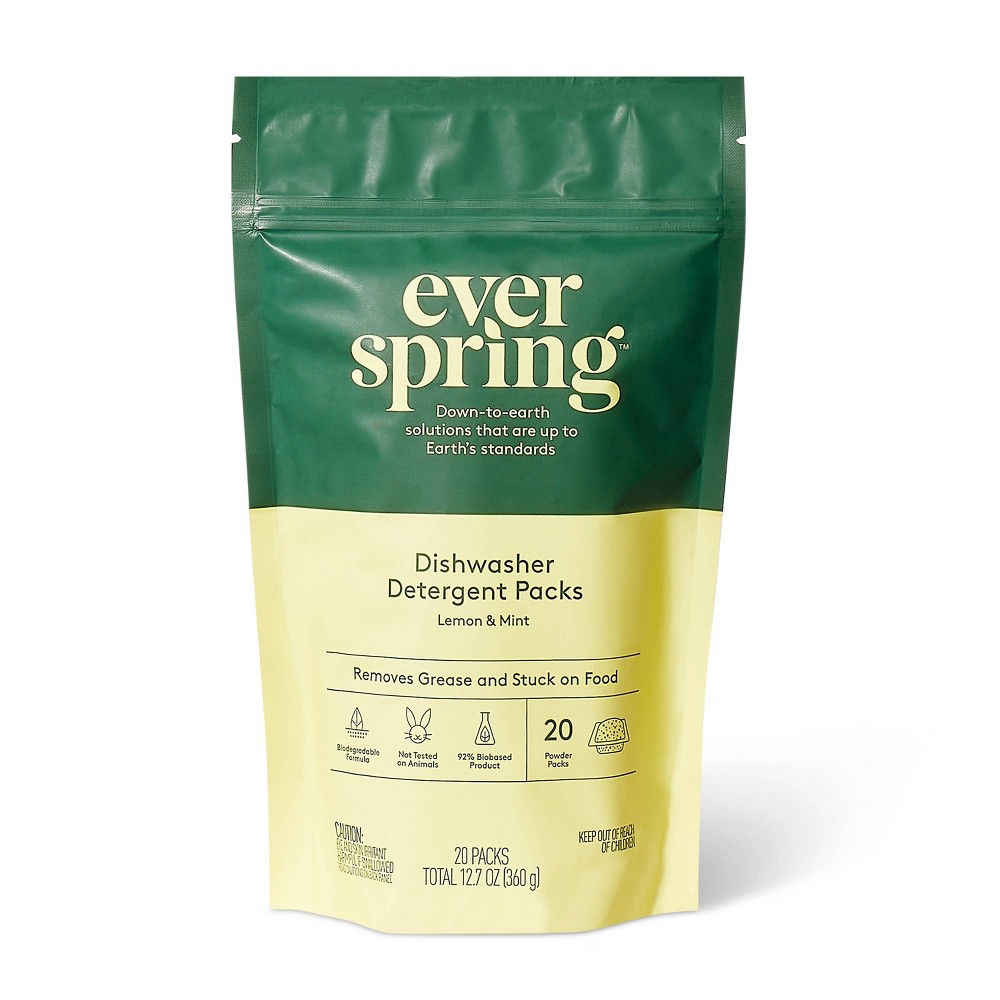

Lemon & Mint Auto Dish - 12.7oz/20ct - Everspring™: Phosphate-Free, Packet Form, Dishwasher Use
Analysis updated August 2026 · How Scout scores
At a glance
Summary
This product contains beneficial ingredients such as citric acid, protease, and amylase, which are biodegradable and environmentally friendly. However, the presence of synthetic fragrance, which can contribute to indoor air pollution and is not biodegradable, negatively impacts its safety and environmental score. The product is processed, which also limits its overall rating.
Key ingredients 10
ProteaseGood
Protease is an enzyme that breaks down proteins. It is used in cleaning products to help remove protein-based stains. Enzymes like protease are biodegradable and considered safe for the environment.
Risks
Inhalation of enzyme dust can cause respiratory irritation.
Benefits
Protease is effective at removing tough stains and is environmentally friendly.
AmylaseGood
Amylase is an enzyme that breaks down starches. It is used in cleaning products to help remove starchy stains. Like other enzymes, amylase is biodegradable and environmentally friendly.
Risks
Inhalation of enzyme dust can cause respiratory irritation.
Benefits
Amylase is effective at breaking down starch-based stains and is safe for the environment.
Sodium SulfateNeutral
Sodium sulfate is a common filler in cleaning products. It helps to bulk up the product without adding significant cost. It is generally considered safe and non-toxic.
Risks
There are minimal risks associated with sodium sulfate in cleaning products.
Benefits
It helps to improve the texture and flow of powdered cleaning products.
Citric acidNeutral
Common acidulant and preservative — safe at typical use levels, neither beneficial nor harmful.
Risks
Citric acid can cause mild skin irritation in concentrated forms.
Benefits
It is effective at removing hard water stains and is safe for the environment.
Sodium carbonateNeutral
Sodium carbonate, also known as washing soda, is used to soften water and enhance cleaning. It is a common ingredient in many cleaning products. It is generally considered safe and non-toxic.
Risks
High concentrations can cause skin and eye irritation.
Benefits
It helps to improve the cleaning efficiency of detergents.
Sodium SilicateNeutral
Sodium silicate is used as a corrosion inhibitor in cleaning products. It helps to protect metal parts of dishwashers from rust. It is generally considered safe for use in cleaning products.
Risks
Can cause skin and eye irritation if not handled properly.
Benefits
It helps to prolong the life of metal components in dishwashers.
Alcohol AlkoxylateNeutral
Alcohol alkoxylates are surfactants used to enhance cleaning power. They help to break down grease and oils in cleaning products. They are generally considered safe but can vary in biodegradability.
Risks
Potential for skin irritation with prolonged exposure.
Benefits
Effective at removing grease and improving cleaning performance.
Sodium PercarbonateNeutral
Sodium percarbonate is a bleaching agent used in cleaning products. It releases hydrogen peroxide when dissolved in water, providing a bleaching effect. It is considered environmentally friendly as it breaks down into water and oxygen.
Risks
Can cause irritation to skin and eyes in concentrated forms.
Benefits
Provides effective stain removal and is environmentally friendly.
Copolymer of Itaconic and Sulfonic Acids, Sodium SaltNeutral
This copolymer is used as a dispersing agent in cleaning products. It helps to prevent redeposition of soil onto surfaces. It is generally considered safe for use in cleaning products.
Risks
Minimal risks are associated with this ingredient in cleaning products.
Benefits
Improves cleaning efficiency by preventing soil redeposition.
FragranceVery Bad
Fragrance in cleaning products often refers to synthetic compounds. These can include phthalates and other chemicals that may cause irritation. Synthetic fragrances are not biodegradable and can contribute to indoor air pollution.
Risks
Potential risks include skin irritation and respiratory issues due to synthetic compounds.
Benefits
Fragrances can enhance the sensory experience of using a product.
Processing
Processed Foods
Get the full breakdown in the Scout appTake Scout shopping
Scan any product to see lab results, healthy alternatives, and your personalized analysis.
Download on theApp Store GET IT ONGoogle Play