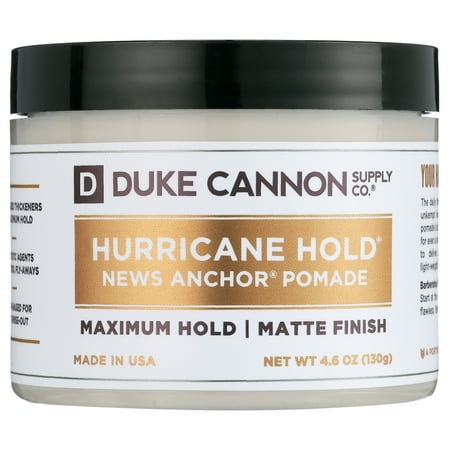
Duke Cannon Hurricane Hold® Hair Pomade for Men Maximum Hold No Shine 4.6 oz
At a glance
Summary
This hair pomade contains beneficial ingredients like beeswax, glycerin, and lanolin, which provide moisturizing and protective properties. However, the presence of fragrance, a common allergen and potential skin irritant, slightly lowers the score. The product has a moderate level of processing with some synthetic emulsifiers and preservatives, but it avoids harsher chemicals and endocrine disruptors, maintaining a relatively safe profile. Its plastic packaging can shed microplastics into the product and lowers its score.
Key ingredients 28
Cera Alba (Beeswax)Very Good
Beeswax is a natural wax produced by honey bees and is used in cosmetics for its emollient properties. It helps to lock in moisture and provides a protective barrier on the skin.
Risks
There are minimal risks, though some individuals may have allergies to bee products.
Benefits
Beeswax is beneficial for its moisturizing and protective properties, making it ideal for skin and hair care.
LanolinVery Good
Lanolin is a natural emollient derived from sheep's wool. It is highly effective at moisturizing and protecting the skin.
Risks
There is a risk of allergic reactions in individuals sensitive to wool.
Benefits
Lanolin is beneficial for its excellent moisturizing properties, making it ideal for dry skin.
GlycerinGood
Glycerin is a humectant that attracts moisture to the skin, helping to keep it hydrated. It is widely used in skincare for its moisturizing properties.
Risks
There are minimal risks associated with glycerin, though excessive use can lead to a sticky feeling.
Benefits
Glycerin is beneficial for its ability to hydrate and maintain skin moisture levels.
Water (Aqua)Neutral
Water is a common solvent used in cosmetic formulations. It helps dissolve other ingredients and provides a base for the product. It is generally considered safe and non-reactive.
Risks
There are no significant risks associated with water in cosmetics.
Benefits
Water helps in the even distribution of other ingredients and provides hydration.
Ceteareth-20Neutral
Ceteareth-20 is an emulsifier used to stabilize and thicken formulations. It helps blend oil and water-based ingredients.
Risks
There is a potential risk of contamination with 1,4-dioxane, a byproduct of ethoxylation.
Benefits
It improves the texture and consistency of cosmetic products.
PropanediolNeutral
Propanediol is a glycol used as a solvent and skin-conditioning agent. It is considered a safer alternative to propylene glycol.
Risks
There are minimal risks, though it may cause irritation in sensitive individuals.
Benefits
Propanediol helps improve the texture of formulations and enhances skin hydration.
PVPNeutral
PVP is a synthetic polymer used as a film-former in hair styling products. It helps provide hold and structure.
Risks
There are minimal risks, though it may cause build-up on hair with frequent use.
Benefits
PVP is beneficial for its ability to provide hold and styling support in hair products.
TribeheninNeutral
Tribehenin is an emollient and thickening agent used in cosmetics. It helps to soften and smooth the skin.
Risks
There are minimal risks associated with tribehenin.
Benefits
Tribehenin is beneficial for its emollient properties, enhancing skin smoothness.
Cetyl AlcoholNeutral
Cetyl Alcohol is a fatty alcohol used as an emollient and thickener in cosmetics. It helps to soften the skin and improve product texture.
Risks
There are minimal risks, though it may cause irritation in sensitive individuals.
Benefits
Cetyl Alcohol is beneficial for its moisturizing and texture-enhancing properties.
C32-36 Isoalkyl StearateNeutral
C32-36 Isoalkyl Stearate is an emollient used to improve the texture and feel of cosmetic products. It provides a smooth application.
Risks
There are minimal risks associated with this ingredient.
Benefits
It enhances the spreadability and feel of products on the skin.
Polyhydroxystearic AcidNeutral
Polyhydroxystearic Acid is used as a thickening agent in cosmetics. It helps stabilize emulsions and improve product consistency.
Risks
There are minimal risks associated with this ingredient.
Benefits
It contributes to the stability and texture of cosmetic formulations.
Stearyl AlcoholNeutral
Stearyl Alcohol is a fatty alcohol used as an emollient and thickener. It helps to soften the skin and improve product texture.
Risks
There are minimal risks, though it may cause irritation in sensitive individuals.
Benefits
Stearyl Alcohol is beneficial for its moisturizing and texture-enhancing properties.
PEG-8 BeeswaxNeutral
PEG-8 Beeswax is a polyethylene glycol derivative of beeswax used as an emulsifier and thickener. It helps blend oil and water-based ingredients.
Risks
There is a potential risk of contamination with 1,4-dioxane, a byproduct of ethoxylation.
Benefits
It improves the texture and consistency of cosmetic products.
Glyceryl StearateNeutral
Glyceryl Stearate is an emulsifier and emollient used in cosmetics. It helps to stabilize formulations and soften the skin.
Risks
There are minimal risks associated with this ingredient.
Benefits
It enhances the texture and moisturizing properties of products.
PEG-100 StearateNeutral
PEG-100 Stearate is an emulsifier used to stabilize and thicken formulations. It helps blend oil and water-based ingredients.
Risks
There is a potential risk of contamination with 1,4-dioxane, a byproduct of ethoxylation.
Benefits
It improves the texture and consistency of cosmetic products.
Maltodextrin/VP CopolymerNeutral
Maltodextrin/VP Copolymer is used as a film-former and binder in cosmetics. It helps provide hold and structure.
Risks
There are minimal risks associated with this ingredient.
Benefits
It enhances the hold and styling properties of hair products.
Stearyl BehenateNeutral
Stearyl Behenate is an emollient and thickening agent used in cosmetics. It helps to soften and smooth the skin.
Risks
There are minimal risks associated with this ingredient.
Benefits
It enhances the texture and feel of cosmetic products.
Cetearyl AlcoholNeutral
Cetearyl Alcohol is a fatty alcohol used as an emollient and thickener. It helps to soften the skin and improve product texture.
Risks
There are minimal risks, though it may cause irritation in sensitive individuals.
Benefits
Cetearyl Alcohol is beneficial for its moisturizing and texture-enhancing properties.
Caprylyl GlycolNeutral
Caprylyl Glycol is a skin-conditioning agent and preservative booster. It helps to improve skin hydration and extend product shelf life.
Risks
There are minimal risks associated with this ingredient.
Benefits
It enhances skin hydration and boosts the effectiveness of preservatives.
Euphorbia Cerifera (Candelilla) WaxNeutral
Candelilla Wax is a plant-derived wax used as a thickening agent in cosmetics. It provides a smooth application and glossy finish.
Risks
There are minimal risks associated with this ingredient.
Benefits
It enhances the texture and application of cosmetic products.
Polyglyceryl-3 StearateNeutral
Polyglyceryl-3 Stearate is an emulsifier used to stabilize formulations. It helps blend oil and water-based ingredients.
Risks
There are minimal risks associated with this ingredient.
Benefits
It improves the texture and consistency of cosmetic products.
CarbomerNeutral
Carbomer is a thickening agent used to stabilize and thicken formulations. It helps improve product texture and consistency.
Risks
There are minimal risks associated with this ingredient.
Benefits
It enhances the stability and texture of cosmetic products.
Polyquaternium-11Neutral
Polyquaternium-11 is a film-forming agent used in hair styling products. It helps provide hold and manageability.
Risks
There are minimal risks associated with this ingredient.
Benefits
It enhances the hold and styling properties of hair products.
EthylhexylglycerinNeutral
Ethylhexylglycerin is a skin-conditioning agent and preservative booster. It helps improve skin hydration and extend product shelf life.
Risks
There are minimal risks associated with this ingredient.
Benefits
It enhances skin hydration and boosts the effectiveness of preservatives.
PhenoxyethanolBad
Processed additive flagged under Scout's ingredient doctrine.
Risks
There is a risk of skin irritation and allergic reactions in sensitive individuals.
Benefits
It helps extend the shelf life of products by preventing microbial contamination.
Aminomethyl PropanolBad
Processed additive flagged under Scout's ingredient doctrine.
Risks
There are minimal risks, though it may cause irritation in sensitive individuals.
Benefits
It ensures the stability and effectiveness of cosmetic products.
Polysorbate 60Bad
Processed additive flagged under Scout's ingredient doctrine.
Risks
There is a potential risk of contamination with 1,4-dioxane, a byproduct of ethoxylation.
Benefits
It improves the texture and consistency of cosmetic products.
FragranceVery Bad
Fragrance is used to impart scent to cosmetic products. It is a common allergen and can cause skin irritation.
Risks
Fragrance can cause allergic reactions and skin irritation, especially in sensitive individuals.
Benefits
It provides a pleasant scent to products, enhancing user experience.
Get the full breakdown in the Scout appTake Scout shopping
Scan any product to see lab results, healthy alternatives, and your personalized analysis.
Are you Duke Cannon? Fix an error Get the badge Get tested
Amazon pricing & content
Amazon price as of . Product prices and availability are accurate as of the date/time indicated and are subject to change. Any price and availability information displayed on Amazon.com at the time of purchase will apply to the purchase of this product.
CERTAIN CONTENT THAT APPEARS ON THIS SITE COMES FROM AMAZON. THIS CONTENT IS PROVIDED “AS IS” AND IS SUBJECT TO CHANGE OR REMOVAL AT ANY TIME.