
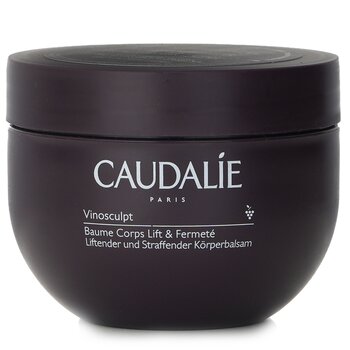

CaudalieVinosculpt Lift & Firm Body Cream 250ml/8.4oz
Analysis updated September 2026 · How Scout scores
At a glance
Summary
This body cream contains beneficial ingredients like grape seed oil, shea butter, and sunflower seed oil, which provide moisturizing and antioxidant benefits. However, it also includes several fragrance components such as limonene, linalool, and geraniol, which can cause skin irritation and sensitization. The presence of 'parfum' as a fragrance adds to the potential for irritation, impacting the overall safety profile of the product.
Key ingredients 33
vitis vinifera (grape) seed oilVery Good
Grape seed oil is rich in antioxidants and essential fatty acids, which help to nourish and protect the skin. It is known for its anti-inflammatory and moisturizing properties.
Risks
There are minimal risks, though it may cause allergic reactions in some individuals.
Benefits
It provides antioxidant protection and helps to moisturize and soothe the skin.
butyrospermum parkii (shea) butter extractVery Good
Shea butter is a natural fat extracted from the nuts of the shea tree. It is highly moisturizing and contains vitamins A and E, which are beneficial for skin health.
Risks
There are minimal risks, though it may cause allergic reactions in individuals with nut allergies.
Benefits
It deeply moisturizes the skin and provides anti-inflammatory benefits.
helianthus annuus (sunflower) seed oilVery Good
Sunflower seed oil is rich in essential fatty acids and vitamins, which help to nourish and moisturize the skin. It is known for its emollient properties.
Risks
There are minimal risks, though it may cause allergic reactions in some individuals.
Benefits
It provides moisturizing and nourishing benefits to the skin.
coco-caprylate/caprateGood
Coco-caprylate/caprate is an emollient derived from coconut oil and caprylic acid. It provides a lightweight, non-greasy feel to the skin.
Risks
There are minimal risks associated with this ingredient, though it may cause irritation in very sensitive skin.
Benefits
It helps to soften and smooth the skin, enhancing the texture of the product.
glycerinGood
Glycerin is a humectant that attracts moisture to the skin, helping to keep it hydrated. It is widely used in skincare for its moisturizing properties.
Risks
Glycerin is generally safe, but in very high concentrations, it may cause irritation.
Benefits
It helps to maintain skin hydration and improve skin barrier function.
palmitoyl grape seed extractGood
Palmitoyl grape seed extract is a derivative of grape seed oil, known for its antioxidant properties. It helps to protect the skin from oxidative stress.
Risks
There are minimal risks, though it may cause allergic reactions in some individuals.
Benefits
It provides antioxidant protection and helps to nourish the skin.
sodium pcaGood
Sodium PCA is a humectant that helps to attract moisture to the skin. It is a natural component of the skin's natural moisturizing factor.
Risks
There are minimal risks associated with this ingredient.
Benefits
It helps to maintain skin hydration and improve skin barrier function.
tocopherolGood
Tocopherol, also known as Vitamin E, is an antioxidant that helps to protect the skin from oxidative stress. It is widely used in skincare for its protective properties.
Risks
There are minimal risks associated with this ingredient.
Benefits
It provides antioxidant protection and helps to nourish the skin.
aqua/water/eauNeutral
Water is a common solvent used in cosmetics to dissolve other ingredients. It does not provide any direct benefits or risks in skincare formulations.
Risks
There are no direct risks associated with water in cosmetic formulations.
Benefits
Water helps to dissolve and distribute other ingredients evenly in the formulation.
butylene glycolNeutral
Butylene glycol is a common solvent and conditioning agent in cosmetics. It helps to improve the texture and spreadability of products.
Risks
It may cause irritation in sensitive skin, but is generally considered safe.
Benefits
It enhances the texture of the product and helps to retain moisture in the skin.
hexyl decyl stearateNeutral
Hexyl decyl stearate is an emollient that provides a smooth feel to the skin. It is used to improve the texture of cosmetic formulations.
Risks
There are minimal risks associated with this ingredient.
Benefits
It helps to soften the skin and improve the product's texture.
isocetyl stearateNeutral
Isocetyl stearate is an emollient that provides a silky feel to the skin. It is used to enhance the spreadability of products.
Risks
There are minimal risks associated with this ingredient.
Benefits
It helps to improve the texture and application of the product.
octyldodecyl myristateNeutral
Octyldodecyl myristate is an emollient that provides a smooth, non-greasy feel to the skin. It is used to improve the texture of cosmetic formulations.
Risks
There are minimal risks associated with this ingredient.
Benefits
It helps to soften the skin and improve the product's texture.
arachidyl alcoholNeutral
Arachidyl alcohol is a fatty alcohol used as an emollient and thickening agent in cosmetics. It helps to stabilize emulsions.
Risks
There are minimal risks associated with this ingredient.
Benefits
It helps to improve the texture and stability of the product.
glyceryl stearateNeutral
Glyceryl stearate is an emulsifier that helps to blend water and oil components in formulations. It also acts as a skin conditioning agent.
Risks
There are minimal risks associated with this ingredient.
Benefits
It helps to stabilize emulsions and condition the skin.
behenyl alcoholNeutral
Behenyl alcohol is a fatty alcohol used as an emollient and thickening agent in cosmetics. It helps to stabilize emulsions.
Risks
There are minimal risks associated with this ingredient.
Benefits
It helps to improve the texture and stability of the product.
palmitic acidNeutral
Palmitic acid is a fatty acid used as an emollient and surfactant in cosmetics. It helps to improve the texture of formulations.
Risks
There are minimal risks associated with this ingredient.
Benefits
It helps to soften the skin and improve the product's texture.
stearic acidNeutral
Stearic acid is a fatty acid used as an emulsifier and thickening agent in cosmetics. It helps to stabilize formulations.
Risks
There are minimal risks associated with this ingredient.
Benefits
It helps to improve the texture and stability of the product.
arachidyl glucosideNeutral
Arachidyl glucoside is an emulsifier used to blend water and oil components in formulations. It helps to stabilize emulsions.
Risks
There are minimal risks associated with this ingredient.
Benefits
It helps to stabilize emulsions and improve the product's texture.
pentaerythrityl distearateNeutral
Pentaerythrityl distearate is an emulsifier and thickening agent used in cosmetics. It helps to stabilize formulations and improve texture.
Risks
There are minimal risks associated with this ingredient.
Benefits
It helps to improve the texture and stability of the product.
polyacrylate crosspolymer-6Neutral
Polyacrylate crosspolymer-6 is a thickening agent used to improve the texture of cosmetic formulations. It helps to stabilize emulsions.
Risks
There are minimal risks associated with this ingredient.
Benefits
It helps to improve the texture and stability of the product.
caprylyl glycolNeutral
Caprylyl glycol is a skin conditioning agent and preservative booster. It helps to improve the texture and shelf life of products.
Risks
There are minimal risks associated with this ingredient.
Benefits
It helps to condition the skin and enhance product preservation.
ethylhexylglycerinNeutral
Ethylhexylglycerin is a skin conditioning agent and preservative booster. It helps to improve the texture and shelf life of products.
Risks
There are minimal risks associated with this ingredient.
Benefits
It helps to condition the skin and enhance product preservation.
xanthan gumNeutral
Xanthan gum is a thickening agent used to improve the texture of cosmetic formulations. It helps to stabilize emulsions.
Risks
There are minimal risks associated with this ingredient.
Benefits
It helps to improve the texture and stability of the product.
iris florentina root extractNeutral
Iris florentina root extract is used for its fragrance and potential skin conditioning properties. It is less commonly used in cosmetics.
Risks
There are minimal risks associated with this ingredient.
Benefits
It may provide a pleasant scent and conditioning benefits to the skin.
citric acidNeutral
Citric acid is used to adjust the pH of cosmetic formulations. It also acts as a mild exfoliant.
Risks
It may cause irritation in sensitive skin, but is generally considered safe.
Benefits
It helps to maintain the stability and effectiveness of the product.
sodium phytateNeutral
Sodium phytate is a chelating agent used to stabilize cosmetic formulations. It helps to prevent the degradation of other ingredients.
Risks
There are minimal risks associated with this ingredient.
Benefits
It helps to stabilize the product and enhance its shelf life.
potassium sorbateBad
Synthetic preservative — flagged in daily-use products.
Risks
It may cause irritation in sensitive skin, but is generally considered safe.
Benefits
It helps to preserve the product and prevent microbial growth.
limoneneBad
Limonene is a fragrance component that can cause skin irritation and sensitization. It is often used for its citrus scent.
Risks
It can cause allergic reactions and skin irritation, especially in sensitive individuals.
Benefits
It provides a pleasant citrus scent to the product.
linaloolBad
Linalool is a fragrance component that can cause skin irritation and sensitization. It is often used for its floral scent.
Risks
It can cause allergic reactions and skin irritation, especially in sensitive individuals.
Benefits
It provides a pleasant floral scent to the product.
geraniolBad
Geraniol is a fragrance component that can cause skin irritation and sensitization. It is often used for its rose-like scent.
Risks
It can cause allergic reactions and skin irritation, especially in sensitive individuals.
Benefits
It provides a pleasant rose-like scent to the product.
citralBad
Citral is a fragrance component that can cause skin irritation and sensitization. It is often used for its lemon scent.
Risks
It can cause allergic reactions and skin irritation, especially in sensitive individuals.
Benefits
It provides a pleasant lemon scent to the product.
parfum (fragrance)Very Bad
Fragrance is a common cause of skin irritation and allergic reactions in cosmetics. It is used to provide a pleasant scent to products.
Risks
It can cause allergic reactions and skin irritation, especially in sensitive individuals.
Benefits
It provides a pleasant scent to the product.
Get the full breakdown in the Scout appTake Scout shopping
Scan any product to see lab results, healthy alternatives, and your personalized analysis.
Download on theApp Store GET IT ONGoogle PlayAmazon pricing & content
Amazon price as of . Product prices and availability are accurate as of the date/time indicated and are subject to change. Any price and availability information displayed on Amazon.com at the time of purchase will apply to the purchase of this product.
CERTAIN CONTENT THAT APPEARS ON THIS SITE COMES FROM AMAZON. THIS CONTENT IS PROVIDED “AS IS” AND IS SUBJECT TO CHANGE OR REMOVAL AT ANY TIME.