
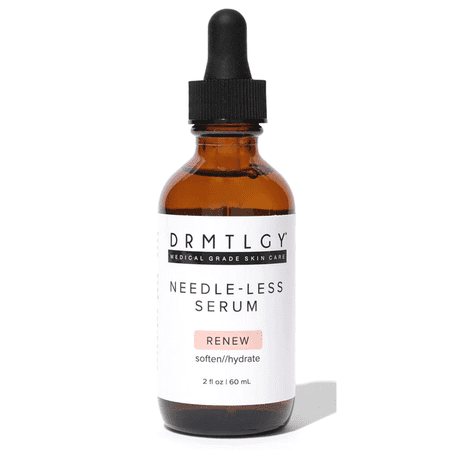

DRMTLGY Needle-Less Serum 2 oz Limited Edition Clear Cruelty Free
Analysis updated August 2026 · How Scout scores
At a glance
Summary
This serum contains a variety of beneficial ingredients such as glycerin, sodium hyaluronate, and peptides, which are known for their hydrating and anti-aging properties. The presence of phenoxyethanol, a preservative that can cause irritation in some individuals, slightly impacts the overall safety profile. Despite this, the product is largely composed of skin-friendly ingredients, making it a mostly safe choice with minor concerns.
Key ingredients 29
Palmitoyl Tripeptide-1Very Good
Palmitoyl Tripeptide-1 is a peptide that helps stimulate collagen production, improving skin texture and reducing wrinkles. It is a popular anti-aging ingredient. It is well-tolerated and effective in skincare formulations.
Risks
Minimal risk of irritation.
Benefits
Stimulates collagen production and reduces wrinkles.
Palmitoyl Tetrapeptide-7Very Good
Palmitoyl Tetrapeptide-7 is known for its anti-inflammatory properties and ability to reduce skin damage. It helps to improve skin elasticity and firmness. It is beneficial in anti-aging skincare products.
Risks
Low risk of irritation.
Benefits
Reduces inflammation and improves skin elasticity.
Palmitoyl Tripeptide-5Very Good
Palmitoyl Tripeptide-5 is a peptide that helps to boost collagen production and improve skin firmness. It is effective in reducing the appearance of wrinkles. It is a beneficial anti-aging ingredient.
Risks
Minimal risk of irritation.
Benefits
Boosts collagen production and reduces wrinkles.
PanthenolVery Good
Panthenol, also known as pro-vitamin B5, is a moisturizing agent that helps to soothe and hydrate the skin. It is beneficial for improving skin barrier function. It is well-tolerated and effective in skincare.
Risks
Very low risk of irritation.
Benefits
Soothes and hydrates the skin.
GlycerinGood
Glycerin is a humectant that attracts moisture to the skin, helping to keep it hydrated. It is widely used in skincare for its moisturizing properties. It is generally well-tolerated and beneficial for most skin types.
Risks
Rarely, it can cause irritation in very sensitive skin.
Benefits
Helps maintain skin hydration and improves skin barrier function.
Sodium Chondroitin SulfateGood
Sodium Chondroitin Sulfate is known for its skin conditioning properties. It helps to maintain skin elasticity and hydration. It is beneficial in anti-aging formulations.
Risks
Minimal risk of irritation or allergic reaction.
Benefits
Improves skin elasticity and hydration.
Sodium HyaluronateGood
Sodium Hyaluronate is a form of hyaluronic acid that deeply hydrates the skin. It can hold up to 1000 times its weight in water, making it an excellent moisturizer. It is beneficial for all skin types, especially dry and aging skin.
Risks
Very low risk of irritation.
Benefits
Provides intense hydration and plumps the skin.
Pisum Sativum (Pea) ExtractGood
Pea extract is rich in antioxidants and proteins that help protect the skin from environmental damage. It supports skin elasticity and firmness. It is a beneficial botanical ingredient in skincare.
Risks
Low risk of allergic reaction.
Benefits
Protects against environmental damage and supports skin firmness.
Bambusa Vulgaris Leaf/Stem ExtractGood
Bamboo extract is known for its antioxidant properties and ability to support skin health. It helps to soothe and protect the skin. It is a beneficial addition to skincare products.
Risks
Low risk of irritation.
Benefits
Provides antioxidant protection and soothes the skin.
Ceramide EOPGood
Ceramide EOP helps to restore the skin barrier and retain moisture. It is essential for maintaining healthy skin. It is beneficial for dry and sensitive skin types.
Risks
Very low risk of irritation.
Benefits
Restores skin barrier and retains moisture.
Glucosamine HClGood
Glucosamine HCl is known for its ability to improve skin hydration and elasticity. It supports the skin's natural repair processes. It is a beneficial ingredient in anti-aging formulations.
Risks
Low risk of irritation.
Benefits
Improves skin hydration and supports repair processes.
GlycosaminoglycansGood
Glycosaminoglycans help to maintain skin structure and hydration. They are important for skin elasticity and firmness. They are beneficial in maintaining youthful skin.
Risks
Minimal risk of irritation.
Benefits
Maintains skin structure and hydration.
Ceramide NPGood
Ceramide NP is crucial for maintaining the skin's barrier function and preventing moisture loss. It is beneficial for dry and sensitive skin. It helps to keep the skin hydrated and healthy.
Risks
Very low risk of irritation.
Benefits
Maintains skin barrier and prevents moisture loss.
Ceramide APGood
Ceramide AP helps to strengthen the skin's natural barrier and retain moisture. It is beneficial for maintaining healthy skin. It is especially useful for dry and sensitive skin types.
Risks
Very low risk of irritation.
Benefits
Strengthens skin barrier and retains moisture.
PhytosphingosineGood
Phytosphingosine is a lipid that helps to maintain the skin's barrier and has anti-inflammatory properties. It is beneficial for reducing redness and irritation. It supports overall skin health.
Risks
Low risk of irritation.
Benefits
Maintains skin barrier and reduces inflammation.
CholesterolGood
Cholesterol is essential for maintaining the skin's barrier function and hydration. It works synergistically with ceramides to improve skin health. It is beneficial for dry and aging skin.
Risks
Very low risk of irritation.
Benefits
Maintains skin barrier and improves hydration.
NiacinamideGood
Niacinamide is a form of Vitamin B3 that improves skin texture, reduces redness, and minimizes pores. It is a versatile ingredient beneficial for all skin types. It is well-tolerated and effective in skincare.
Risks
Very low risk of irritation.
Benefits
Improves skin texture and reduces redness.
Copper Lysinate/ProlinateGood
Copper Lysinate/Prolinate is known for its skin conditioning and anti-aging properties. It helps to improve skin elasticity and firmness. It is beneficial in anti-aging skincare products.
Risks
Low risk of irritation.
Benefits
Improves skin elasticity and firmness.
Tocopheryl AcetateGood
Tocopheryl Acetate is a form of Vitamin E that provides antioxidant protection to the skin. It helps to protect the skin from environmental damage. It is beneficial for maintaining healthy skin.
Risks
Low risk of irritation.
Benefits
Provides antioxidant protection.
WaterNeutral
Water is a common solvent used in cosmetic formulations. It helps dissolve other ingredients and provides a base for the serum. It does not have any direct benefits or risks.
Benefits
Provides a medium for other ingredients to be delivered to the skin.
Sodium Lauroyl LactylateNeutral
Sodium Lauroyl Lactylate is an emulsifier that helps blend ingredients in formulations. It is generally considered safe and non-irritating. It does not have significant direct benefits or risks.
Risks
Low risk of irritation.
Benefits
Helps blend ingredients in formulations.
Methylglucoside PhosphateNeutral
Methylglucoside Phosphate is used as a skin conditioning agent. It helps to improve the texture of formulations. It does not have significant direct benefits or risks.
Risks
Low risk of irritation.
Benefits
Improves texture of formulations.
Polysorbate 20Neutral
Polysorbate 20 is an emulsifier that helps to stabilize formulations. It is generally considered safe and non-irritating. It does not have significant direct benefits or risks.
Risks
Low risk of irritation.
Benefits
Stabilizes formulations.
EthylhexylglycerinNeutral
Ethylhexylglycerin is used as a preservative and skin conditioning agent. It is generally considered safe and non-irritating. It does not have significant direct benefits or risks.
Risks
Low risk of irritation.
Benefits
Acts as a preservative and skin conditioner.
Butylene GlycolNeutral
Butylene Glycol is a solvent and humectant that helps to improve the texture of formulations. It is generally considered safe and non-irritating. It does not have significant direct benefits or risks.
Risks
Low risk of irritation.
Benefits
Improves texture and acts as a humectant.
CarbomerNeutral
Carbomer is a thickening agent used to stabilize and thicken formulations. It is generally considered safe and non-irritating. It does not have significant direct benefits or risks.
Risks
Low risk of irritation.
Benefits
Stabilizes and thickens formulations.
Xanthan GumNeutral
Xanthan Gum is a thickening agent used to stabilize formulations. It is generally considered safe and non-irritating. It does not have significant direct benefits or risks.
Risks
Low risk of irritation.
Benefits
Stabilizes formulations.
PhenoxyethanolBad
Phenoxyethanol is a preservative used to prevent microbial growth in cosmetics. It can cause irritation in some individuals, especially in high concentrations. It is considered a moderate risk ingredient.
Risks
Potential for skin irritation and allergic reactions.
Benefits
Prevents microbial growth in formulations.
Disodium EDTABad
Processed additive flagged under Scout's ingredient doctrine.
Risks
Low risk of irritation.
Benefits
Stabilizes formulations by binding metal ions.
Processing
Processed Foods
Get the full breakdown in the Scout appTake Scout shopping
Scan any product to see lab results, healthy alternatives, and your personalized analysis.
Download on theApp Store GET IT ONGoogle PlayAmazon pricing & content
Amazon price as of . Product prices and availability are accurate as of the date/time indicated and are subject to change. Any price and availability information displayed on Amazon.com at the time of purchase will apply to the purchase of this product.
CERTAIN CONTENT THAT APPEARS ON THIS SITE COMES FROM AMAZON. THIS CONTENT IS PROVIDED “AS IS” AND IS SUBJECT TO CHANGE OR REMOVAL AT ANY TIME.