
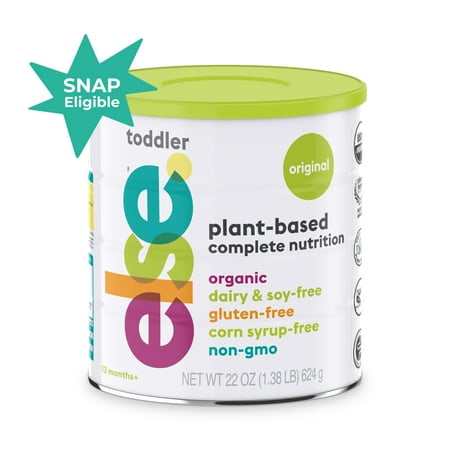
Else Nutrition Toddler Plant-Based Organic Formula Powder Low Sugar Clean Label Non-GMO 22oz Can
Summary
This toddler formula features high-quality organic ingredients like almond butter and buckwheat, which provide essential nutrients and healthy fats. The product is fortified with vitamins and minerals, enhancing its nutritional profile. However, the presence of sunflower lecithin as an emulsifier introduces a minor level of processing, which slightly affects the overall score.
At a glance
Key ingredients 30
Organic Almond ButterGood
Organic almond butter is a nutritious source of healthy fats and protein, contributing to balanced nutrition. Being organic, it is free from synthetic pesticides and fertilizers, enhancing its health profile. It also provides essential vitamins and minerals like vitamin E and magnesium.
Risks
Potential allergen for individuals with nut allergies.
Benefits
Rich in monounsaturated fats that support heart health and provide anti-inflammatory properties.
Organic BuckwheatGood
Organic buckwheat is a gluten-free grain alternative rich in fiber and essential nutrients. Its organic nature ensures it is free from harmful pesticides and genetically modified organisms. It is also a good source of plant-based protein and antioxidants.
Benefits
Provides essential amino acids and supports digestive health due to its high fiber content.
Organic Tapioca MaltodextrinNeutral
Organic tapioca maltodextrin is used as a carbohydrate source and thickening agent. Being organic, it is free from synthetic additives and pesticides. It is a high-glycemic ingredient, which may affect blood sugar levels.
Risks
May cause rapid spikes in blood sugar levels due to its high glycemic index.
Calcium CarbonateGood
Calcium carbonate is a common dietary supplement used to provide calcium, essential for bone health. It is a cost-effective and widely used form of calcium supplementation. It supports bone density and overall skeletal health.
Risks
Excessive intake may lead to hypercalcemia or kidney stones.
Benefits
Supports bone health and helps prevent osteoporosis.
Sodium Citrate DihydrateNeutral
Sodium citrate dihydrate is used as an acidity regulator and stabilizer in food products. It is generally recognized as safe and has no significant health concerns. It helps maintain the stability and taste of the product.
Potassium ChlorideNeutral
Potassium chloride is used as a potassium supplement and salt substitute. It helps maintain electrolyte balance and supports normal muscle function. It is generally safe when consumed in appropriate amounts.
Risks
Excessive intake may lead to hyperkalemia, affecting heart function.
Benefits
Supports electrolyte balance and muscle function.
Tricalcium PhosphateGood
Tricalcium phosphate is a calcium supplement that also provides phosphorus, both essential for bone health. It is used to fortify foods with calcium and phosphorus. It supports bone density and overall skeletal health.
Risks
Excessive intake may lead to imbalances in calcium and phosphorus levels.
Benefits
Enhances bone strength and supports dental health.
Vitamin A AcetateGood
Vitamin A acetate is a form of vitamin A used to fortify foods and supplements. It is essential for vision, immune function, and skin health. It helps prevent vitamin A deficiency and supports overall health.
Risks
Excessive intake may lead to hypervitaminosis A, causing toxicity.
Benefits
Supports vision, immune function, and skin health.
Niacin (B3)Good
Niacin, or vitamin B3, is essential for energy metabolism and maintaining healthy skin and nerves. It is commonly added to foods to prevent deficiencies. It supports cardiovascular health by improving cholesterol levels.
Risks
High doses may cause flushing or liver damage.
Benefits
Supports energy production and cardiovascular health.
Pantothenic Acid (B5)Good
Pantothenic acid, or vitamin B5, is vital for synthesizing coenzyme A, crucial for fatty acid metabolism. It is often included in supplements to support energy production. It aids in the synthesis of hormones and cholesterol.
Benefits
Supports energy metabolism and hormone synthesis.
Pyridoxine HydrochlorideGood
Pyridoxine hydrochloride is a form of vitamin B6, essential for amino acid metabolism and neurotransmitter synthesis. It is included in supplements to support brain health and immune function. It helps in the production of hemoglobin and neurotransmitters.
Risks
Excessive intake may cause nerve damage.
Benefits
Supports brain health and immune function.
Thiamine Mononitrate (B1)Good
Thiamine mononitrate is a form of vitamin B1, crucial for carbohydrate metabolism and nerve function. It is added to foods to prevent thiamine deficiency. It supports energy production and nerve health.
Benefits
Supports energy metabolism and nerve function.
Riboflavin (B2)Good
Riboflavin, or vitamin B2, is essential for energy production and cellular function. It is often added to foods to prevent deficiencies. It supports skin health and helps convert food into energy.
Benefits
Supports energy production and skin health.
Manganese (B6)Neutral
Manganese is a trace mineral important for bone formation and enzyme function. It is included in supplements to support metabolic processes. It plays a role in bone health and antioxidant defense.
Risks
Excessive intake may lead to neurological issues.
Benefits
Supports bone health and enzyme function.
Biotin (B8)Good
Biotin, or vitamin B8, is essential for fatty acid synthesis and energy metabolism. It is often included in supplements to support hair, skin, and nail health. It aids in the metabolism of carbohydrates, fats, and proteins.
Benefits
Supports hair, skin, and nail health.
Folic Acid (B9)Good
Folic acid, or vitamin B9, is crucial for DNA synthesis and cell division. It is added to foods to prevent neural tube defects during pregnancy. It supports red blood cell formation and overall health.
Risks
Excessive intake may mask vitamin B12 deficiency.
Benefits
Supports DNA synthesis and prevents birth defects.
CyanocobalaminGood
Cyanocobalamin is a synthetic form of vitamin B12, essential for nerve function and red blood cell production. It is commonly used in supplements to prevent B12 deficiency. It supports energy production and neurological health.
Benefits
Supports nerve function and red blood cell production.
Sodium Ascorbate (C)Good
Sodium ascorbate is a form of vitamin C used to boost immune function and antioxidant defense. It is less acidic than ascorbic acid, making it gentler on the stomach. It supports collagen synthesis and overall health.
Risks
High doses may cause gastrointestinal discomfort.
Benefits
Boosts immune function and supports collagen synthesis.
Cholecalciferol (D3)Good
Cholecalciferol, or vitamin D3, is essential for calcium absorption and bone health. It is often included in supplements to prevent vitamin D deficiency. It supports immune function and overall health.
Risks
Excessive intake may lead to hypercalcemia.
Benefits
Supports bone health and immune function.
Vitamin D AcetateGood
Vitamin D acetate is a form of vitamin D used to support bone health and calcium absorption. It is included in supplements to prevent deficiencies. It supports immune function and overall health.
Risks
Excessive intake may lead to hypercalcemia.
Benefits
Supports bone health and immune function.
Phylloquinone (K1)Good
Phylloquinone, or vitamin K1, is essential for blood clotting and bone health. It is included in supplements to support cardiovascular and skeletal health. It helps prevent excessive bleeding and supports bone density.
Benefits
Supports blood clotting and bone health.
Ferric PyrophosphateGood
Ferric pyrophosphate is an iron supplement used to prevent and treat iron deficiency anemia. It is a stable and bioavailable form of iron. It supports red blood cell production and oxygen transport.
Risks
Excessive intake may cause gastrointestinal discomfort.
Benefits
Prevents iron deficiency anemia and supports oxygen transport.
Zinc SulfateGood
Zinc sulfate is a form of zinc used to support immune function and wound healing. It is included in supplements to prevent zinc deficiency. It supports enzyme function and overall health.
Risks
High doses may cause nausea and vomiting.
Benefits
Supports immune function and wound healing.
Choline BitartrateGood
Choline bitartrate is a form of choline used to support brain health and liver function. It is included in supplements to enhance cognitive function. It supports neurotransmitter synthesis and liver health.
Benefits
Supports brain health and cognitive function.
InositolGood
Inositol is a carbohydrate compound that supports cell membrane health and neurotransmitter function. It is included in supplements to support mental health. It aids in the regulation of insulin and mood.
Benefits
Supports mental health and cell membrane function.
Sodium SeleniteNeutral
Sodium selenite is a form of selenium used to support antioxidant defense and thyroid function. It is included in supplements to prevent selenium deficiency. It supports immune function and overall health.
Risks
Excessive intake may lead to selenium toxicity.
Benefits
Supports antioxidant defense and thyroid function.
Potassium IodideGood
Potassium iodide is a form of iodine used to support thyroid function and prevent iodine deficiency. It is included in supplements to support metabolic health. It supports hormone production and overall health.
Risks
Excessive intake may lead to thyroid dysfunction.
Benefits
Supports thyroid function and hormone production.
Organic Sunflower LecithinBad
Organic sunflower lecithin is used as an emulsifier to improve texture and mixability. Although organic, lecithin is a processed ingredient that may contain residual solvents. It is less harmful than seed oils but still considered a processed additive.
Risks
May contain residual solvents from processing.
CopperNeutral
Copper is a trace mineral essential for iron metabolism and enzyme function. It is included in supplements to support overall health. It plays a role in the formation of red blood cells and connective tissue.
Risks
Excessive intake may lead to copper toxicity.
Benefits
Supports iron metabolism and enzyme function.
Cane SugarNeutral
Cane sugar is a natural sweetener used to enhance flavor. It is a source of simple carbohydrates and provides quick energy. It should be consumed in moderation to avoid negative health impacts.
Risks
Excessive consumption may contribute to weight gain and dental issues.
Benefits
Provides quick energy but should be consumed in moderation.
Processing
Ultra-Processed Foods
Get the full breakdown in the Scout app
Scan any product to see lab results, healthy alternatives, and your personalized analysis.
Download on theApp Store