
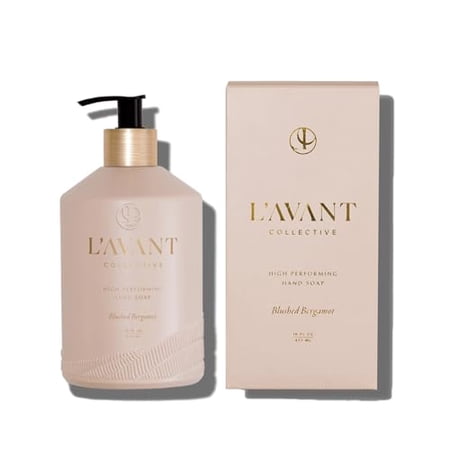

L AVANT Collective High Performing Hand Soap | Luxurious Ingredients for Soft & Smooth Hands | Notes of Bergamot Orange Blossom Amber Cedar | Blushed Bergamot Scent Reusable Glass Bottle 16 Fl
Analysis updated July 2026 · How Scout scores
At a glance
Summary
This hand soap contains several natural and beneficial ingredients such as aloe vera, chamomile, and calendula extracts, which are known for their soothing properties. However, the presence of synthetic fragrance and sodium coco-sulfate, a milder but still processed surfactant, slightly lowers its rating. The product is moderately processed, which impacts its overall score, but it remains a relatively safe choice for skincare.
Key ingredients 25
aloe barbadensis leaf juiceVery Good
Aloe vera is known for its soothing and moisturizing properties. It is often used to calm irritated skin and provide hydration. It is beneficial for maintaining skin health.
Risks
Rarely, aloe vera can cause allergic reactions in sensitive individuals.
Benefits
Aloe vera soothes and hydrates the skin, reducing irritation.
chamomilla recutita flower extractVery Good
Chamomile extract is known for its anti-inflammatory and soothing properties. It helps to calm irritated skin and reduce redness. It is beneficial for sensitive and inflamed skin.
Risks
Very low risk of irritation, generally well-tolerated.
Benefits
Soothes and calms irritated skin, reducing inflammation.
calendula officinalis flower extractVery Good
Calendula extract is known for its healing and anti-inflammatory properties. It helps to soothe and repair damaged skin. It is beneficial for sensitive and irritated skin.
Risks
Very low risk of irritation, generally well-tolerated.
Benefits
Heals and soothes damaged skin, reducing inflammation.
tocopherolVery Good
Tocopherol, or Vitamin E, is a powerful antioxidant that protects the skin from free radical damage. It helps to moisturize and improve skin texture. It is beneficial for maintaining healthy skin.
Risks
Very low risk of irritation, generally well-tolerated.
Benefits
Protects skin from damage and improves moisture retention.
decyl glucosideGood
Decyl glucoside is a mild, non-ionic surfactant derived from glucose. It is gentle on the skin and suitable for sensitive skin types. It helps to cleanse without stripping natural oils.
Risks
Generally considered safe with minimal risk of irritation.
Benefits
Gentle cleansing agent that maintains skin's natural moisture balance.
glycerinGood
Glycerin is a humectant that attracts moisture to the skin. It helps to keep the skin hydrated and soft. It is widely used in skincare for its moisturizing properties.
Risks
Very low risk of irritation or allergic reaction.
Benefits
Hydrates and softens the skin by attracting moisture.
lauryl glucosideGood
Lauryl glucoside is a mild surfactant derived from natural sources. It is used for its gentle cleansing properties. It is suitable for sensitive skin and helps maintain skin's natural balance.
Risks
Low risk of irritation, generally well-tolerated.
Benefits
Provides gentle cleansing without disrupting skin's natural barrier.
ocimum basilicum oilGood
Basil oil is known for its antibacterial and anti-inflammatory properties. It can help soothe the skin and reduce inflammation. It is beneficial for maintaining skin health.
Risks
May cause irritation in sensitive skin if used in high concentrations.
Benefits
Offers antibacterial and soothing properties for the skin.
lavandula angustifolia oilGood
Lavender oil is known for its calming and soothing effects on the skin. It has anti-inflammatory and antiseptic properties. It is often used to reduce redness and irritation.
Risks
Potential for skin irritation or allergic reaction in sensitive individuals.
Benefits
Calms and soothes the skin, reducing redness and irritation.
pelargonium graveolens oilGood
Geranium oil is used for its astringent and anti-inflammatory properties. It helps to balance skin oils and improve skin elasticity. It is beneficial for maintaining healthy skin.
Risks
May cause irritation or allergic reactions in sensitive skin.
Benefits
Balances skin oils and improves skin elasticity.
salvia sclarea oilGood
Clary sage oil is known for its calming and anti-inflammatory properties. It helps to soothe irritated skin and reduce redness. It is beneficial for sensitive skin types.
Risks
Potential for skin irritation in sensitive individuals.
Benefits
Soothes and calms irritated skin, reducing redness.
coco-glucosideGood
Coco-glucoside is a mild, non-ionic surfactant derived from coconut oil and glucose. It is gentle on the skin and suitable for sensitive skin types. It helps to cleanse without stripping natural oils.
Risks
Generally considered safe with minimal risk of irritation.
Benefits
Gentle cleansing agent that maintains skin's natural moisture balance.
glyceryl oleateGood
Glyceryl oleate is an emollient that helps to soften and smooth the skin. It is derived from natural oils and is well-tolerated by most skin types. It enhances the moisturizing properties of the product.
Risks
Low risk of irritation, generally considered safe.
Benefits
Softens and smooths the skin, enhancing moisture retention.
gluconolactoneGood
Gluconolactone is a polyhydroxy acid that provides gentle exfoliation. It helps to improve skin texture and hydration. It is suitable for sensitive skin types.
Risks
Low risk of irritation, generally well-tolerated.
Benefits
Gently exfoliates and hydrates the skin, improving texture.
waterNeutral
Water is a common solvent used in cosmetic formulations. It helps dissolve other ingredients and provides a base for the product. It does not have any direct benefits or risks.
Benefits
Water acts as a solvent and hydrates the skin.
sodium coco-sulfateNeutral
Sodium coco-sulfate is a surfactant derived from coconut oil. It is used to create lather and cleanse the skin. It is considered milder than sodium lauryl sulfate.
Risks
May cause mild irritation in sensitive skin types.
Benefits
Provides effective cleansing with a milder profile than harsher sulfates.
lauryl betaineNeutral
Lauryl betaine is a mild surfactant used to enhance foam and cleansing. It is generally well-tolerated and suitable for sensitive skin. It helps improve the texture of the product.
Risks
Low risk of irritation, generally considered safe.
Benefits
Enhances foam and cleansing properties of the product.
cetyl betaineNeutral
Cetyl betaine is a surfactant used to improve the texture and feel of the product. It is mild and suitable for sensitive skin. It helps to stabilize the formulation.
Risks
Low risk of irritation, generally considered safe.
Benefits
Improves texture and stability of the product.
myristyl betaineNeutral
Myristyl betaine is a surfactant that helps to create foam and cleanse the skin. It is mild and suitable for sensitive skin types. It contributes to the overall cleansing efficacy of the product.
Risks
Low risk of irritation, generally considered safe.
Benefits
Contributes to cleansing and foaming properties.
hydrogenated palm glycerides citrateNeutral
This ingredient is used as an emollient and stabilizer in cosmetic formulations. It helps to improve the texture and feel of the product. It is generally considered safe for use in cosmetics.
Risks
Low risk of irritation, generally considered safe.
Benefits
Improves texture and stability of the product.
citric acidNeutral
Citric acid is used to adjust the pH of cosmetic formulations. It can also act as a mild exfoliant. It is generally considered safe for use in cosmetics.
Risks
May cause irritation in sensitive skin if used in high concentrations.
Benefits
Helps to maintain the pH balance of the product.
calcium gluconateNeutral
Calcium gluconate is used as a skin-conditioning agent in cosmetics. It helps to improve the texture and feel of the product. It is generally considered safe for use in cosmetics.
Risks
Low risk of irritation, generally considered safe.
Benefits
Improves texture and conditioning of the skin.
sodium chlorideNeutral
Sodium chloride, or table salt, is used to thicken and stabilize cosmetic formulations. It is generally considered safe for use in cosmetics. It helps to improve the texture of the product.
Risks
Low risk of irritation, generally considered safe.
Benefits
Thickens and stabilizes the product, improving texture.
sodium benzoateBad
Synthetic preservative that can form benzene in the presence of vitamin C.
Risks
May cause irritation in sensitive skin if used in high concentrations.
Benefits
Prevents microbial growth, extending product shelf life.
fragranceVery Bad
Fragrance is often added to cosmetics for scent but can cause irritation or allergic reactions. It is a common cause of contact dermatitis. It is generally considered a potential irritant.
Risks
Can cause skin irritation and allergic reactions in sensitive individuals.
Benefits
Provides a pleasant scent to the product.
Get the full breakdown in the Scout appTake Scout shopping
Scan any product to see lab results, healthy alternatives, and your personalized analysis.
Download on theApp Store GET IT ONGoogle Play