
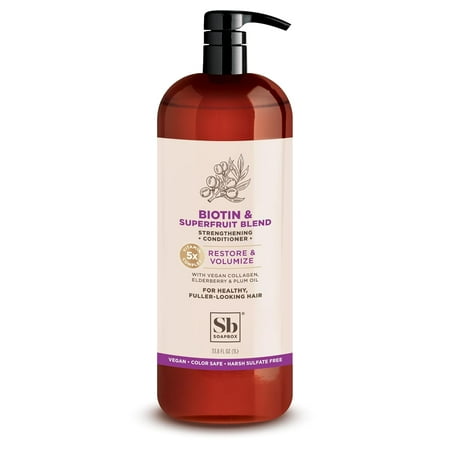
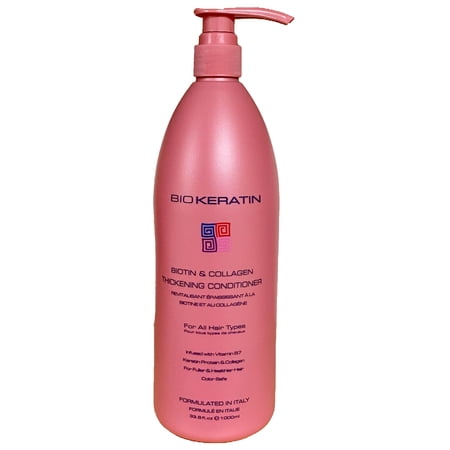
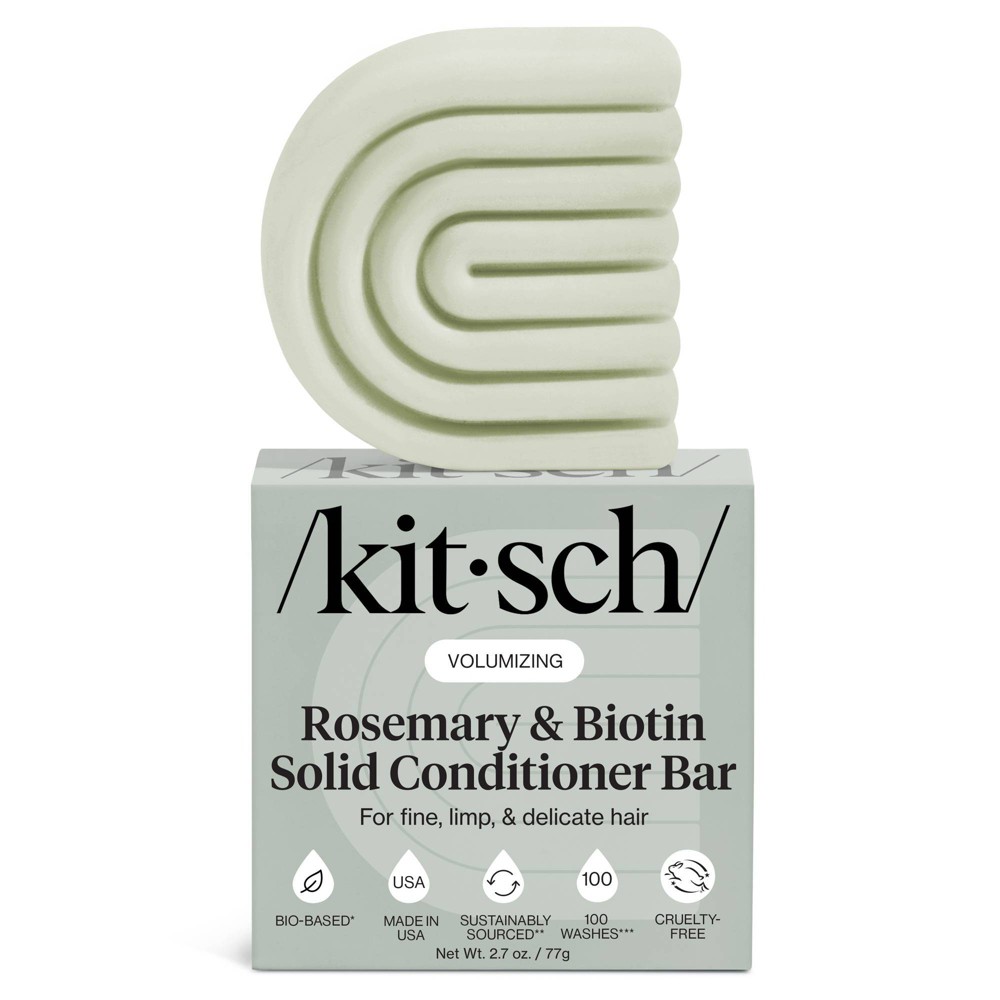

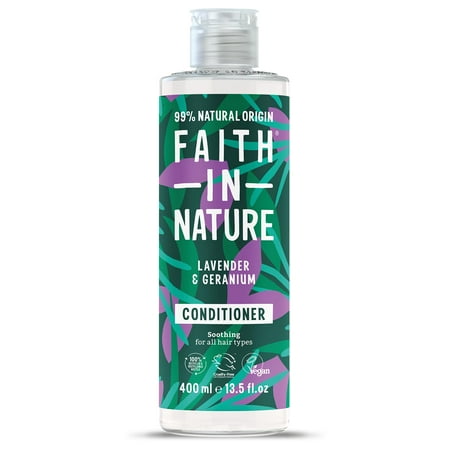
Soapbox Conditioner Biotin & Superfruit 1L / 33.8oz
Analysis updated August 2026 · How Scout scores
At a glance
Summary
This conditioner contains a variety of beneficial ingredients such as biotin, shea butter, and avocado extract, which are known to nourish and strengthen hair. However, the presence of synthetic fragrance and potential allergens like benzyl alcohol and linalool may cause irritation for some users. While the product is minimally processed, these less favorable ingredients slightly detract from its overall safety and effectiveness for sensitive scalps.
Key ingredients 34
Persea Gratissima (Avocado) Fruit ExtractVery Good
Avocado Extract is rich in vitamins and fatty acids, providing deep nourishment to the hair. It helps to moisturize and strengthen the hair, improving its overall health. It is a highly beneficial ingredient in hair care.
Risks
There are minimal risks associated with Avocado Extract, though it may cause mild irritation in sensitive individuals.
Benefits
It deeply nourishes and strengthens the hair, enhancing its health and shine.
Butyrospermum Parkii (Shea) ButterVery Good
Shea Butter is a natural fat extracted from the nuts of the Shea tree. It provides deep conditioning and moisture to the hair, improving its softness and manageability. It is a highly beneficial ingredient in hair care.
Risks
There are minimal risks associated with Shea Butter, though it may cause mild irritation in sensitive individuals.
Benefits
It deeply conditions and moisturizes the hair, enhancing its softness and manageability.
Biotin (Vitamin B7)Good
Biotin is a vitamin that supports hair health and strength. It is believed to improve hair thickness and reduce hair loss. It is a beneficial ingredient in hair care products.
Risks
There are no significant risks associated with topical application of biotin.
Benefits
Biotin supports hair health, potentially improving thickness and reducing hair loss.
Prunus Domestica (Plum) Seed OilGood
Plum Seed Oil is a plant-derived oil rich in fatty acids and antioxidants. It helps to nourish and moisturize the hair, improving its overall health. It is considered a beneficial ingredient in hair care.
Risks
There are minimal risks associated with Plum Seed Oil, though it may cause mild irritation in sensitive individuals.
Benefits
It provides nourishment and moisture to the hair, enhancing its health and shine.
Sambucus (Elderberry) Nigra Seed OilGood
Elderberry Seed Oil is rich in antioxidants and fatty acids, providing nourishment to the hair. It helps to moisturize and protect the hair from environmental damage. It is a beneficial ingredient in hair care.
Risks
There are minimal risks associated with Elderberry Seed Oil, though it may cause mild irritation in sensitive individuals.
Benefits
It nourishes and protects the hair, enhancing its health and resilience.
Carica Papaya (Papaya) Fruit ExtractGood
Papaya Extract is rich in vitamins and enzymes that help to nourish and condition the hair. It improves the texture and health of the hair, making it more manageable. It is a beneficial ingredient in hair care.
Risks
There are minimal risks associated with Papaya Extract, though it may cause mild irritation in sensitive individuals.
Benefits
It nourishes and conditions the hair, improving its texture and manageability.
Musa Sapientum (Banana) Fruit ExtractGood
Banana Extract is rich in vitamins and minerals that help to nourish and condition the hair. It improves the texture and health of the hair, making it more manageable. It is a beneficial ingredient in hair care.
Risks
There are minimal risks associated with Banana Extract, though it may cause mild irritation in sensitive individuals.
Benefits
It nourishes and conditions the hair, improving its texture and manageability.
Hydrolyzed Soy ProteinGood
Hydrolyzed Soy Protein helps to strengthen and repair the hair by providing essential amino acids. It improves the elasticity and resilience of the hair. It is a beneficial ingredient in hair care products.
Risks
There are minimal risks associated with Hydrolyzed Soy Protein, though it may cause mild irritation in sensitive individuals.
Benefits
It strengthens and repairs the hair, improving its elasticity and resilience.
Rice Amino AcidsGood
Rice Amino Acids help to strengthen and repair the hair by providing essential nutrients. They improve the texture and manageability of the hair. They are beneficial ingredients in hair care products.
Risks
There are minimal risks associated with Rice Amino Acids, though they may cause mild irritation in sensitive individuals.
Benefits
They strengthen and repair the hair, improving its texture and manageability.
Hydrolyzed Adansonia Digitata ExtractGood
Hydrolyzed Adansonia Digitata Extract, derived from the Baobab tree, is rich in vitamins and antioxidants. It helps to nourish and protect the hair, improving its health and resilience. It is a beneficial ingredient in hair care.
Risks
There are minimal risks associated with Hydrolyzed Adansonia Digitata Extract, though it may cause mild irritation in sensitive individuals.
Benefits
It nourishes and protects the hair, enhancing its health and resilience.
Ascorbic Acid (Vitamin C)Good
Ascorbic Acid is an antioxidant that helps to protect the hair from environmental damage. It supports hair health and can improve the appearance of hair. It is a beneficial ingredient in hair care products.
Risks
There are minimal risks associated with Ascorbic Acid, though it may cause mild irritation in sensitive individuals.
Benefits
It protects the hair from environmental damage and supports overall hair health.
Panthenol (Vitamin B5)Good
Panthenol is a form of Vitamin B5 that helps to moisturize and strengthen the hair. It improves the texture and appearance of the hair, making it more manageable. It is a beneficial ingredient in hair care products.
Risks
There are minimal risks associated with Panthenol, though it may cause mild irritation in sensitive individuals.
Benefits
It moisturizes and strengthens the hair, improving its texture and manageability.
Tocopheryl Acetate (Vitamin E)Good
Tocopheryl Acetate is a form of Vitamin E that acts as an antioxidant, protecting the hair from environmental damage. It supports hair health and can improve the appearance of hair. It is a beneficial ingredient in hair care products.
Risks
There are minimal risks associated with Tocopheryl Acetate, though it may cause mild irritation in sensitive individuals.
Benefits
It protects the hair from environmental damage and supports overall hair health.
GlycerinGood
Glycerin is a humectant that helps to attract and retain moisture in the hair. It improves the hydration and softness of the hair. It is a beneficial ingredient in hair care products.
Risks
There are minimal risks associated with Glycerin, though it may cause mild irritation in sensitive individuals.
Benefits
It hydrates and softens the hair, improving its overall health and appearance.
Water (Aqua)Neutral
Water is a common solvent used in cosmetic formulations. It helps dissolve other ingredients and provides a base for the conditioner. It does not have any direct benefits or risks.
Risks
There are no known risks associated with water in cosmetic products.
Benefits
Water helps in the application and distribution of the conditioner on hair.
Stearyl AlcoholNeutral
Stearyl Alcohol is a fatty alcohol used as an emollient and thickener. It helps to soften and smooth the hair. It is generally considered safe and non-irritating.
Risks
There are minimal risks associated with Stearyl Alcohol, though it may cause mild irritation in sensitive individuals.
Benefits
It provides conditioning benefits and helps improve the texture of the conditioner.
Cetyl AlcoholNeutral
Standard formulation ingredient — neither beneficial nor harmful at typical use.
Risks
There are minimal risks associated with Cetyl Alcohol, though it may cause mild irritation in sensitive individuals.
Benefits
It provides conditioning benefits and improves the texture and spreadability of the conditioner.
Cetearyl AlcoholNeutral
Standard formulation ingredient — neither beneficial nor harmful at typical use.
Risks
There are minimal risks associated with Cetearyl Alcohol, though it may cause mild irritation in sensitive individuals.
Benefits
It provides conditioning benefits and improves the texture and spreadability of the conditioner.
ProlineNeutral
Proline is an amino acid that helps to strengthen and repair the hair. It is a building block of proteins and contributes to hair health. It is generally considered safe for use in hair care products.
Risks
There are minimal risks associated with Proline, though it may cause mild irritation in sensitive individuals.
Benefits
It helps to strengthen and repair the hair, contributing to overall hair health.
Folic Acid (Vitamin B9)Neutral
Folic Acid is a vitamin that supports cell growth and health. It is included in hair care products for its potential to support hair health. It is generally considered safe for use in hair care products.
Risks
There are minimal risks associated with Folic Acid, though it may cause mild irritation in sensitive individuals.
Benefits
It supports cell growth and overall hair health.
Pantothenic AcidNeutral
Pantothenic Acid, also known as Vitamin B5, is included in hair care products for its potential to support hair health. It is generally considered safe for use in hair care products. It does not have any direct benefits or risks.
Risks
There are minimal risks associated with Pantothenic Acid, though it may cause mild irritation in sensitive individuals.
Benefits
It supports overall hair health.
Stearalkonium ChlorideNeutral
Stearalkonium Chloride is a conditioning agent that helps to reduce static and improve the texture of hair. It is generally considered safe for use in hair care products. It does not have any direct benefits or risks.
Risks
In high concentrations, it may cause irritation to the skin and eyes.
Benefits
It helps in detangling hair and reducing static, making hair smoother and easier to manage.
Guar Hydroxypropyltrimonium ChlorideNeutral
Guar Hydroxypropyltrimonium Chloride is a conditioning agent derived from guar gum. It helps to improve the texture and manageability of hair. It is generally considered safe for use in hair care products.
Risks
There are minimal risks associated with Guar Hydroxypropyltrimonium Chloride, though it may cause mild irritation in sensitive individuals.
Benefits
It improves the texture and manageability of hair, making it smoother and easier to style.
Polyquaternium-11Neutral
Polyquaternium-11 is a film-forming agent that helps to improve the texture and manageability of hair. It is generally considered safe for use in hair care products. It does not have any direct benefits or risks.
Risks
There are minimal risks associated with Polyquaternium-11, though it may cause mild irritation in sensitive individuals.
Benefits
It improves the texture and manageability of hair, making it smoother and easier to style.
Dehydroacetic AcidNeutral
Dehydroacetic Acid is a preservative used to prevent the growth of microorganisms in cosmetic products. It is generally considered safe for use in hair care products. It does not have any direct benefits or risks.
Risks
There are minimal risks associated with Dehydroacetic Acid, though it may cause mild irritation in sensitive individuals.
Benefits
It acts as a preservative, helping to extend the shelf life of the product.
Citric AcidNeutral
Citric Acid is used to adjust the pH of cosmetic products. It is generally considered safe for use in hair care products. It does not have any direct benefits or risks.
Risks
There are minimal risks associated with Citric Acid, though it may cause mild irritation in sensitive individuals.
Benefits
It helps to adjust the pH of the product, ensuring it is suitable for hair and scalp.
Cetrimonium ChlorideBad
Processed additive flagged under Scout's ingredient doctrine.
Risks
In high concentrations, it may cause irritation to the skin and eyes.
Benefits
It helps in detangling hair and reducing static, making hair smoother and easier to manage.
Benzyl AlcoholBad
Benzyl Alcohol is used as a preservative and solvent in cosmetic products. It can be drying and irritating to the skin and scalp. It is considered a less favorable ingredient in hair care.
Risks
It can cause skin and scalp irritation, especially in sensitive individuals.
Benefits
It acts as a preservative, helping to extend the shelf life of the product.
Behentrimonium MethosulfateBad
Processed additive flagged under Scout's ingredient doctrine.
Risks
There are minimal risks associated with Behentrimonium Methosulfate, though it may cause mild irritation in sensitive individuals.
Benefits
It detangles and softens the hair, improving its manageability and texture.
LinaloolBad
Linalool is a fragrance component that can cause allergic reactions in some individuals. It is considered a less favorable ingredient in hair care due to its potential to cause irritation. It is often used to impart a pleasant scent to products.
Risks
It can cause skin irritation and allergic reactions, especially in sensitive individuals.
Benefits
It provides a pleasant fragrance to the product.
Hexyl CinnamalBad
Hexyl Cinnamal is a fragrance component that can cause allergic reactions in some individuals. It is considered a less favorable ingredient in hair care due to its potential to cause irritation. It is often used to impart a pleasant scent to products.
Risks
It can cause skin irritation and allergic reactions, especially in sensitive individuals.
Benefits
It provides a pleasant fragrance to the product.
LimoneneBad
Limonene is a fragrance component that can cause allergic reactions in some individuals. It is considered a less favorable ingredient in hair care due to its potential to cause irritation. It is often used to impart a pleasant scent to products.
Risks
It can cause skin irritation and allergic reactions, especially in sensitive individuals.
Benefits
It provides a pleasant fragrance to the product.
Propylene GlycolBad
Processed additive flagged under Scout's ingredient doctrine.
Risks
There are minimal risks associated with Propylene Glycol, though it may cause mild irritation in sensitive individuals.
Benefits
It helps to retain moisture in the hair, improving its hydration and softness.
Fragrance (Parfum)Very Bad
Fragrance is a synthetic component used to impart a pleasant scent to products. It can cause allergic reactions and irritation in some individuals. It is considered a less favorable ingredient in hair care due to its potential to cause irritation.
Risks
It can cause skin irritation and allergic reactions, especially in sensitive individuals.
Benefits
It provides a pleasant fragrance to the product.
Get the full breakdown in the Scout appTake Scout shopping
Scan any product to see lab results, healthy alternatives, and your personalized analysis.
Download on theApp Store GET IT ONGoogle PlayAmazon pricing & content
Amazon price as of . Product prices and availability are accurate as of the date/time indicated and are subject to change. Any price and availability information displayed on Amazon.com at the time of purchase will apply to the purchase of this product.
CERTAIN CONTENT THAT APPEARS ON THIS SITE COMES FROM AMAZON. THIS CONTENT IS PROVIDED “AS IS” AND IS SUBJECT TO CHANGE OR REMOVAL AT ANY TIME.