
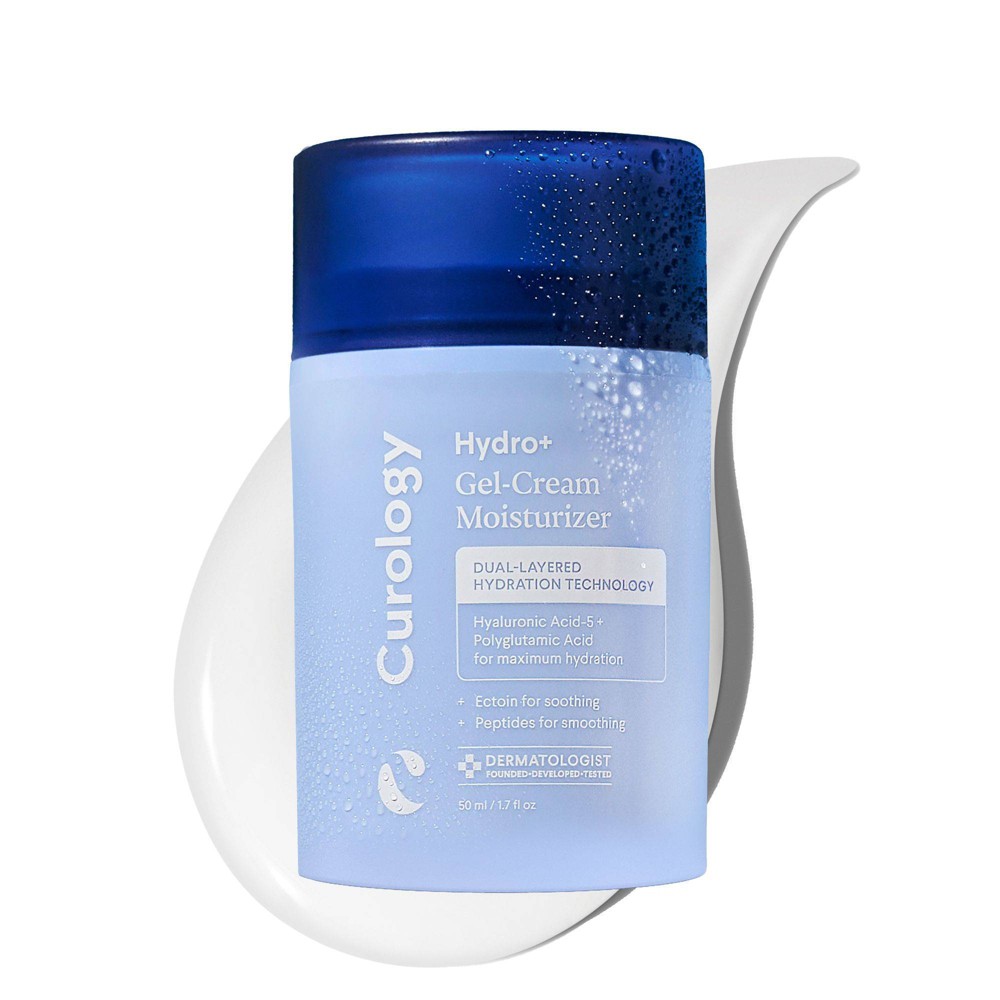

Curology Hydro+ Gel Cream Moisturizer - 1.7 fl oz: Fragrance-Free, Paraben & Sulfate-Free Daily Facial Cream
Analysis updated August 2026 · How Scout scores
At a glance
Summary
This moisturizer contains a variety of beneficial ingredients such as glycerin, niacinamide, and multiple forms of hyaluronic acid, which are known for their hydrating and skin-improving properties. The absence of parabens, sulfates, and fragrance is a positive aspect, reducing the risk of irritation. However, the presence of acrylates and other synthetic polymers indicates a moderate level of processing, which slightly impacts the overall score.
Key ingredients 33
Hydrolyzed Hyaluronic AcidVery Good
Hydrolyzed Hyaluronic Acid is a smaller molecule form of hyaluronic acid that penetrates the skin more effectively. It provides intense hydration and improves skin elasticity. It is a beneficial ingredient for maintaining skin moisture.
Risks
There are no significant risks associated with hydrolyzed hyaluronic acid.
Benefits
It offers deep hydration and enhances skin elasticity.
Hydrolyzed Sodium HyaluronateVery Good
Hydrolyzed Sodium Hyaluronate is a smaller molecule form of sodium hyaluronate that penetrates the skin more effectively. It provides long-lasting hydration and improves skin texture. It is a highly effective moisturizing agent.
Risks
There are no significant risks associated with hydrolyzed sodium hyaluronate.
Benefits
It enhances deep skin hydration and smoothness.
Sodium Acetylated HyaluronateVery Good
Sodium Acetylated Hyaluronate is a modified form of hyaluronic acid that provides enhanced moisture retention. It helps in improving skin texture and elasticity. It is a beneficial ingredient for maintaining skin hydration.
Risks
There are no significant risks associated with sodium acetylated hyaluronate.
Benefits
It offers superior hydration and enhances skin elasticity.
Sodium Hyaluronate CrosspolymerVery Good
Sodium Hyaluronate Crosspolymer is a cross-linked form of hyaluronic acid that provides sustained hydration. It helps in improving skin texture and plumpness. It is a beneficial ingredient for maintaining skin moisture.
Risks
There are no significant risks associated with sodium hyaluronate crosspolymer.
Benefits
It provides long-lasting hydration and enhances skin plumpness.
Palmitoyl Tripeptide-1Very Good
Palmitoyl Tripeptide-1 is a peptide that helps in stimulating collagen production. It improves skin firmness and reduces the appearance of fine lines. It is a beneficial ingredient for anti-aging skincare.
Risks
There are no significant risks associated with palmitoyl tripeptide-1.
Benefits
It enhances skin firmness and reduces signs of aging.
Palmitoyl Tetrapeptide-7Very Good
Palmitoyl Tetrapeptide-7 is a peptide that helps in reducing inflammation and improving skin elasticity. It works synergistically with other peptides to enhance skin repair. It is a beneficial ingredient for anti-aging skincare.
Risks
There are no significant risks associated with palmitoyl tetrapeptide-7.
Benefits
It reduces inflammation and enhances skin elasticity.
PanthenolVery Good
Panthenol, also known as provitamin B5, is a moisturizing and soothing agent. It helps in improving skin hydration and reducing irritation. It is a beneficial ingredient for sensitive and dry skin.
Risks
There are no significant risks associated with panthenol.
Benefits
It enhances skin hydration and soothes irritation.
GlycerinGood
Glycerin is a powerful humectant that attracts moisture to the skin. It is a natural compound that helps maintain skin hydration and improves skin barrier function. It is well-tolerated by most skin types.
Risks
There are minimal risks associated with glycerin.
Benefits
It significantly enhances skin hydration and smoothness.
NiacinamideGood
Niacinamide is a form of Vitamin B3 known for its anti-inflammatory and brightening properties. It helps in improving skin texture, reducing redness, and minimizing pores. It is a well-researched ingredient with multiple skin benefits.
Risks
Rarely, it may cause mild irritation or redness.
Benefits
It enhances skin barrier function and reduces signs of aging.
TrehaloseGood
Trehalose is a sugar molecule that acts as a humectant and antioxidant. It helps in retaining moisture and protecting the skin from environmental stress. It is considered safe for use in skincare products.
Risks
There are no significant risks associated with trehalose.
Benefits
It provides hydration and protects the skin from oxidative damage.
Polyglutamic AcidGood
Polyglutamic Acid is a hydrating ingredient that can hold more moisture than hyaluronic acid. It helps in improving skin elasticity and smoothness. It is a beneficial ingredient for maintaining skin hydration.
Risks
There are minimal risks associated with polyglutamic acid.
Benefits
It enhances skin hydration and elasticity.
Hyaluronic AcidGood
Hyaluronic Acid is a well-known humectant that can hold up to 1000 times its weight in water. It helps in maintaining skin hydration and plumpness. It is a highly beneficial ingredient for all skin types.
Risks
There are no significant risks associated with hyaluronic acid.
Benefits
It provides intense hydration and reduces the appearance of fine lines.
Sodium HyaluronateGood
Sodium Hyaluronate is a salt form of hyaluronic acid that penetrates deeper into the skin. It provides long-lasting hydration and improves skin texture. It is a highly effective moisturizing agent.
Risks
There are no significant risks associated with sodium hyaluronate.
Benefits
It enhances deep skin hydration and smoothness.
EctoinGood
Ectoin is a natural compound that helps protect the skin from environmental stress. It has moisturizing and anti-inflammatory properties. It is considered safe for use in skincare products.
Risks
There are no significant risks associated with ectoin.
Benefits
It provides protection against environmental stress and enhances skin hydration.
WaterNeutral
Water is a common solvent used in cosmetic formulations. It helps dissolve other ingredients and provides a base for the product. It does not have any direct benefits or risks.
Risks
There are no significant risks associated with water in cosmetics.
Benefits
Water helps in hydrating the skin by providing moisture.
Butylene GlycolNeutral
Butylene Glycol is a common humectant that helps retain moisture in the skin. It also acts as a solvent and improves the texture of the product. It is generally considered safe for use in cosmetics.
Risks
In rare cases, it may cause irritation in sensitive skin.
Benefits
It helps in keeping the skin hydrated and enhances the product's spreadability.
TrisiloxaneNeutral
Trisiloxane is a silicone compound used for its emollient and conditioning properties. It helps in providing a smooth application and enhances the product's spreadability. It is generally considered safe for use in cosmetics.
Risks
May cause mild irritation in very sensitive skin.
Benefits
It improves the texture and feel of the product on the skin.
CarbomerNeutral
Carbomer is a thickening agent used to create gel-like textures in cosmetics. It helps in stabilizing emulsions and improving product consistency. It is considered safe for use in skincare products.
Risks
May cause mild irritation in very sensitive skin.
Benefits
It provides a smooth texture and stabilizes the formulation.
Ethylhexyl PalmitateNeutral
Ethylhexyl Palmitate is an emollient that helps in softening and smoothing the skin. It improves the spreadability of the product and provides a silky feel. It is generally considered safe for use in cosmetics.
Risks
May cause mild irritation in very sensitive skin.
Benefits
It enhances skin softness and product spreadability.
Hydrogenated PolydeceneNeutral
Hydrogenated Polydecene is an emollient that provides a smooth and silky texture to the skin. It helps in improving the spreadability of the product. It is considered safe for use in cosmetics.
Risks
May cause mild irritation in very sensitive skin.
Benefits
It enhances the texture and feel of the product on the skin.
Hydrogenated PolyisobuteneNeutral
Hydrogenated Polyisobutene is a synthetic polymer used as an emollient and moisturizer. It provides a smooth application and enhances the product's texture. It is generally considered safe for use in cosmetics.
Risks
May cause mild irritation in very sensitive skin.
Benefits
It improves skin smoothness and product spreadability.
HydroxyacetophenoneNeutral
Hydroxyacetophenone is an antioxidant and preservative used in cosmetics. It helps in protecting the product from degradation and enhances its shelf life. It is considered safe for use in skincare products.
Risks
May cause mild irritation in very sensitive skin.
Benefits
It provides antioxidant protection and stabilizes the formulation.
Pentylene GlycolNeutral
Pentylene Glycol is a humectant and solvent used in cosmetics. It helps in retaining moisture and improving the texture of the product. It is generally considered safe for use in skincare products.
Risks
May cause mild irritation in very sensitive skin.
Benefits
It provides hydration and enhances product spreadability.
Polyacrylate-13Neutral
Polyacrylate-13 is a thickening agent used to improve the texture and stability of cosmetic formulations. It helps in creating a smooth and consistent product. It is considered safe for use in cosmetics.
Risks
May cause mild irritation in very sensitive skin.
Benefits
It enhances the texture and stability of the product.
Sodium Polyacryloyldimethyl TaurateNeutral
Sodium Polyacryloyldimethyl Taurate is a thickening and stabilizing agent used in cosmetics. It helps in improving the texture and consistency of the product. It is generally considered safe for use in skincare products.
Risks
May cause mild irritation in very sensitive skin.
Benefits
It provides a smooth texture and stabilizes the formulation.
Sorbitan IsostearateNeutral
Sorbitan Isostearate is an emulsifier used to stabilize oil-in-water formulations. It helps in improving the texture and consistency of the product. It is considered safe for use in cosmetics.
Risks
May cause mild irritation in very sensitive skin.
Benefits
It enhances the stability and texture of the product.
Polyglyceryl-10 LaurateNeutral
Polyglyceryl-10 Laurate is an emulsifier used to stabilize cosmetic formulations. It helps in improving the texture and consistency of the product. It is generally considered safe for use in skincare products.
Risks
May cause mild irritation in very sensitive skin.
Benefits
It provides a smooth texture and stabilizes the formulation.
Polysorbate 20Neutral
Polysorbate 20 is an emulsifier used to stabilize oil-in-water formulations. It helps in improving the texture and consistency of the product. It is considered safe for use in cosmetics.
Risks
May cause mild irritation in very sensitive skin.
Benefits
It enhances the stability and texture of the product.
PropanediolNeutral
Propanediol is a solvent and humectant used in cosmetics. It helps in retaining moisture and improving the texture of the product. It is generally considered safe for use in skincare products.
Risks
May cause mild irritation in very sensitive skin.
Benefits
It provides hydration and enhances product spreadability.
Caprylyl GlycolNeutral
Caprylyl Glycol is a humectant and skin conditioning agent used in cosmetics. It helps in retaining moisture and improving the texture of the product. It is considered safe for use in skincare products.
Risks
May cause mild irritation in very sensitive skin.
Benefits
It provides hydration and enhances product spreadability.
EthylhexylglycerinNeutral
Ethylhexylglycerin is a preservative and skin conditioning agent used in cosmetics. It helps in enhancing the product's shelf life and improving skin feel. It is generally considered safe for use in skincare products.
Risks
May cause mild irritation in very sensitive skin.
Benefits
It provides preservation and enhances skin feel.
DimethiconeBad
Occlusive silicone film-former — flagged under clean-beauty doctrine.
Risks
It may cause build-up on the skin if not properly cleansed.
Benefits
It provides a silky texture and helps in reducing the appearance of fine lines.
Acrylates/C10-30 Alkyl Acrylate CrosspolymerBad
Processed additive flagged under Scout's ingredient doctrine.
Risks
May cause mild irritation in very sensitive skin.
Benefits
It enhances the texture and stability of the product.
Processing
Processed Foods
Get the full breakdown in the Scout appTake Scout shopping
Scan any product to see lab results, healthy alternatives, and your personalized analysis.
Download on theApp Store GET IT ONGoogle Play