
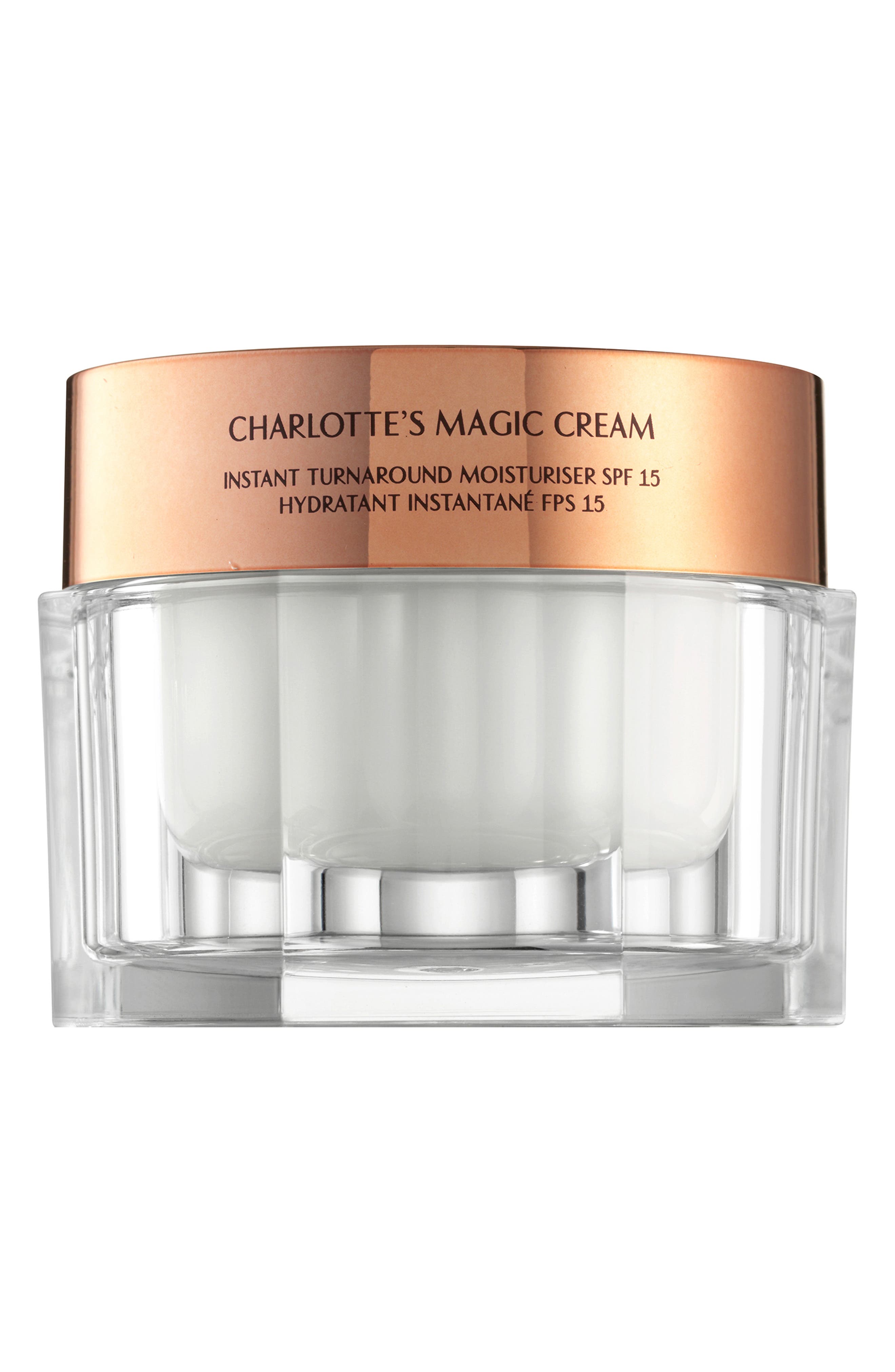

Charlotte Tilbury Charlotte's Magic Cream, Size 1.7 oz
Analysis updated August 2026 · How Scout scores
At a glance
Summary
This moisturizer contains several beneficial ingredients such as shea butter, camellia seed oil, and glycerin, which provide hydration and nourishment to the skin. However, the presence of fragrance components like linalool, citronellol, and geraniol, which can cause skin irritation in sensitive individuals, slightly lowers its rating. The product is moderately processed, which also impacts the overall score.
Key ingredients 47
Avena Sativa (Oat) Kernel ExtractVery Good
Avena Sativa (Oat) Kernel Extract is known for its soothing and anti-inflammatory properties. It helps to calm irritated skin and provides moisture. It is beneficial for sensitive and dry skin types.
Risks
Very low risk of irritation; generally safe for sensitive skin.
Benefits
Soothes and calms irritated skin, providing moisture and anti-inflammatory benefits.
Butyrospermum Parkii (Shea) ButterVery Good
Shea Butter is a natural fat extracted from the nuts of the shea tree, known for its moisturizing and healing properties. It helps to soften and protect the skin. It is highly beneficial for dry and sensitive skin types.
Risks
Very low risk of irritation; generally safe for all skin types.
Benefits
Deeply moisturizes and protects the skin, providing healing benefits.
Camellia Oleifera (Camellia) Seed OilVery Good
Camellia Seed Oil is rich in antioxidants and essential fatty acids, providing nourishment and hydration to the skin. It helps to improve skin elasticity and reduce the appearance of fine lines. It is highly beneficial for dry and mature skin types.
Risks
Very low risk of irritation; generally safe for all skin types.
Benefits
Nourishes and hydrates the skin, improving elasticity and reducing fine lines.
Rosa Canina Fruit OilVery Good
Rosa Canina Fruit Oil, also known as rosehip oil, is rich in vitamins A and C, providing antioxidant protection and promoting skin regeneration. It helps to improve skin tone and texture. It is beneficial for reducing the appearance of scars and fine lines.
Risks
Very low risk of irritation; generally safe for all skin types.
Benefits
Provides antioxidant protection and promotes skin regeneration, improving tone and texture.
Aloe Barbadensis Leaf Juice PowderVery Good
Aloe Vera is known for its soothing and hydrating properties, helping to calm irritated skin and provide moisture. It is widely used in skincare for its healing benefits. It is beneficial for all skin types, especially sensitive and dry skin.
Risks
Very low risk of irritation; generally safe for all skin types.
Benefits
Soothes and hydrates the skin, providing healing benefits.
Caprylic/Capric TriglycerideGood
Caprylic/Capric Triglyceride is an emollient derived from coconut oil and glycerin. It helps to moisturize and replenish the skin's surface. It is lightweight and non-greasy, making it suitable for various skin types.
Risks
Generally considered safe with low risk of irritation.
Benefits
Moisturizes and replenishes the skin with a lightweight, non-greasy feel.
GlycerinGood
Glycerin is a powerful humectant that attracts moisture to the skin, helping to keep it hydrated. It is widely used in skincare for its moisturizing properties. It is considered safe and beneficial for most skin types.
Risks
Very low risk of irritation; generally safe for all skin types.
Benefits
Attracts moisture to the skin, keeping it hydrated and improving skin barrier function.
Hydrolyzed Viola Tricolor ExtractGood
Hydrolyzed Viola Tricolor Extract is used for its antioxidant and soothing properties. It helps to protect the skin from environmental stressors and reduce irritation. It is beneficial for maintaining healthy skin.
Risks
Low risk of irritation; generally safe for most skin types.
Benefits
Provides antioxidant protection and soothes the skin, reducing irritation.
Nasturtium Officinale ExtractGood
Nasturtium Officinale Extract is rich in vitamins and minerals, providing nourishment to the skin. It helps to improve skin vitality and radiance. It is considered beneficial for overall skin health.
Risks
Low risk of irritation; generally safe for most skin types.
Benefits
Nourishes the skin with vitamins and minerals, improving vitality and radiance.
Gigartina Stellata ExtractGood
Gigartina Stellata Extract is derived from red algae and is known for its hydrating and antioxidant properties. It helps to protect the skin from environmental damage and maintain moisture balance. It is beneficial for maintaining healthy, hydrated skin.
Risks
Low risk of irritation; generally safe for most skin types.
Benefits
Hydrates and protects the skin with antioxidant properties, maintaining moisture balance.
Rosa Damascena ExtractGood
Rosa Damascena Extract is known for its soothing and anti-inflammatory properties. It helps to calm and hydrate the skin, providing a pleasant fragrance. It is beneficial for sensitive and dry skin types.
Risks
Low risk of irritation; generally safe for most skin types.
Benefits
Soothes and hydrates the skin, providing anti-inflammatory benefits.
EctoinGood
Ectoin is a natural compound known for its protective and moisturizing properties. It helps to shield the skin from environmental stressors and maintain hydration. It is beneficial for sensitive and stressed skin.
Risks
Low risk of irritation; generally safe for most skin types.
Benefits
Protects the skin from environmental stressors and maintains hydration.
Sodium HyaluronateGood
Sodium Hyaluronate is a form of hyaluronic acid that provides intense hydration to the skin, helping to retain moisture and improve elasticity. It is widely used in skincare for its anti-aging benefits. It is beneficial for all skin types, especially dry and mature skin.
Risks
Very low risk of irritation; generally safe for all skin types.
Benefits
Provides intense hydration and improves skin elasticity, offering anti-aging benefits.
Ascorbyl TetraisonopalmitateGood
Ascorbyl Tetraisonopalmitate is a stable form of Vitamin C that provides antioxidant protection and brightens the skin. It helps to reduce the appearance of dark spots and improve skin tone. It is beneficial for all skin types, especially those with pigmentation concerns.
Risks
Low risk of irritation; generally safe for most skin types.
Benefits
Provides antioxidant protection and brightens the skin, reducing dark spots.
Tocopheryl AcetateGood
Tocopheryl Acetate is a form of Vitamin E that provides antioxidant protection and helps to moisturize the skin. It is widely used in skincare for its protective and conditioning benefits. It is beneficial for all skin types.
Risks
Low risk of irritation; generally safe for most skin types.
Benefits
Provides antioxidant protection and moisturizes the skin, offering conditioning benefits.
TocopherolGood
Tocopherol, a form of Vitamin E, provides antioxidant protection and helps to moisturize the skin. It is widely used in skincare for its protective and conditioning benefits. It is beneficial for all skin types.
Risks
Low risk of irritation; generally safe for most skin types.
Benefits
Provides antioxidant protection and moisturizes the skin, offering conditioning benefits.
Aqua/Water/EauNeutral
Water is a common solvent used in cosmetics to dissolve other ingredients. It helps in the application and absorption of the product. It does not provide any direct benefits or risks.
Risks
There are no significant risks associated with water in cosmetics.
Benefits
Water helps in the application and absorption of the product.
C12-15 Alkyl BenzoateNeutral
C12-15 Alkyl Benzoate is an emollient that helps to soften and smooth the skin. It is commonly used in cosmetics for its ability to enhance the texture of formulations. It is generally considered safe for use in cosmetics.
Risks
There are minimal risks associated with this ingredient, though it may cause irritation in sensitive individuals.
Benefits
It helps to soften and smooth the skin, improving the texture of formulations.
Glyceryl Stearate SENeutral
Glyceryl Stearate SE is an emulsifier that helps to blend water and oils in formulations. It provides a smooth texture and enhances the stability of the product. It is generally safe for use in cosmetics.
Risks
May cause mild irritation in sensitive skin types.
Benefits
Improves product texture and stability by emulsifying water and oils.
Butylene GlycolNeutral
Butylene Glycol is a solvent and conditioning agent that helps to improve the texture and spreadability of products. It also acts as a humectant, drawing moisture into the skin. It is widely used and considered safe in cosmetics.
Risks
Can cause irritation or allergic reactions in sensitive individuals.
Benefits
Improves texture and spreadability, and acts as a humectant to draw moisture into the skin.
Isononyl IsononanoateNeutral
Isononyl Isononanoate is an emollient that provides a silky feel to the skin and helps to improve the spreadability of products. It is commonly used in cosmetics for its non-greasy texture. It is considered safe for use.
Risks
Minimal risk of irritation or allergic reaction.
Benefits
Provides a silky feel and improves spreadability without a greasy texture.
Cetyl AlcoholNeutral
Cetyl Alcohol is a fatty alcohol used as an emollient and thickening agent in cosmetics. It helps to soften the skin and improve the texture of formulations. It is generally considered safe and non-irritating.
Risks
Low risk of irritation or allergic reaction.
Benefits
Softens the skin and improves the texture of formulations.
Ethylhexyl PalmitateNeutral
Ethylhexyl Palmitate is an emollient that provides a smooth, soft feel to the skin. It is used to enhance the texture and spreadability of products. It is generally considered safe for use in cosmetics.
Risks
May cause mild irritation in sensitive individuals.
Benefits
Provides a smooth, soft feel and enhances product texture and spreadability.
Pentylene GlycolNeutral
Pentylene Glycol is a humectant and solvent that helps to retain moisture in the skin. It also enhances the penetration of other ingredients. It is considered safe for use in cosmetics.
Risks
Low risk of irritation or allergic reaction.
Benefits
Retains moisture in the skin and enhances ingredient penetration.
Polyester-7Neutral
Polyester-7 is a film-forming agent that helps to create a smooth, even application of products. It is used to improve the texture and longevity of cosmetics. It is generally considered safe for use.
Risks
Minimal risk of irritation or allergic reaction.
Benefits
Creates a smooth, even application and improves product longevity.
Michelia Alba Leaf OilNeutral
Michelia Alba Leaf Oil is used for its aromatic properties and potential skin benefits. It provides a pleasant fragrance and may offer mild soothing effects. It is generally considered safe for use in cosmetics.
Risks
May cause irritation in sensitive individuals due to fragrance components.
Benefits
Provides a pleasant fragrance and may offer mild soothing effects.
Trachelospermum Jasminoides ExtractNeutral
Trachelospermum Jasminoides Extract is used for its potential soothing and antioxidant properties. It may help to protect the skin from environmental stressors. It is generally considered safe for use in cosmetics.
Risks
Low risk of irritation; generally safe for most skin types.
Benefits
May provide soothing and antioxidant benefits, protecting the skin from stressors.
Hydrolyzed Vegetable ProteinNeutral
Hydrolyzed Vegetable Protein is used for its conditioning properties, helping to improve the texture and feel of the skin. It may also provide some moisturizing benefits. It is generally considered safe for use in cosmetics.
Risks
Low risk of irritation; generally safe for most skin types.
Benefits
Improves skin texture and feel, providing some moisturizing benefits.
Steareth-21Neutral
Steareth-21 is an emulsifier that helps to blend water and oils in formulations, providing a smooth texture. It is commonly used in cosmetics for its ability to stabilize products. It is generally considered safe for use.
Risks
May cause mild irritation in sensitive individuals.
Benefits
Blends water and oils, providing a smooth texture and stabilizing products.
CarbomerNeutral
Carbomer is a thickening agent used to create gel-like textures in cosmetics. It helps to stabilize and improve the consistency of formulations. It is generally considered safe for use in cosmetics.
Risks
Low risk of irritation; generally safe for most skin types.
Benefits
Creates gel-like textures and stabilizes formulations, improving consistency.
Neopentyl Glycol DiheptanoateNeutral
Neopentyl Glycol Diheptanoate is an emollient that provides a silky feel to the skin and enhances the spreadability of products. It is commonly used in cosmetics for its non-greasy texture. It is considered safe for use.
Risks
Minimal risk of irritation or allergic reaction.
Benefits
Provides a silky feel and enhances spreadability without a greasy texture.
Hydrogenated Rapeseed OilNeutral
Hydrogenated Rapeseed Oil is used as an emollient to soften and smooth the skin. It helps to improve the texture of formulations. It is generally considered safe for use in cosmetics.
Risks
Low risk of irritation; generally safe for most skin types.
Benefits
Softens and smooths the skin, improving the texture of formulations.
Potassium Cetyl PhosphateNeutral
Potassium Cetyl Phosphate is an emulsifier that helps to blend water and oils in formulations, providing a smooth texture. It is commonly used in cosmetics for its ability to stabilize products. It is generally considered safe for use.
Risks
May cause mild irritation in sensitive individuals.
Benefits
Blends water and oils, providing a smooth texture and stabilizing products.
DimethiconolNeutral
Dimethiconol is a silicone-based polymer used to provide a smooth application and protect the skin barrier. It helps to fill in fine lines and create a matte finish. It is widely used and considered safe in cosmetics.
Risks
May cause breakouts in acne-prone skin due to occlusive properties.
Benefits
Provides smooth application, protects the skin barrier, and creates a matte finish.
PropanediolNeutral
Propanediol is a solvent and humectant that helps to improve the texture and spreadability of products. It also acts as a moisturizer, drawing moisture into the skin. It is widely used and considered safe in cosmetics.
Risks
Can cause irritation or allergic reactions in sensitive individuals.
Benefits
Improves texture and spreadability, and acts as a moisturizer to draw moisture into the skin.
Xanthan GumNeutral
Xanthan Gum is a thickening agent used to stabilize and improve the consistency of formulations. It helps to create a smooth texture in cosmetics. It is generally considered safe for use.
Risks
Low risk of irritation; generally safe for most skin types.
Benefits
Stabilizes and improves the consistency of formulations, creating a smooth texture.
Sodium HydroxideNeutral
Sodium Hydroxide is used to adjust the pH of cosmetic formulations. It is used in very small amounts to ensure product stability. It is generally considered safe when used appropriately.
Risks
Can cause irritation if used in high concentrations.
Benefits
Adjusts the pH of formulations, ensuring product stability.
Sodium PhytateNeutral
Sodium Phytate is a chelating agent that helps to stabilize formulations by binding metal ions. It is used to improve the shelf life and efficacy of products. It is generally considered safe for use in cosmetics.
Risks
Low risk of irritation; generally safe for most skin types.
Benefits
Stabilizes formulations by binding metal ions, improving shelf life and efficacy.
Caprylyl GlycolNeutral
Caprylyl Glycol is a humectant and skin conditioning agent that helps to retain moisture in the skin. It also has antimicrobial properties, enhancing product preservation. It is generally considered safe for use in cosmetics.
Risks
Low risk of irritation; generally safe for most skin types.
Benefits
Retains moisture in the skin and enhances product preservation with antimicrobial properties.
EthylhexylglycerinNeutral
Ethylhexylglycerin is a conditioning agent and preservative enhancer that helps to improve the texture and efficacy of formulations. It is used to enhance the preservation of products. It is generally considered safe for use in cosmetics.
Risks
Low risk of irritation; generally safe for most skin types.
Benefits
Improves texture and efficacy of formulations, enhancing product preservation.
1,2-HexanediolNeutral
1,2-Hexanediol is a solvent and preservative used to enhance the stability and efficacy of formulations. It helps to improve the texture and spreadability of products. It is generally considered safe for use in cosmetics.
Risks
Low risk of irritation; generally safe for most skin types.
Benefits
Enhances stability and efficacy of formulations, improving texture and spreadability.
Beta-CaryophylleneNeutral
Beta-Caryophyllene is a terpene found in essential oils, used for its potential anti-inflammatory and soothing properties. It may help to calm irritated skin. It is generally considered safe for use in cosmetics.
Risks
Low risk of irritation; generally safe for most skin types.
Benefits
May provide anti-inflammatory and soothing benefits, calming irritated skin.
DimethiconeBad
Occlusive silicone film-former — flagged under clean-beauty doctrine.
Risks
May cause breakouts in acne-prone skin due to occlusive properties.
Benefits
Provides smooth application, protects the skin barrier, and creates a matte finish.
Sodium BenzoateBad
Synthetic preservative that can form benzene in the presence of vitamin C.
Risks
Low risk of irritation; generally safe for most skin types.
Benefits
Prevents microbial growth, extending the shelf life of products.
LinaloolBad
Linalool is a fragrance component that provides a floral scent to cosmetic products. It is commonly used in perfumes and scented products. However, it can cause allergic reactions and skin irritation in sensitive individuals.
Risks
Potential to cause allergic reactions and skin irritation.
Benefits
Provides a floral scent to cosmetic products.
CitronellolBad
Citronellol is a fragrance component that provides a fresh, floral scent to cosmetic products. It is commonly used in perfumes and scented products. However, it can cause allergic reactions and skin irritation in sensitive individuals.
Risks
Potential to cause allergic reactions and skin irritation.
Benefits
Provides a fresh, floral scent to cosmetic products.
GeraniolBad
Geraniol is a fragrance component that provides a rose-like scent to cosmetic products. It is commonly used in perfumes and scented products. However, it can cause allergic reactions and skin irritation in sensitive individuals.
Risks
Potential to cause allergic reactions and skin irritation.
Benefits
Provides a rose-like scent to cosmetic products.
Get the full breakdown in the Scout appTake Scout shopping
Scan any product to see lab results, healthy alternatives, and your personalized analysis.
Download on theApp Store GET IT ONGoogle PlayAmazon pricing & content
Amazon price as of . Product prices and availability are accurate as of the date/time indicated and are subject to change. Any price and availability information displayed on Amazon.com at the time of purchase will apply to the purchase of this product.
CERTAIN CONTENT THAT APPEARS ON THIS SITE COMES FROM AMAZON. THIS CONTENT IS PROVIDED “AS IS” AND IS SUBJECT TO CHANGE OR REMOVAL AT ANY TIME.