
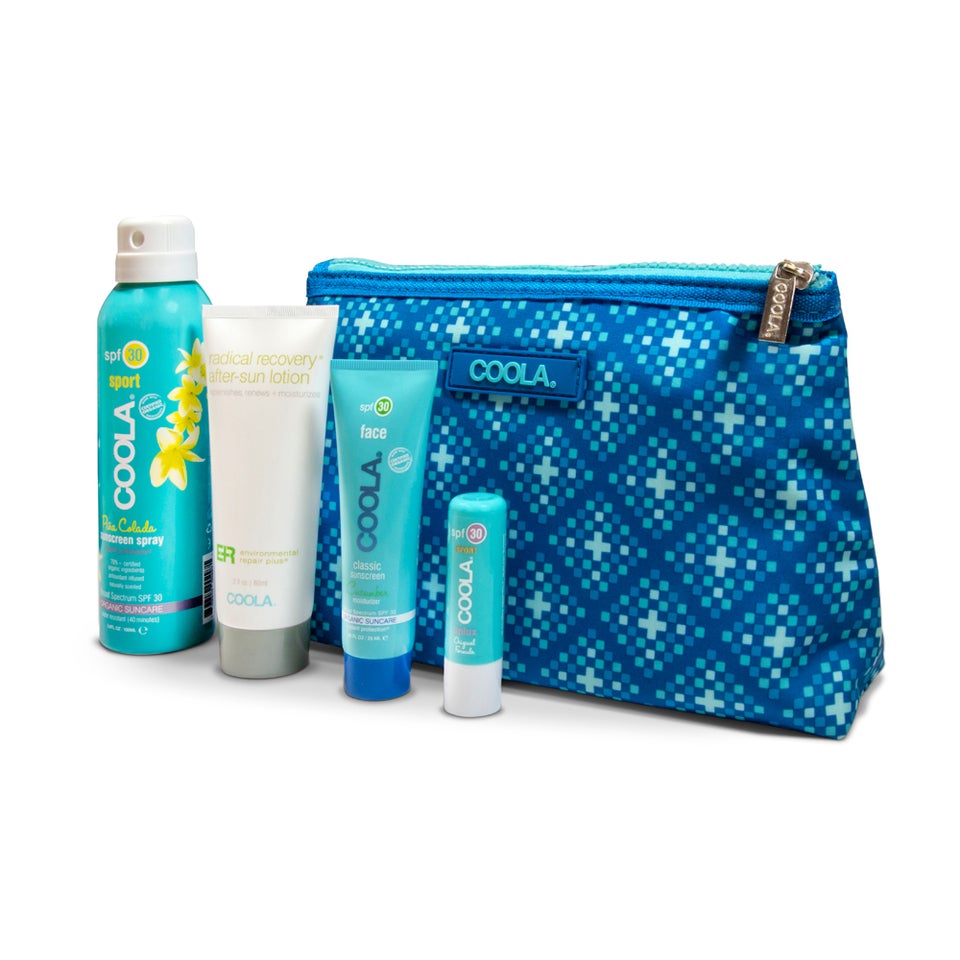


COOLA Signature Classic Travel Kit Collection, 4 Ct
Summary
This product contains several beneficial oils such as aloe, safflower, and raspberry seed oil, which provide moisturizing and antioxidant benefits. However, the inclusion of synthetic fragrance, labeled as 'flavor', can be a concern due to potential skin irritation and undisclosed chemical content. The processing level and presence of this synthetic ingredient prevent it from achieving a higher score.
At a glance
Key ingredients 40
AlcoholNeutral
Alcohol is commonly used as a solvent and preservative in cosmetic products. It helps in the quick evaporation of the product from the skin. However, it can be drying to the skin if used in high concentrations.
Risks
May cause skin dryness and irritation.
Benefits
Acts as a preservative and helps in quick drying of the product.
Aloe Barbadensis Leaf JuiceVery Good
Aloe Barbadensis Leaf Juice is known for its soothing and moisturizing properties. It is often used in skincare products for its ability to hydrate and calm the skin. Additionally, it contains antioxidants that can help protect the skin.
Risks
Generally considered safe with minimal risk of irritation.
Benefits
Provides hydration and soothing effects to the skin.
Butyloctyl SalicylateNeutral
Butyloctyl Salicylate is used in sunscreens to enhance the UV protection. It acts as a solvent and helps in the even distribution of sunscreen agents. It is generally considered safe for use in cosmetics.
Risks
Minimal risk of irritation or allergic reaction.
Benefits
Enhances UV protection and helps in even application of sunscreen.
Carthamus Tinctorius Seed OilGood
Carthamus Tinctorius Seed Oil, also known as safflower oil, is rich in linoleic acid, which is beneficial for maintaining skin barrier function. It is often used for its moisturizing properties and ability to improve skin texture.
Risks
Generally safe, but may cause allergic reactions in sensitive individuals.
Benefits
Moisturizes the skin and improves skin texture.
FlavorBad
Flavor in cosmetic products is often a synthetic fragrance, which can cause allergic reactions or skin irritation. It is used to enhance the sensory experience of the product. However, it may contain undisclosed chemicals.
Risks
Potential for allergic reactions and skin irritation.
Benefits
Enhances the sensory experience of the product.
Limnanthes Alba Seed OilGood
Limnanthes Alba Seed Oil, also known as meadowfoam seed oil, is known for its moisturizing and rejuvenating properties. It is highly stable and helps to lock in moisture in the skin. It is often used in skincare for its emollient benefits.
Risks
Generally considered safe with low risk of irritation.
Benefits
Provides moisture and helps to rejuvenate the skin.
Mauritia Flexuosa Fruit OilGood
Mauritia Flexuosa Fruit Oil is rich in beta-carotene and essential fatty acids, making it beneficial for skin health. It is used for its moisturizing and antioxidant properties. It helps to protect the skin from environmental damage.
Risks
Generally safe, but may cause allergic reactions in sensitive individuals.
Benefits
Moisturizes the skin and provides antioxidant protection.
Methyl DihydroabietateNeutral
Methyl Dihydroabietate is used as a fragrance ingredient in cosmetics. It provides a pleasant scent to the product. It is generally considered safe for use in cosmetics.
Risks
Minimal risk of irritation or allergic reaction.
Benefits
Adds fragrance to the product.
Opuntia Ficus-Indica Seed OilGood
Opuntia Ficus-Indica Seed Oil, also known as prickly pear seed oil, is rich in essential fatty acids and vitamin E. It is known for its moisturizing and anti-aging properties. It helps to improve skin elasticity and reduce the appearance of fine lines.
Risks
Generally considered safe with low risk of irritation.
Benefits
Moisturizes the skin and provides anti-aging benefits.
Rubus Idaeus Seed OilGood
Rubus Idaeus Seed Oil, also known as raspberry seed oil, is rich in antioxidants and essential fatty acids. It is used for its moisturizing and anti-inflammatory properties. It helps to protect the skin from environmental damage.
Risks
Generally considered safe with low risk of irritation.
Benefits
Provides moisture and antioxidant protection to the skin.
Sodium HydroxideNeutral
Sodium Hydroxide is used to adjust the pH of cosmetic products. It is a strong alkaline compound that helps to balance the acidity of the formulation. It is used in small amounts to ensure product stability.
Risks
Can cause irritation if used in high concentrations.
Benefits
Helps to stabilize the pH of the product.
Xanthan GumNeutral
Xanthan Gum is used as a thickening agent in cosmetic formulations. It helps to stabilize emulsions and improve the texture of the product. It is derived from natural sources and is generally considered safe.
Risks
Minimal risk of irritation or allergic reaction.
Benefits
Improves the texture and stability of the product.
WaterNeutral
Water is a common solvent used in cosmetic products. It acts as a base for formulations and helps to dissolve other ingredients. It is essential for hydrating the skin.
Benefits
Provides hydration and acts as a solvent in formulations.
TropoloneNeutral
Tropolone is used as a preservative in cosmetic products. It helps to prevent the growth of bacteria and mold. It is generally considered safe for use in cosmetics.
Risks
Minimal risk of irritation or allergic reaction.
Benefits
Acts as a preservative to extend the shelf life of the product.
Phytate SodiumNeutral
Phytate Sodium is used as a chelating agent in cosmetics. It helps to stabilize formulations by binding metal ions. It is derived from natural sources and is generally considered safe.
Risks
Minimal risk of irritation or allergic reaction.
Benefits
Stabilizes formulations and prevents metal ion interference.
Decyl GlucosideNeutral
Decyl Glucoside is a mild surfactant used in cosmetic products. It is derived from natural sources and is known for its gentle cleansing properties. It is suitable for sensitive skin and is biodegradable.
Risks
Minimal risk of irritation or allergic reaction.
Benefits
Provides gentle cleansing and is suitable for sensitive skin.
Citric Acid MonohydrateNeutral
Citric Acid Monohydrate is used to adjust the pH of cosmetic formulations. It is a natural acid that helps to balance the acidity of the product. It is also used as a preservative and antioxidant.
Risks
Can cause irritation if used in high concentrations.
Benefits
Helps to stabilize the pH and acts as a preservative.
Butylene GlycolNeutral
Butylene Glycol is used as a solvent and humectant in cosmetic products. It helps to improve the texture and spreadability of the product. It is generally considered safe for use in cosmetics.
Risks
Minimal risk of irritation or allergic reaction.
Benefits
Improves texture and provides moisture to the skin.
Canola OilGood
Canola Oil is rich in essential fatty acids and is used for its moisturizing properties. It helps to improve skin texture and provides nourishment to the skin. It is often used in skincare products for its emollient benefits.
Risks
Generally considered safe with low risk of irritation.
Benefits
Moisturizes and nourishes the skin.
1,2-HexanediolNeutral
1,2-Hexanediol is used as a solvent and preservative in cosmetic products. It helps to improve the texture and stability of the formulation. It is generally considered safe for use in cosmetics.
Risks
Minimal risk of irritation or allergic reaction.
Benefits
Improves texture and acts as a preservative.
PhenoxyethanolNeutral
Phenoxyethanol is used as a preservative in cosmetic products. It helps to prevent the growth of bacteria and mold. It is generally considered safe for use in cosmetics at low concentrations.
Risks
Can cause irritation in sensitive individuals.
Benefits
Acts as a preservative to extend the shelf life of the product.
Sodium BenzoateNeutral
Sodium Benzoate is used as a preservative in cosmetic products. It helps to prevent the growth of bacteria and mold. It is generally considered safe for use in cosmetics.
Risks
Can cause irritation in sensitive individuals.
Benefits
Acts as a preservative to extend the shelf life of the product.
Raspberry Seed OilGood
Raspberry Seed Oil is rich in antioxidants and essential fatty acids. It is used for its moisturizing and anti-inflammatory properties. It helps to protect the skin from environmental damage.
Risks
Generally considered safe with low risk of irritation.
Benefits
Provides moisture and antioxidant protection to the skin.
Dimethicone/Vinyl Dimethicone CrosspolymerNeutral
Dimethicone/Vinyl Dimethicone Crosspolymer is used as a texture enhancer in cosmetic products. It provides a smooth and silky feel to the skin. It is generally considered safe for use in cosmetics.
Risks
Minimal risk of irritation or allergic reaction.
Benefits
Improves texture and provides a smooth feel to the skin.
TocopherolGood
Tocopherol, also known as vitamin E, is a powerful antioxidant. It helps to protect the skin from free radical damage and provides moisturizing benefits. It is often used in skincare products for its anti-aging properties.
Risks
Generally considered safe with low risk of irritation.
Benefits
Provides antioxidant protection and moisturizes the skin.
Tert-Butyl AlcoholNeutral
Tert-Butyl Alcohol is used as a solvent in cosmetic products. It helps to dissolve other ingredients and improve the texture of the formulation. It is generally considered safe for use in cosmetics.
Risks
Minimal risk of irritation or allergic reaction.
Benefits
Acts as a solvent and improves texture.
Sodium ChlorideNeutral
Sodium Chloride is used as a thickening agent in cosmetic products. It helps to improve the texture and stability of the formulation. It is generally considered safe for use in cosmetics.
Risks
Minimal risk of irritation or allergic reaction.
Benefits
Improves texture and stability of the product.
Silicon DioxideNeutral
Silicon Dioxide is used as an anti-caking agent in cosmetic products. It helps to improve the texture and flow of the formulation. It is generally considered safe for use in cosmetics.
Risks
Minimal risk of irritation or allergic reaction.
Benefits
Improves texture and prevents caking.
Ammonium AcryloyldimethyltaurateNeutral
Ammonium Acryloyldimethyltaurate is used as a thickening agent in cosmetic products. It helps to stabilize emulsions and improve the texture of the formulation. It is generally considered safe for use in cosmetics.
Risks
Minimal risk of irritation or allergic reaction.
Benefits
Improves texture and stability of the product.
Jojoba OilGood
Jojoba Oil is known for its moisturizing and emollient properties. It is similar to the natural oils produced by the skin, making it an excellent moisturizer. It helps to improve skin texture and provides nourishment.
Risks
Generally considered safe with low risk of irritation.
Benefits
Moisturizes and nourishes the skin.
Hydrogenated Jojoba OilGood
Hydrogenated Jojoba Oil is used for its moisturizing and emollient properties. It is a stable form of jojoba oil that helps to improve skin texture. It provides long-lasting moisture to the skin.
Risks
Generally considered safe with low risk of irritation.
Benefits
Provides long-lasting moisture and improves skin texture.
Hexylene GlycolNeutral
Hexylene Glycol is used as a solvent and viscosity agent in cosmetic products. It helps to improve the texture and spreadability of the formulation. It is generally considered safe for use in cosmetics.
Risks
Minimal risk of irritation or allergic reaction.
Benefits
Improves texture and spreadability of the product.
GluconolactoneNeutral
Gluconolactone is used as a moisturizer and exfoliant in cosmetic products. It helps to improve skin texture and provides gentle exfoliation. It is generally considered safe for use in cosmetics.
Risks
Minimal risk of irritation or allergic reaction.
Benefits
Provides gentle exfoliation and improves skin texture.
Carthamus Tinctorius SeedcakeNeutral
Carthamus Tinctorius Seedcake is used for its moisturizing properties in cosmetic products. It is derived from safflower seeds and helps to improve skin texture. It is generally considered safe for use in cosmetics.
Risks
Minimal risk of irritation or allergic reaction.
Benefits
Moisturizes and improves skin texture.
DimethiconeNeutral
Dimethicone is used as a skin protectant and conditioning agent in cosmetic products. It provides a smooth and silky feel to the skin. It is generally considered safe for use in cosmetics.
Risks
Minimal risk of irritation or allergic reaction.
Benefits
Provides a smooth feel and protects the skin.
Meadowfoam Seed OilGood
Meadowfoam Seed Oil is known for its moisturizing and rejuvenating properties. It is highly stable and helps to lock in moisture in the skin. It is often used in skincare for its emollient benefits.
Risks
Generally considered safe with low risk of irritation.
Benefits
Provides moisture and helps to rejuvenate the skin.
GlycerinGood
Glycerin is a humectant that attracts moisture to the skin. It is used in cosmetic products for its moisturizing properties. It helps to improve skin hydration and texture.
Risks
Generally considered safe with low risk of irritation.
Benefits
Provides moisture and improves skin hydration.
Safflower OilGood
Safflower Oil is rich in linoleic acid, which is beneficial for maintaining skin barrier function. It is often used for its moisturizing properties and ability to improve skin texture. It is generally considered safe for use in cosmetics.
Risks
Generally safe, but may cause allergic reactions in sensitive individuals.
Benefits
Moisturizes the skin and improves skin texture.
Caprylyl GlycolNeutral
Caprylyl Glycol is used as a humectant and preservative in cosmetic products. It helps to improve the texture and stability of the formulation. It is generally considered safe for use in cosmetics.
Risks
Minimal risk of irritation or allergic reaction.
Benefits
Improves texture and acts as a preservative.
Camelina Sativa Seed OilGood
Camelina Sativa Seed Oil is rich in omega-3 fatty acids and antioxidants. It is used for its moisturizing and anti-inflammatory properties. It helps to protect the skin from environmental damage.
Risks
Generally considered safe with low risk of irritation.
Benefits
Provides moisture and antioxidant protection to the skin.
Processing
Processed Foods
Get the full breakdown in the Scout app
Scan any product to see lab results, healthy alternatives, and your personalized analysis.
Download on theApp Store