
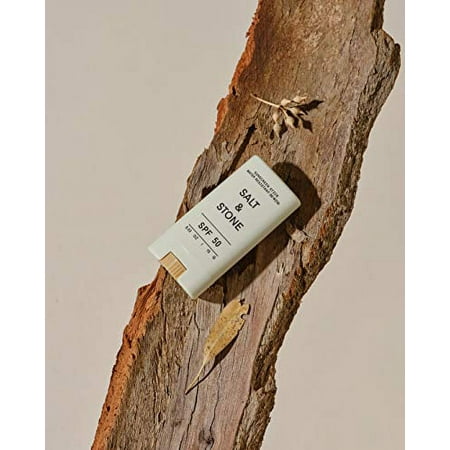


Salt & Stone - SPF 50 Tinted Sunscreen Stick - Mineral Zinc Oxide Broad Spectrum Water Resistant Reef Safe Face + Body Moisturizing Cruelty Free Gluten Free Kids Travel-Friendly Made in USA
Summary
This sunscreen stick contains beneficial ingredients like Zinc Oxide and Titanium Dioxide, which provide effective UV protection and are suitable for sensitive skin. However, the presence of fragrance and phenoxyethanol, which can cause irritation and contain undisclosed allergens, affects its overall safety profile. Despite being processed, the product includes several natural and minimally processed ingredients, contributing positively to its rating.
At a glance
Key ingredients 19
Zinc OxideVery Good
Zinc Oxide is a mineral sunscreen agent that provides broad-spectrum UV protection. It is non-nano and reef-safe, making it environmentally friendly. It is also suitable for sensitive skin due to its anti-inflammatory properties.
Benefits
Provides effective protection against UVA and UVB rays and is gentle on the skin.
Titanium DioxideGood
Titanium Dioxide is another mineral sunscreen agent that offers UV protection. It is often used in combination with Zinc Oxide for enhanced efficacy. It is considered safe and effective for sensitive skin types.
Risks
Inhalation of fine particles can be a concern, but this is not applicable in cream or stick formulations.
Benefits
Offers broad-spectrum UV protection and is non-irritating to the skin.
WaterNeutral
Water is used as a solvent and base in many cosmetic formulations. It helps to dissolve other ingredients and provides a smooth texture. The quality of water used is crucial, but no specific source or purity details are provided.
See more about Water →Coconut OilVery Good
Coconut Oil is a natural emollient that moisturizes and nourishes the skin. It is rich in fatty acids and has antimicrobial properties. It is minimally processed and retains its natural benefits.
Risks
May cause breakouts in acne-prone skin due to its comedogenic nature.
Benefits
Provides deep hydration and has antibacterial properties that benefit skin health.
Shea ButterVery Good
Shea Butter is a natural fat extracted from the nuts of the shea tree. It is highly moisturizing and contains vitamins A and E. It is minimally processed, preserving its beneficial properties.
Benefits
Deeply hydrates and nourishes the skin, improving elasticity and reducing inflammation.
BeeswaxGood
Beeswax is a natural wax produced by honey bees. It acts as a barrier to lock in moisture and protect the skin. It is unrefined and retains its natural properties.
Benefits
Helps to seal moisture into the skin and provides a protective barrier.
Jojoba OilVery Good
Jojoba Oil is a liquid wax ester that closely resembles the skin's natural sebum. It is non-comedogenic and helps balance oil production. It is cold-pressed, preserving its natural nutrients.
Benefits
Moisturizes without clogging pores and helps regulate skin's oil production.
Vitamin EVery Good
Vitamin E is a powerful antioxidant that protects the skin from free radical damage. It is often used to enhance the stability of skincare products. It is naturally derived and beneficial for skin health.
Benefits
Protects against oxidative stress and supports skin repair and hydration.
Sunflower OilGood
Sunflower Oil is a non-comedogenic oil rich in linoleic acid. It helps to maintain the skin's barrier and reduce inflammation. It is cold-pressed, ensuring the retention of its beneficial properties.
Benefits
Moisturizes and strengthens the skin barrier while providing anti-inflammatory benefits.
Caprylic/Capric TriglycerideGood
Caprylic/Capric Triglyceride is an emollient derived from coconut oil and glycerin. It helps to improve the spreadability of products and provides a lightweight, non-greasy feel. It is highly stable and non-irritating.
Benefits
Enhances product texture and provides moisturizing benefits without a greasy residue.
TocopherolGood
Tocopherol is a form of Vitamin E used as an antioxidant in skincare products. It helps to protect the skin from environmental damage and improve product stability. It is naturally sourced and beneficial for skin health.
Benefits
Provides antioxidant protection and supports skin repair and hydration.
Sodium HyaluronateVery Good
Sodium Hyaluronate is a salt form of hyaluronic acid that attracts and retains moisture in the skin. It is highly effective in hydrating and plumping the skin. It is biocompatible and suitable for all skin types.
Benefits
Deeply hydrates and plumps the skin, reducing the appearance of fine lines.
GlycerinVery Good
Glycerin is a humectant that draws moisture into the skin, keeping it hydrated. It is naturally derived and enhances the skin's moisture barrier. It is widely used for its safety and efficacy.
Benefits
Attracts moisture to the skin, improving hydration and skin barrier function.
Cetearyl AlcoholNeutral
Cetearyl Alcohol is a fatty alcohol used as an emulsifier and thickener in skincare products. It helps to stabilize formulations and improve texture. It is derived from natural sources and is non-irritating.
Benefits
Improves product texture and stability without drying the skin.
Ceteareth-20Neutral
Ceteareth-20 is an emulsifying agent that helps to blend oil and water components in formulations. It is synthetically derived and widely used in cosmetics. It is generally considered safe for topical use.
Risks
May cause irritation in sensitive individuals, especially if used in high concentrations.
Benefits
Facilitates the mixing of ingredients, improving product consistency.
Sorbitan StearateNeutral
Sorbitan Stearate is an emulsifier used to stabilize and thicken formulations. It is derived from sorbitol and stearic acid, both of which are naturally occurring substances. It is considered safe for use in cosmetics.
Benefits
Helps to stabilize emulsions, improving product texture and consistency.
FragranceBad
Fragrance is a mixture of aromatic compounds used to impart scent to products. It can contain allergens and irritants that may cause skin sensitivity. The specific components are often undisclosed, making it difficult to assess safety.
Risks
Potential to cause allergic reactions and skin irritation, especially in sensitive individuals.
PhenoxyethanolBad
Phenoxyethanol is a synthetic preservative used to prevent microbial growth in cosmetics. It is effective but can cause irritation in some individuals. It is often used as a safer alternative to parabens.
Risks
May cause skin irritation and allergic reactions in sensitive individuals.
Benefits
Provides effective preservation, extending the shelf life of products.
EthylhexylglycerinNeutral
Ethylhexylglycerin is a preservative enhancer and skin conditioning agent. It is often used in combination with other preservatives to boost efficacy. It is considered safe for use in cosmetics.
Benefits
Enhances the effectiveness of preservatives and conditions the skin.
Processing
Processed Foods
Get the full breakdown in the Scout app
Scan any product to see lab results, healthy alternatives, and your personalized analysis.
Download on theApp Store