
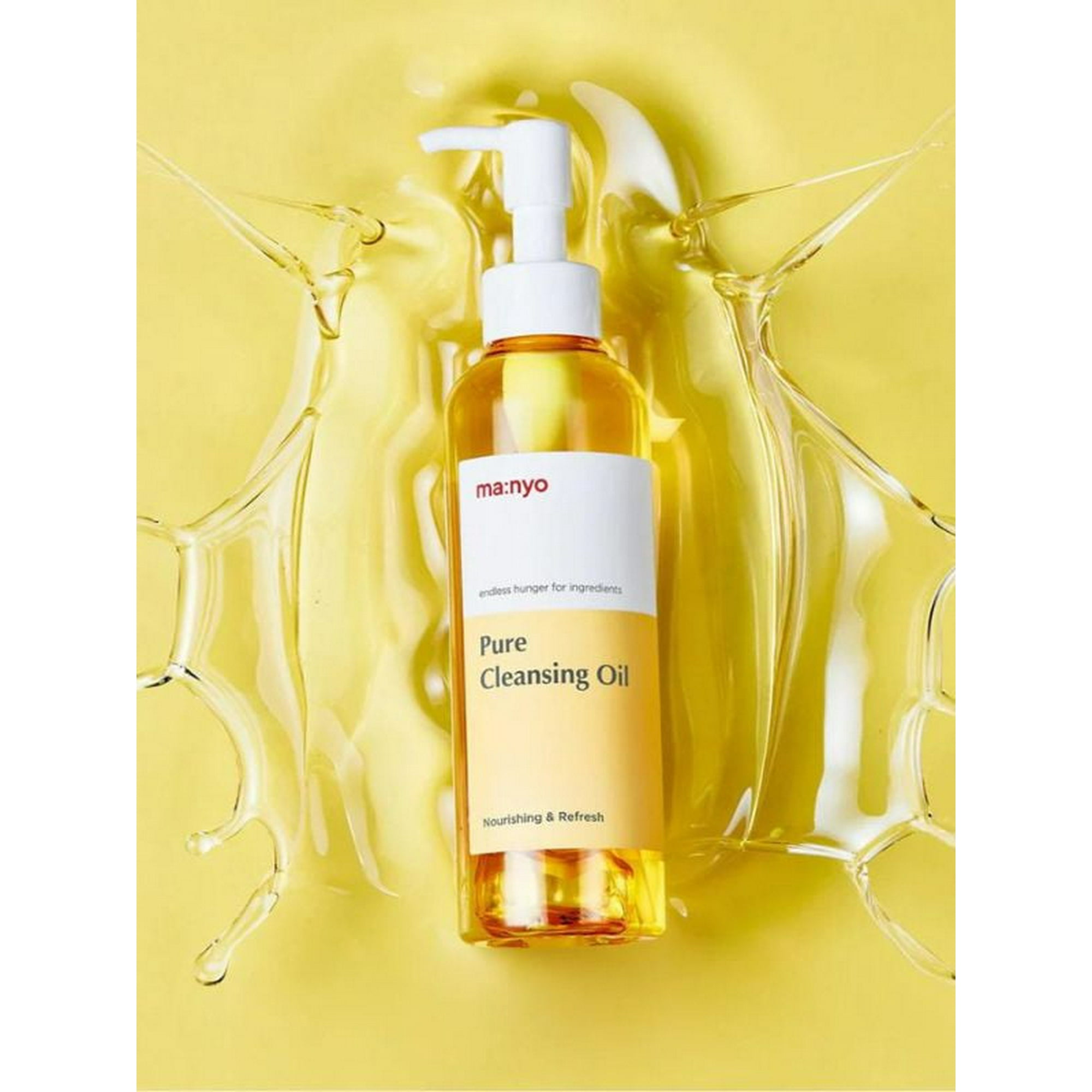
ma:nyo Pure Cleansing Face Oil - 6.7oz
Analysis updated August 2026 · How Scout scores
At a glance
Summary
This face oil is composed primarily of natural oils and beneficial extracts, such as soybean, hazelnut, and grape seed oils, which provide excellent moisturizing and antioxidant properties. The product is minimally processed and includes skin-friendly ingredients like squalane and argan oil. However, the presence of fragrance components like limonene and linalool, which can cause irritation in sensitive individuals, slightly detracts from its overall safety profile.
Key ingredients 33
Glycine Soja (Soybean) OilVery Good
Soybean oil is rich in essential fatty acids and vitamin E, which help to nourish and protect the skin. It is known for its moisturizing properties and ability to improve skin elasticity.
Risks
May cause allergic reactions in individuals sensitive to soy.
Benefits
Provides deep hydration and helps maintain skin barrier function.
Corylus Avellana (Hazelnut) Seed OilVery Good
Hazelnut oil is a lightweight oil that is easily absorbed by the skin, making it an excellent moisturizer. It contains antioxidants and fatty acids that help protect and rejuvenate the skin.
Risks
Potential allergen for those with nut allergies.
Benefits
Helps to balance skin's oil production and improve skin texture.
Vitis Vinifera (Grape) Seed OilVery Good
Grape seed oil is rich in antioxidants, including vitamin E, which help to protect the skin from environmental damage. It is lightweight and non-comedogenic, making it suitable for all skin types.
Risks
Rarely, it may cause allergic reactions.
Benefits
Promotes skin repair and reduces inflammation.
Olea Europaea (Olive) Fruit OilVery Good
Olive oil is rich in vitamins A, D, E, and K, and has strong moisturizing properties. It helps to nourish and protect the skin, making it softer and more supple.
Risks
May clog pores in acne-prone skin if used excessively.
Benefits
Deeply hydrates and soothes dry or irritated skin.
SqualaneVery Good
Squalane is a highly effective emollient and natural antioxidant. It mimics the skin's natural oils, making it an excellent moisturizer for all skin types.
Risks
Very low risk of irritation or allergic reaction.
Benefits
Improves skin elasticity and reduces the appearance of fine lines.
Argania Spinosa Kernel OilVery Good
Argan oil is rich in essential fatty acids and vitamin E, providing deep hydration and nourishment to the skin. It is known for its anti-aging and skin-softening properties.
Risks
Rarely, it may cause allergic reactions.
Benefits
Helps to improve skin elasticity and reduce inflammation.
Camellia Japonica Seed OilVery Good
Camellia oil is lightweight and easily absorbed, providing excellent moisturizing and anti-aging benefits. It is rich in oleic acid and antioxidants.
Risks
Generally safe with low risk of irritation.
Benefits
Nourishes the skin and helps to maintain a youthful appearance.
Helianthus Annuus (Sunflower) Seed OilVery Good
Sunflower seed oil is rich in vitamin E and fatty acids, providing excellent emollient properties. It helps to maintain the skin's natural barrier and prevent moisture loss.
Risks
May cause allergic reactions in individuals sensitive to sunflower seeds.
Benefits
Protects and nourishes the skin, promoting a healthy complexion.
Oenothera Biennis (Evening Primrose) OilVery Good
Evening primrose oil is high in gamma-linolenic acid, which helps to reduce inflammation and improve skin health. It is beneficial for dry and sensitive skin.
Risks
Rarely, it may cause skin irritation or allergic reactions.
Benefits
Supports skin hydration and reduces redness and irritation.
Simmondsia Chinensis (Jojoba) Seed OilVery Good
Jojoba oil closely resembles the skin's natural sebum, making it an excellent moisturizer. It is non-comedogenic and helps to balance oil production.
Risks
Very low risk of irritation or allergic reaction.
Benefits
Moisturizes and protects the skin without clogging pores.
Orbignya Oleifera Seed OilVery Good
Babassu oil is similar to coconut oil and is rich in lauric acid, providing excellent moisturizing properties. It is lightweight and easily absorbed by the skin.
Risks
May cause allergic reactions in individuals sensitive to coconut derivatives.
Benefits
Softens and hydrates the skin, leaving it smooth and supple.
Olea Europaea (Olive) Husk OilVery Good
Olive husk oil is a byproduct of olive oil production, rich in antioxidants and fatty acids. It provides nourishing and protective benefits to the skin.
Risks
May cause pore-clogging in acne-prone skin if used excessively.
Benefits
Enhances skin hydration and provides antioxidant protection.
Ginkgo Biloba Leaf ExtractVery Good
Ginkgo Biloba extract is known for its antioxidant and anti-inflammatory properties. It helps to protect the skin from environmental damage and improve circulation.
Risks
Rarely, it may cause skin irritation or allergic reactions.
Benefits
Promotes healthy skin and reduces signs of aging.
Camellia Sinensis Leaf ExtractVery Good
Green tea extract is rich in polyphenols, providing strong antioxidant and anti-inflammatory benefits. It helps to protect the skin from free radical damage.
Risks
Generally safe with low risk of irritation.
Benefits
Reduces redness and irritation while promoting a healthy complexion.
Aloe Barbadensis Leaf ExtractVery Good
Aloe vera extract is known for its soothing and hydrating properties. It helps to calm irritated skin and promote healing.
Risks
Rarely, it may cause allergic reactions in sensitive individuals.
Benefits
Provides deep hydration and soothes inflammation.
Oryza Sativa (Rice) Bran OilVery Good
Rice bran oil is rich in antioxidants, vitamins, and fatty acids, providing excellent moisturizing and anti-aging benefits. It helps to protect and nourish the skin.
Risks
Rarely, it may cause allergic reactions.
Benefits
Enhances skin softness and reduces the appearance of fine lines.
TocopherolVery Good
Tocopherol, or vitamin E, is a powerful antioxidant that helps to protect the skin from free radical damage. It is known for its moisturizing and healing properties.
Risks
Very low risk of irritation or allergic reaction.
Benefits
Enhances skin barrier function and reduces signs of aging.
Caprylic/Capric TriglycerideGood
Caprylic/Capric Triglyceride is derived from coconut oil and glycerin, providing a silky feel and acting as an effective moisturizer. It helps to improve the spreadability of products.
Risks
Generally safe, but may cause mild irritation in sensitive individuals.
Benefits
Enhances skin's moisture retention and provides a smooth application.
Saponaria Officinalis Leaf ExtractGood
Saponaria Officinalis, also known as soapwort, contains natural saponins that provide gentle cleansing properties. It is used for its soothing and anti-inflammatory effects.
Risks
May cause irritation in sensitive skin if used in high concentrations.
Benefits
Cleanses the skin without stripping natural oils.
Decyl GlucosideGood
Beneficial ingredient — whole-food or functional value in this product class.
Risks
Generally considered safe, but may cause mild irritation in very sensitive skin.
Benefits
Cleanses the skin without causing dryness or irritation.
GlycerinGood
Glycerin is a humectant that attracts moisture to the skin, helping to keep it hydrated. It is widely used for its moisturizing properties.
Risks
Very low risk of irritation or allergic reaction.
Benefits
Enhances skin hydration and improves barrier function.
Rice Ferment Filtrate (Sake)Good
Rice ferment filtrate, or sake, is rich in amino acids and enzymes that help to brighten and hydrate the skin. It is known for its anti-aging benefits.
Risks
Generally safe, but may cause irritation in sensitive skin.
Benefits
Improves skin texture and radiance.
Melaleuca Alternifolia (Tea Tree) Leaf OilGood
Tea tree oil is known for its antimicrobial and anti-inflammatory properties, making it effective in treating acne and other skin conditions. It helps to reduce redness and irritation.
Risks
May cause irritation or allergic reactions in sensitive skin.
Benefits
Helps to clear blemishes and soothe inflamed skin.
Lavandula Angustifolia (Lavender) OilGood
Lavender oil is known for its calming and soothing properties. It helps to reduce redness and irritation while promoting relaxation.
Risks
May cause irritation or allergic reactions in sensitive skin.
Benefits
Calms the skin and provides a pleasant aroma.
Citrus Aurantium Dulcis (Orange) Peel OilGood
Orange peel oil is rich in vitamin C and antioxidants, providing brightening and anti-aging benefits. It helps to improve skin texture and tone.
Risks
May cause photosensitivity or irritation in sensitive skin.
Benefits
Brightens the complexion and reduces signs of aging.
Sorbeth-30 TetraoleateNeutral
Sorbeth-30 Tetraoleate is an emulsifier used to blend oil and water-based ingredients. It helps to stabilize formulations and improve texture.
Risks
Generally considered safe, but may cause irritation in sensitive skin.
Benefits
Enhances product consistency and application.
Vegetable OilNeutral
Vegetable oil is a generic term that can refer to various plant-derived oils. It is often used as a base or carrier oil in formulations.
Risks
Quality and composition can vary, potentially affecting skin compatibility.
Benefits
Provides emollient properties and helps to soften the skin.
Isoamyl LaurateNeutral
Isoamyl Laurate is an ester used to enhance the texture and spreadability of cosmetic products. It provides a silky feel and helps to reduce greasiness.
Risks
Generally considered safe, but may cause mild irritation in sensitive skin.
Benefits
Improves product application and skin feel.
Butylene GlycolNeutral
Butylene Glycol is a common solvent and conditioning agent used in cosmetics. It helps to improve the texture and spreadability of products.
Risks
May cause irritation in sensitive skin or if used in high concentrations.
Benefits
Enhances product absorption and provides a smooth application.
WaterNeutral
Water is used as a solvent in cosmetic formulations, helping to dissolve other ingredients and provide a base for the product.
Benefits
Acts as a carrier for active ingredients and hydrates the skin.
1,2-HexanediolNeutral
1,2-Hexanediol is a synthetic preservative and moisture-binding agent used in cosmetics. It helps to stabilize formulations and improve product longevity.
Risks
Generally considered safe, but may cause irritation in sensitive skin.
Benefits
Enhances product stability and provides mild moisturizing effects.
LimoneneBad
Limonene is a fragrance component that can cause skin irritation and sensitization, especially when oxidized. It is used for its citrus scent.
Risks
Potential allergen and skin irritant, particularly in sensitive individuals.
Benefits
Provides a fresh, citrus aroma to products.
LinaloolBad
Linalool is a fragrance ingredient that can cause skin irritation and allergic reactions in some individuals. It is commonly used for its floral scent.
Risks
Potential allergen and skin irritant, particularly in sensitive individuals.
Benefits
Adds a pleasant floral aroma to products.
Get the full breakdown in the Scout appTake Scout shopping
Scan any product to see lab results, healthy alternatives, and your personalized analysis.
Download on theApp Store GET IT ONGoogle PlayAmazon pricing & content
Amazon price as of . Product prices and availability are accurate as of the date/time indicated and are subject to change. Any price and availability information displayed on Amazon.com at the time of purchase will apply to the purchase of this product.
CERTAIN CONTENT THAT APPEARS ON THIS SITE COMES FROM AMAZON. THIS CONTENT IS PROVIDED “AS IS” AND IS SUBJECT TO CHANGE OR REMOVAL AT ANY TIME.