
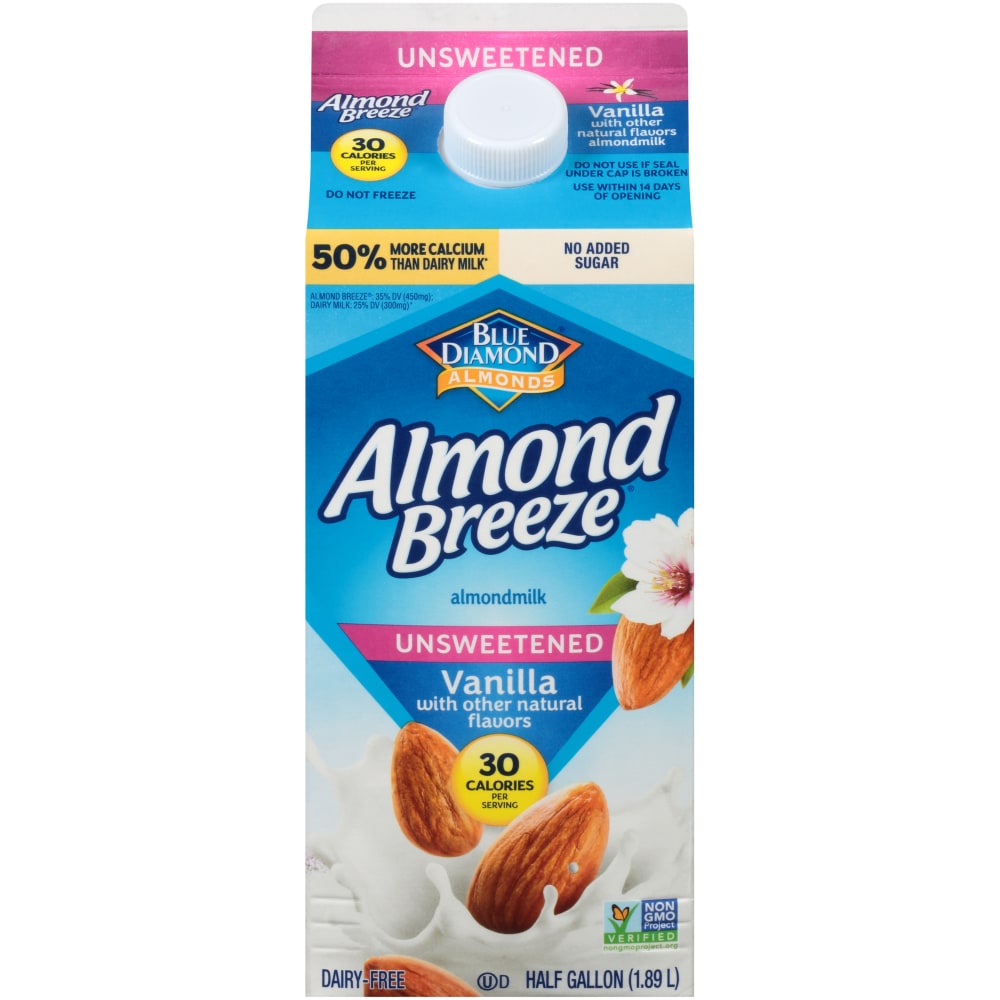


Vanilla unsweetened almond milk
Summary
This vanilla unsweetened almond milk is a processed product but contains mostly clean ingredients like almondmilk, filtered water, and almonds, which are beneficial for health. The inclusion of fortifying agents such as calcium carbonate and vitamins A and D2 enhances its nutritional profile. However, the presence of emulsifiers and gums, while not harmful, contributes to its processing level, which slightly limits its score.
At a glance
Key ingredients 12
AlmondmilkGood
Almondmilk is a plant-based milk alternative that is low in calories and saturated fat. It is typically made by blending almonds with water and straining the mixture, retaining some of the nutritional benefits of almonds. It is a suitable option for those who are lactose intolerant or seeking a dairy-free alternative.
Benefits
Rich in vitamin E and healthy fats, supporting skin health and providing antioxidant properties.
Filtered WaterVery Good
Filtered water is used as a base in many beverages to ensure purity and safety. The filtration process removes impurities and contaminants, providing a clean and safe ingredient. It is essential for hydration and acts as a solvent for other ingredients.
Benefits
Provides essential hydration and helps in the absorption of nutrients.
AlmondsVery Good
Almonds are a nutrient-dense nut rich in healthy fats, protein, and fiber. They are minimally processed, often just blanched or roasted, retaining most of their nutritional value. Almonds are known for their heart health benefits and ability to support weight management.
Benefits
High in monounsaturated fats and vitamin E, promoting heart health and providing antioxidant benefits.
Calcium CarbonateGood
Calcium carbonate is used as a calcium supplement in fortified foods and beverages. It is a common additive to enhance the nutritional profile, especially in non-dairy products. It helps in maintaining bone health and preventing calcium deficiency.
Risks
Excessive intake may lead to hypercalcemia, causing kidney stones or impaired absorption of other minerals.
Benefits
Provides a source of calcium, essential for bone health and muscle function.
Natural Vanilla FlavorNeutral
Natural vanilla flavor is used to impart a vanilla taste to food products. It is derived from vanilla beans or other natural sources, providing a more authentic flavor compared to artificial vanilla. It enhances the sensory appeal of the product without significant nutritional impact.
Benefits
Adds flavor without adding calories or sugar.
Sea SaltGood
Unrefined sea salt — a minimally processed, natural source of sodium and essential trace minerals, and a legitimate whole-food seasoning. Treated as a positive ingredient.
Risks
High sodium intake can contribute to hypertension and cardiovascular disease.
Benefits
Contains trace minerals and provides essential sodium for electrolyte balance.
Potassium CitrateGood
Potassium citrate is used as a potassium supplement and acidity regulator. It helps maintain proper electrolyte balance and supports cardiovascular health. It is often added to improve the nutritional profile of beverages.
Risks
Excessive intake may cause hyperkalemia, leading to heart and kidney issues.
Benefits
Supports heart health and helps in maintaining electrolyte balance.
Sunflower LecithinGood
Sunflower lecithin is used as an emulsifier to improve texture and consistency in food products. It is derived from sunflower seeds and is a natural alternative to soy lecithin. It may support brain health and improve lipid metabolism.
Benefits
Contains phospholipids that support brain health and improve lipid metabolism.
Guar GumNeutral
Guar gum is a thickening agent derived from guar beans, used to improve texture and stability in food products. It is a soluble fiber that can aid in digestion and improve the consistency of beverages. While generally safe, excessive consumption may cause digestive issues.
Risks
Excessive intake may lead to digestive discomfort such as bloating or gas.
Benefits
Acts as a soluble fiber, potentially aiding in digestion and improving gut health.
Gellan GumNeutral
Gellan gum is a gelling agent used to stabilize and thicken food products. It is produced through fermentation and is considered safe for consumption. It helps maintain the desired texture and consistency of beverages.
Benefits
Helps stabilize and thicken products, improving texture without adding calories.
Vitamin A PalmitateGood
Vitamin A palmitate is a form of vitamin A used to fortify foods and beverages. It is essential for vision, immune function, and skin health. Fortification helps prevent vitamin A deficiency, especially in non-dairy products.
Risks
Excessive intake can lead to hypervitaminosis A, causing liver damage and other health issues.
Benefits
Supports vision, immune function, and skin health.
Vitamin D2Good
Vitamin D2 is a plant-based form of vitamin D used to fortify foods and beverages. It is essential for calcium absorption and bone health. Fortification helps prevent vitamin D deficiency, especially in plant-based products.
Risks
Excessive intake can lead to hypercalcemia, causing kidney stones or other health issues.
Benefits
Supports bone health and calcium absorption.
Processing
Processed Foods
Get the full breakdown in the Scout app
Scan any product to see lab results, healthy alternatives, and your personalized analysis.
Download on theApp Store