
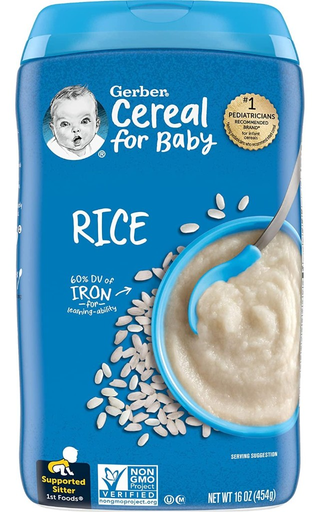

Gerber Rice Single Grain Cereal
At a glance
Summary
Gerber Rice Single Grain Cereal scored 8/100. Testing detected inorganic arsenic at 106 ppb — just over the FDA action level — with cadmium at 11.1 ppb (~2× industry target) and lead at 3.9 ppb. Marketed as a first-food starter cereal for 'supported sitters' at ~4-6 months. 'Non-GMO Project Verified' does not address soil-borne heavy metals in rice-based infant foods.
Contaminants 3
Source: Independent third-party laboratory testing
Arsenic 106 ppb High
A high level of arsenic — a significant sourcing/quality concern relative to what clean supply chains achieve.
Independent third-party testing.
Cadmium 11.1 ppb Low
A low level of cadmium — present but modest; a sourcing-quality note rather than a safety concern at typical intake.
Independent third-party testing.
Lead 3.9 ppb Trace
A trace amount of lead — within the range expected from normal soil uptake/processing and below our concern threshold.
Independent third-party testing.
Key ingredients 8
Soy LecithinBad
Refined emulsifier lecithin (doctrine: 'bad', distinct from seed oils).
See more about Soy Lecithin →Electrolytic IronBad
Synthetic iron powder — poorly bioavailable, can irritate infant gastrointestinal tract.
See more about Electrolytic Iron →Synthetic B-Vitamin FortificationBad
Contains niacinamide, thiamine mononitrate, riboflavin, pyridoxine HCl, and folic acid — synthetic nutrient stack.
See more about Synthetic B-Vitamin Fortification →Rice FlourNeutral
Standard formulation ingredient — neither beneficial nor harmful at typical use.
See more about Rice Flour →Calcium CarbonateNeutral
Calcium fortification.
See more about Calcium Carbonate →Vitamin E (Alpha Tocopherol Acetate)Neutral
Synthetic vitamin E fortification.
See more about Vitamin E (Alpha Tocopherol Acetate) →Zinc SulfateNeutral
Zinc fortification.
See more about Zinc Sulfate →Vitamin C (Sodium Ascorbate)Good
Added vitamin C; helps iron absorption.
See more about Vitamin C (Sodium Ascorbate) →Processing
Ultra-Processed Foods
Get the full breakdown in the Scout appTake Scout shopping
Scan any product to see lab results, healthy alternatives, and your personalized analysis.
Download on theApp Store GET IT ONGoogle PlayAmazon pricing & content
Amazon price as of . Product prices and availability are accurate as of the date/time indicated and are subject to change. Any price and availability information displayed on Amazon.com at the time of purchase will apply to the purchase of this product.
CERTAIN CONTENT THAT APPEARS ON THIS SITE COMES FROM AMAZON. THIS CONTENT IS PROVIDED “AS IS” AND IS SUBJECT TO CHANGE OR REMOVAL AT ANY TIME.