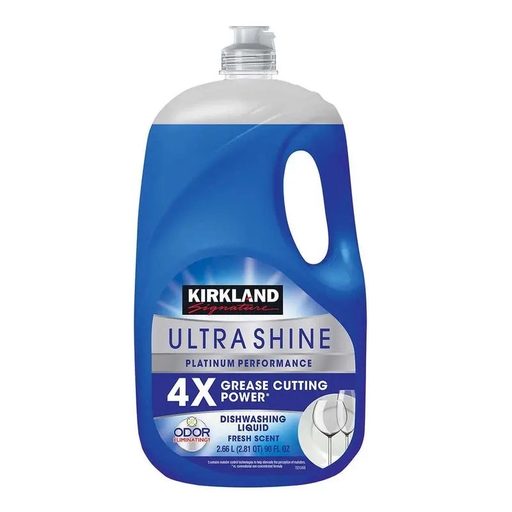
Kirkland Signature Ultra Shine Platinum Performance
At a glance
Summary
This dishwasher detergent contains beneficial cleaning agents like sodium carbonate peroxide and enzymes, which are effective and environmentally friendly. However, the presence of synthetic fragrances and limonene, which can cause skin irritation and are potential environmental pollutants, affects its overall safety and environmental impact. The product avoids harsher chemicals like SLS, but the inclusion of undisclosed fragrances prevents it from achieving a higher rating.
Key ingredients 19
Protease EnzymeVery Good
Protease enzymes break down protein-based stains, making them easier to remove. They are effective at low temperatures and are biodegradable. They are considered safe and environmentally friendly.
Risks
There are minimal risks associated with protease enzymes in cleaning products.
Benefits
They enhance stain removal and are environmentally friendly.
Amylase EnzymeVery Good
Amylase enzymes break down starch-based stains, making them easier to remove. They are effective at low temperatures and are biodegradable. They are considered safe and environmentally friendly.
Risks
There are minimal risks associated with amylase enzymes in cleaning products.
Benefits
They enhance stain removal and are environmentally friendly.
Sodium Carbonate PeroxideGood
Sodium carbonate peroxide is an oxygen-based bleaching agent. It releases hydrogen peroxide when dissolved in water, providing effective stain removal. It is considered safe and environmentally friendly.
Risks
May cause irritation to the skin and eyes upon direct contact.
Benefits
It is an effective stain remover and is biodegradable.
Sodium SulfateNeutral
Sodium sulfate is a common filler in cleaning products. It helps to bulk up the product without affecting its cleaning power. It is generally considered safe for use in cleaning applications.
Risks
There are minimal risks associated with sodium sulfate in cleaning products.
Benefits
It is an inexpensive and effective filler that does not interfere with the cleaning process.
Sodium CarbonateNeutral
Standard formulation ingredient — neither beneficial nor harmful at typical use.
Risks
In high concentrations, it can be irritating to the skin and eyes.
Benefits
It enhances the cleaning power of detergents and is environmentally friendly.
Sodium CitrateNeutral
Sodium citrate is used as a water softener in cleaning products. It helps to prevent mineral deposits on dishes and glassware. It is generally recognized as safe for use in cleaning applications.
Risks
There are minimal risks associated with sodium citrate in cleaning products.
Benefits
It helps to improve the effectiveness of detergents by softening water.
Trisodium Dicarboxymethyl Alaninate (MGDA)Neutral
MGDA is a chelating agent that binds to metal ions, preventing them from interfering with cleaning processes. It is biodegradable and considered safe for use in cleaning products. It enhances the performance of detergents by preventing mineral deposits.
Risks
There are minimal risks associated with MGDA in cleaning products.
Benefits
It improves the efficiency of cleaning agents and is environmentally friendly.
Acrylic Acid/Sulfonate Copolymer/TerpolymerNeutral
These polymers are used to prevent redeposition of soil on surfaces during cleaning. They help to keep dirt suspended in water. They are generally considered safe for use in cleaning products.
Risks
There are minimal risks associated with these polymers in cleaning products.
Benefits
They enhance the cleaning process by preventing soil redeposition.
TAEDNeutral
TAED is an activator for bleach systems, enhancing the effectiveness of oxygen-based bleaches. It is used to improve stain removal at lower temperatures. It is considered safe for use in cleaning products.
Risks
There are minimal risks associated with TAED in cleaning products.
Benefits
It enhances the performance of bleach, making it more effective at lower temperatures.
WaterNeutral
Water is used as a solvent and carrier for other ingredients in cleaning products. It helps to dissolve and distribute cleaning agents. It is safe and non-toxic.
Risks
There are no risks associated with water in cleaning products.
Benefits
It is essential for dissolving and distributing cleaning agents.
Polyvinyl AlcoholNeutral
Polyvinyl alcohol is used as a film-forming agent in cleaning products. It helps to encapsulate and release active ingredients. It is considered safe for use in cleaning applications.
Risks
There are minimal risks associated with polyvinyl alcohol in cleaning products.
Benefits
It aids in the controlled release of active ingredients.
Sodium MetasilicateNeutral
Sodium metasilicate is used as a builder in cleaning products, enhancing the effectiveness of surfactants. It helps to break down grease and remove stains. It is generally considered safe for use in cleaning applications.
Risks
May cause irritation to the skin and eyes upon direct contact.
Benefits
It enhances the cleaning power of detergents and is effective at removing grease.
Disodium DisilicateNeutral
Disodium disilicate is used as a builder in cleaning products, enhancing the effectiveness of surfactants. It helps to soften water and improve cleaning performance. It is generally considered safe for use in cleaning applications.
Risks
May cause irritation to the skin and eyes upon direct contact.
Benefits
It enhances the cleaning power of detergents and is effective at softening water.
Hydrated SilicaNeutral
Hydrated silica is used as an abrasive agent in cleaning products. It helps to scrub and remove tough stains and residues. It is generally considered safe for use in cleaning applications.
Risks
There are minimal risks associated with hydrated silica in cleaning products.
Benefits
It enhances the scrubbing power of cleaning products.
UltramarinesNeutral
Ultramarines are used as colorants in cleaning products. They provide a blue tint to the product, which can enhance its visual appeal. They are generally considered safe for use in cleaning applications.
Risks
There are minimal risks associated with ultramarines in cleaning products.
Benefits
They enhance the visual appeal of cleaning products.
Sodium PolyacrylateNeutral
Sodium polyacrylate is used as a thickening agent in cleaning products. It helps to stabilize and thicken the formula, improving its application. It is generally considered safe for use in cleaning applications.
Risks
There are minimal risks associated with sodium polyacrylate in cleaning products.
Benefits
It improves the texture and application of cleaning products.
Fatty Alcohol AlkoxylateBad
An alkoxylated (ethoxylated) nonionic surfactant. Ethoxylation can leave 1,4-dioxane, a likely carcinogen, behind as a contaminant.
Risks
May cause mild irritation to the skin and eyes.
Benefits
They are effective at removing grease and are biodegradable.
FragrancesBad
Fragrances are added to cleaning products to provide a pleasant scent. However, they can contain synthetic chemicals that may cause allergic reactions or skin irritation. They are often not fully disclosed, leading to potential health concerns.
Risks
May cause allergic reactions or skin irritation in sensitive individuals.
Benefits
They provide a pleasant scent to cleaning products.
LimoneneBad
Limonene is a fragrance compound derived from citrus oils. While it provides a pleasant scent, it can cause skin irritation and allergic reactions in sensitive individuals. It is also a potential environmental pollutant.
Risks
May cause skin irritation and allergic reactions in sensitive individuals.
Benefits
It provides a natural citrus scent to cleaning products.
Get the full breakdown in the Scout appTake Scout shopping
Scan any product to see lab results, healthy alternatives, and your personalized analysis.