
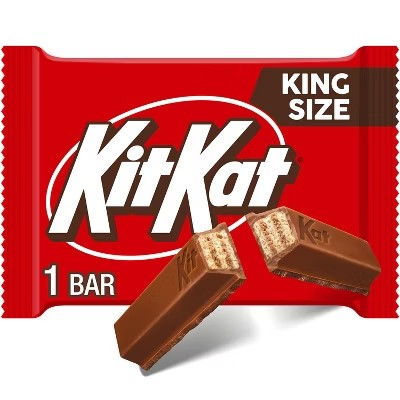
Kit Kat
At a glance
Summary
Kit Kat scores 20/100 — the cleanest mass-market candy on this list. Third-party 2025 testing detected 230 ppb arsenic. Free of petroleum dyes and hydrogenated oils, but still contains refined palm kernel oil, PGPR synthetic emulsifier, and artificial flavor. Lower processing burden than most competitors but still ultra-processed. Distributed in the US by The Hershey Company under license from Nestlé.
Contaminants 1
Source: Independent third-party laboratory testing
Arsenic 230 ppb High
Detected at a high level — at or above health-based exposure limits. Regular exposure at this level is a genuine health concern. No safe level of arsenic exposure exists; chronic exposure is linked to increased cancer risk (lung, skin, kidney, bladder), cardiovascular disease, and neurodevelopmental harm in children.
Independent third-party testing detected arsenic at 230 parts per billion — a notable contamination level.
Key ingredients 14
Refined Palm Kernel OilVery Bad
Industrial tropical oil; deforestation concerns and high saturated fat content.
See more about Refined Palm Kernel Oil →PGPR (Polyglycerol Polyricinoleate)Very Bad
Synthetic emulsifier used to reduce cocoa butter requirements.
See more about PGPR (Polyglycerol Polyricinoleate) →SugarBad
First ingredient — refined sucrose.
See more about Sugar →Wheat FlourBad
Refined wheat flour.
See more about Wheat Flour →Soy LecithinBad
Industrial emulsifier, typically GMO soy.
See more about Soy Lecithin →Artificial FlavorBad
Undisclosed synthetic flavor compounds.
See more about Artificial Flavor →Nonfat MilkNeutral
Dairy powder.
See more about Nonfat Milk →ChocolateNeutral
Cacao solids.
See more about Chocolate →LactoseNeutral
Milk sugar.
See more about Lactose →Milk FatNeutral
Dairy fat.
See more about Milk Fat →YeastNeutral
Wafer leavening.
See more about Yeast →SaltNeutral
Sodium.
See more about Salt →Sodium BicarbonateNeutral
Leavening agent.
See more about Sodium Bicarbonate →Cocoa ButterGood
Natural traditional fat pressed from cacao.
See more about Cocoa Butter →Processing
Ultra-Processed Foods
Get the full breakdown in the Scout appTake Scout shopping
Scan any product to see lab results, healthy alternatives, and your personalized analysis.
Download on theApp Store GET IT ONGoogle PlayAmazon pricing & content
Amazon price as of . Product prices and availability are accurate as of the date/time indicated and are subject to change. Any price and availability information displayed on Amazon.com at the time of purchase will apply to the purchase of this product.
CERTAIN CONTENT THAT APPEARS ON THIS SITE COMES FROM AMAZON. THIS CONTENT IS PROVIDED “AS IS” AND IS SUBJECT TO CHANGE OR REMOVAL AT ANY TIME.