
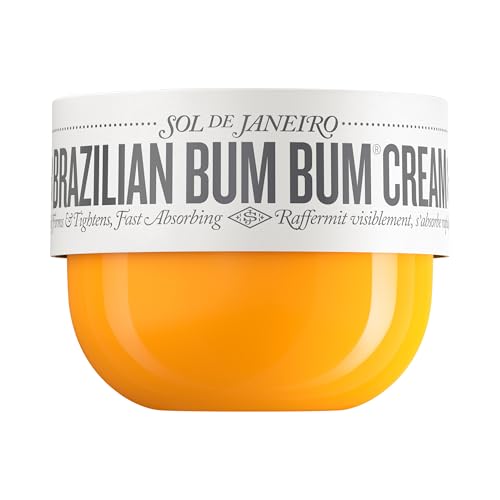


Sol De Janeiro Brazilian Bum Bum Cream
At a glance
Summary
This body lotion contains several beneficial ingredients such as coconut oil, açaí fruit oil, and cupuaçu seed butter, which are known for their moisturizing and nourishing properties. However, the presence of 'fragrance' can be a concern due to potential allergens and skin irritants. The product is moderately processed, which affects its overall rating, but the inclusion of natural oils and butters helps to balance the score.
Key ingredients 37
Cocos Nucifera (Coconut) OilVery Good
Coconut oil is a natural emollient that helps moisturize and nourish the skin. It is rich in fatty acids and has antimicrobial properties. It is well-tolerated by most skin types.
Risks
There is a risk of clogged pores for individuals with acne-prone skin.
Benefits
It provides deep moisturization and has antimicrobial benefits.
Euterpe Oleracea (Açaí) Fruit OilVery Good
Açaí fruit oil is rich in antioxidants and essential fatty acids. It helps protect the skin from environmental damage and provides nourishment. It is well-tolerated by most skin types.
Risks
There are minimal risks, primarily related to potential skin irritation in very sensitive individuals.
Benefits
It provides antioxidant protection and nourishes the skin.
Theobroma Grandiflorum (Cupuaçu) Seed ButterVery Good
Cupuaçu seed butter is a natural emollient that helps moisturize and soften the skin. It is rich in fatty acids and has excellent water absorption properties. It is well-tolerated by most skin types.
Risks
There are minimal risks, primarily related to potential skin irritation in very sensitive individuals.
Benefits
It provides deep moisturization and helps improve skin elasticity.
Bertholletia Excelsa (Brazil Nut) Seed OilVery Good
Brazil nut seed oil is rich in selenium and fatty acids. It helps nourish and moisturize the skin. It is well-tolerated by most skin types.
Risks
There are minimal risks, primarily related to potential skin irritation in very sensitive individuals.
Benefits
It provides nourishment and helps improve skin texture.
TocopherolVery Good
Tocopherol, also known as Vitamin E, is a powerful antioxidant. It helps protect the skin from environmental damage and supports skin health. It is well-tolerated by most skin types.
Risks
There are minimal risks, primarily related to potential skin irritation in very sensitive individuals.
Benefits
It provides antioxidant protection and supports skin health.
SqualaneVery Good
Squalane is a highly effective emollient and natural antioxidant. It helps moisturize and protect the skin. It is well-tolerated by most skin types.
Risks
There are minimal risks, primarily related to potential skin irritation in very sensitive individuals.
Benefits
It provides deep moisturization and helps protect the skin.
Caprylic/Capric TriglycerideGood
Caprylic/Capric Triglyceride is derived from coconut oil and glycerin. It is used as an emollient and helps to moisturize and replenish the skin. It is well-tolerated by most skin types.
Risks
There are minimal risks, primarily related to potential skin irritation in very sensitive individuals.
Benefits
It provides moisturizing benefits and helps improve skin texture.
GlycerinGood
Glycerin is a humectant that attracts moisture to the skin. It helps maintain skin hydration and is well-tolerated by most skin types. It is a common ingredient in moisturizing products.
Risks
There are minimal risks associated with glycerin, primarily related to potential skin irritation in very sensitive individuals.
Benefits
It helps keep the skin hydrated and improves moisture retention.
Sodium HyaluronateGood
Sodium Hyaluronate is a form of hyaluronic acid that helps retain moisture in the skin. It is known for its excellent hydrating properties and ability to improve skin elasticity. It is well-tolerated by most skin types.
Risks
There are minimal risks, primarily related to potential skin irritation in very sensitive individuals.
Benefits
It provides deep hydration and helps improve skin texture and elasticity.
Paullinia Cupana (Guaraná) Seed ExtractGood
Guaraná seed extract is rich in caffeine and antioxidants. It helps improve skin firmness and reduce the appearance of cellulite. It is well-tolerated by most skin types.
Risks
There are minimal risks, primarily related to potential skin irritation in very sensitive individuals.
Benefits
It helps improve skin firmness and has antioxidant benefits.
Daucus Carota Sativa (Carrot) Seed OilGood
Carrot seed oil is rich in beta-carotene and vitamins. It helps nourish and rejuvenate the skin. It is well-tolerated by most skin types.
Risks
There are minimal risks, primarily related to potential skin irritation in very sensitive individuals.
Benefits
It provides nourishment and helps improve skin texture.
MicaGood
Beneficial ingredient — whole-food or functional value in this product class.
Risks
There are minimal risks, primarily related to potential skin irritation in very sensitive individuals.
Benefits
It adds a shimmering effect to the product.
Aqua (Water, Eau)Neutral
Water is a common solvent used in cosmetic formulations. It helps dissolve other ingredients and provides a base for the product. It does not have any direct benefits or risks.
Risks
There are no significant risks associated with water in cosmetic products.
Benefits
Water helps in the application and absorption of the product.
Methyl Glucose SesquistearateNeutral
Methyl Glucose Sesquistearate is an emulsifier that helps blend oil and water components. It is derived from glucose and stearic acid. It is generally considered safe for use in cosmetics.
Risks
There are minimal risks associated with this ingredient, primarily related to potential skin irritation in sensitive individuals.
Benefits
It helps stabilize the formulation and improve texture.
Phenyl TrimethiconeNeutral
Phenyl Trimethicone is a silicone-based compound used to enhance the feel and spreadability of products. It provides a smooth, silky texture. It is generally considered safe for use in cosmetics.
Risks
Silicones can potentially cause build-up on the skin, leading to clogged pores.
Benefits
It improves the texture and application of the product.
Cetearyl AlcoholNeutral
Cetearyl Alcohol is a fatty alcohol used as an emollient and thickener. It helps stabilize and thicken formulations. It is generally considered safe for use in cosmetics.
Risks
There are minimal risks, primarily related to potential skin irritation in sensitive individuals.
Benefits
It helps improve the texture and stability of the product.
Ilex Guayusa Leaf ExtractNeutral
Ilex Guayusa leaf extract is known for its antioxidant properties. It helps protect the skin from environmental damage. It is generally considered safe for use in cosmetics.
Risks
There are minimal risks, primarily related to potential skin irritation in very sensitive individuals.
Benefits
It provides antioxidant protection for the skin.
Ilex Paraguariensis Leaf ExtractNeutral
Ilex Paraguariensis leaf extract, also known as yerba mate, is rich in antioxidants. It helps protect the skin from environmental damage. It is generally considered safe for use in cosmetics.
Risks
There are minimal risks, primarily related to potential skin irritation in very sensitive individuals.
Benefits
It provides antioxidant protection for the skin.
Bixa Orellana Seed ExtractNeutral
Bixa Orellana seed extract, also known as annatto, is used for its antioxidant properties. It helps protect the skin from environmental damage. It is generally considered safe for use in cosmetics.
Risks
There are minimal risks, primarily related to potential skin irritation in very sensitive individuals.
Benefits
It provides antioxidant protection for the skin.
Sodium PhytateNeutral
Sodium Phytate is used as a chelating agent in cosmetics. It helps stabilize formulations by binding metal ions. It is generally considered safe for use in cosmetics.
Risks
There are minimal risks, primarily related to potential skin irritation in very sensitive individuals.
Benefits
It helps stabilize the formulation and improve product longevity.
Sodium Stearoyl GlutamateNeutral
Sodium Stearoyl Glutamate is an emulsifier used to blend oil and water components. It is derived from stearic acid and glutamic acid. It is generally considered safe for use in cosmetics.
Risks
There are minimal risks, primarily related to potential skin irritation in very sensitive individuals.
Benefits
It helps stabilize the formulation and improve texture.
Glyceryl CaprylateNeutral
Glyceryl Caprylate is used as an emollient and co-emulsifier. It helps moisturize the skin and stabilize formulations. It is generally considered safe for use in cosmetics.
Risks
There are minimal risks, primarily related to potential skin irritation in very sensitive individuals.
Benefits
It helps moisturize the skin and improve product stability.
EthylhexylglycerinNeutral
Ethylhexylglycerin is used as a skin conditioning agent and preservative enhancer. It helps improve the efficacy of preservatives. It is generally considered safe for use in cosmetics.
Risks
There are minimal risks, primarily related to potential skin irritation in very sensitive individuals.
Benefits
It helps enhance the efficacy of preservatives and condition the skin.
Xanthan GumNeutral
Xanthan Gum is used as a thickening agent in cosmetics. It helps stabilize and thicken formulations. It is generally considered safe for use in cosmetics.
Risks
There are minimal risks, primarily related to potential skin irritation in very sensitive individuals.
Benefits
It helps improve the texture and stability of the product.
Sorbitan IsostearateNeutral
Sorbitan Isostearate is used as an emulsifier in cosmetics. It helps blend oil and water components. It is generally considered safe for use in cosmetics.
Risks
There are minimal risks, primarily related to potential skin irritation in very sensitive individuals.
Benefits
It helps stabilize the formulation and improve texture.
Benzyl BenzoateNeutral
Benzyl Benzoate is used as a fragrance ingredient and solvent in cosmetics. It helps dissolve other ingredients and impart scent. It is generally considered safe for use in cosmetics.
Risks
There are minimal risks, primarily related to potential skin irritation in very sensitive individuals.
Benefits
It helps dissolve other ingredients and enhance fragrance.
Benzyl SalicylateNeutral
Benzyl Salicylate is used as a fragrance ingredient in cosmetics. It helps impart scent to the product. It is generally considered safe for use in cosmetics.
Risks
There are minimal risks, primarily related to potential skin irritation in very sensitive individuals.
Benefits
It provides a pleasant scent to the product.
CoumarinNeutral
Coumarin is a fragrance ingredient used to impart a sweet scent. It is used in small amounts in cosmetics. It is generally considered safe for use in cosmetics.
Risks
There are minimal risks, primarily related to potential skin irritation in very sensitive individuals.
Benefits
It provides a sweet scent to the product.
HydroxycitronellalNeutral
Hydroxycitronellal is a fragrance ingredient used to impart a floral scent. It is used in small amounts in cosmetics. It is generally considered safe for use in cosmetics.
Risks
There are minimal risks, primarily related to potential skin irritation in very sensitive individuals.
Benefits
It provides a floral scent to the product.
Tin OxideNeutral
Tin Oxide is used as an opacifying agent in cosmetics. It helps improve the appearance and texture of the product. It is generally considered safe for use in cosmetics.
Risks
There are minimal risks, primarily related to potential skin irritation in very sensitive individuals.
Benefits
It helps improve the appearance and texture of the product.
CI 77891 (Titanium Dioxide)Neutral
Titanium Dioxide is used as a pigment and opacifying agent in cosmetics. It helps provide coverage and improve the appearance of the product. It is generally considered safe for use in cosmetics.
Risks
There are minimal risks, primarily related to potential skin irritation in very sensitive individuals.
Benefits
It helps provide coverage and improve the appearance of the product.
PhenoxyethanolBad
Processed additive flagged under Scout's ingredient doctrine.
Risks
There are minimal risks, primarily related to potential skin irritation in very sensitive individuals.
Benefits
It helps preserve the product and extend its shelf life.
Benzyl AlcoholBad
Processed additive flagged under Scout's ingredient doctrine.
Risks
There are minimal risks, primarily related to potential skin irritation in very sensitive individuals.
Benefits
It helps preserve the product and extend its shelf life.
CitralBad
Processed additive flagged under Scout's ingredient doctrine.
Risks
There are minimal risks, primarily related to potential skin irritation in very sensitive individuals.
Benefits
It provides a lemon scent to the product.
LimoneneBad
Processed additive flagged under Scout's ingredient doctrine.
Risks
There are minimal risks, primarily related to potential skin irritation in very sensitive individuals.
Benefits
It provides a citrus scent to the product.
LinaloolBad
Processed additive flagged under Scout's ingredient doctrine.
Risks
There are minimal risks, primarily related to potential skin irritation in very sensitive individuals.
Benefits
It provides a floral scent to the product.
Parfum (Fragrance)Very Bad
Fragrance is used to impart scent to the product. It can contain a mixture of various aromatic compounds. Fragrances are a common cause of allergic reactions and skin irritation.
Risks
Fragrances can cause skin irritation and allergic reactions, especially in sensitive individuals.
Benefits
It provides a pleasant scent to the product.
Get the full breakdown in the Scout appTake Scout shopping
Scan any product to see lab results, healthy alternatives, and your personalized analysis.
Download on theApp Store GET IT ONGoogle PlayAmazon pricing & content
Amazon price as of . Product prices and availability are accurate as of the date/time indicated and are subject to change. Any price and availability information displayed on Amazon.com at the time of purchase will apply to the purchase of this product.
CERTAIN CONTENT THAT APPEARS ON THIS SITE COMES FROM AMAZON. THIS CONTENT IS PROVIDED “AS IS” AND IS SUBJECT TO CHANGE OR REMOVAL AT ANY TIME.