

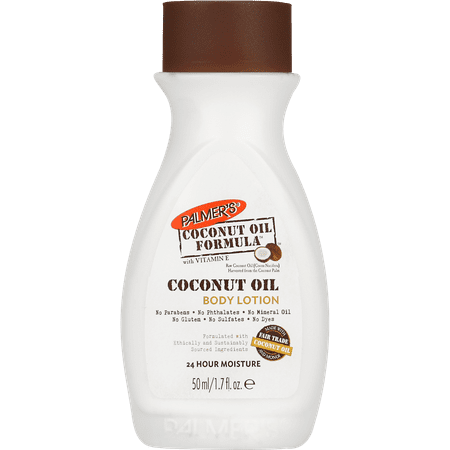


Palmer's Cocoa Butter Formula Complete Stretch Mark Care Set - 1 set
Analysis updated August 2026 · How Scout scores
At a glance
Summary
This body lotion contains a mix of beneficial natural ingredients like cocoa extract, sweet almond oil, and shea butter, which provide moisturizing and antioxidant benefits. However, the presence of petrolatum, a petroleum-derived occlusive agent, is a concern due to potential comedogenic effects and contamination risks. The product also includes some synthetic ingredients, which slightly lowers its overall safety profile compared to more natural formulations.
Key ingredients 37
Theobroma Cacao (Cocoa) ExtractVery Good
Cocoa extract is rich in antioxidants and has moisturizing properties. It helps protect the skin from environmental damage and improves skin texture.
Risks
There are no significant risks associated with cocoa extract.
Benefits
Cocoa extract provides antioxidant benefits and enhances skin hydration.
Prunus Amygdalus Dulcis (Sweet Almond) OilVery Good
Sweet almond oil is a natural emollient that nourishes and softens the skin. It is rich in vitamins and fatty acids that improve skin health.
Risks
There is a minor risk of allergic reactions in individuals with nut allergies.
Benefits
Sweet almond oil deeply moisturizes and improves skin elasticity.
Cocos Nucifera (Coconut) OilVery Good
Coconut oil is a natural emollient with moisturizing and antimicrobial properties. It helps nourish and protect the skin.
Risks
It may clog pores in acne-prone skin.
Benefits
Coconut oil deeply moisturizes and has antibacterial benefits.
Theobroma Cacao (Cocoa) Seed ButterVery Good
Cocoa seed butter is a rich emollient that provides deep hydration. It is high in fatty acids and antioxidants.
Risks
There are no significant risks associated with cocoa seed butter.
Benefits
Cocoa seed butter improves skin elasticity and provides long-lasting moisture.
Butyrospermum Parkii (Shea) ButterVery Good
Shea butter is a natural fat extracted from the nuts of the shea tree. It is highly moisturizing and rich in vitamins.
Risks
There are minimal risks, though it can cause allergic reactions in individuals with nut allergies.
Benefits
Shea butter deeply nourishes and improves skin elasticity.
TocopherolVery Good
Tocopherol, or Vitamin E, is a powerful antioxidant that protects the skin from free radical damage. It also has moisturizing properties.
Risks
There are minimal risks, though it can cause irritation in sensitive skin.
Benefits
Tocopherol helps protect and nourish the skin.
Helianthus Annuus (Sunflower) Seed OilVery Good
Sunflower seed oil is a non-comedogenic oil rich in vitamins and fatty acids. It helps maintain the skin barrier and provides moisture.
Risks
There are no significant risks associated with sunflower seed oil.
Benefits
Sunflower seed oil nourishes and protects the skin.
Argania Spinosa Kernel OilVery Good
Argan oil is a nourishing oil rich in fatty acids and antioxidants. It helps moisturize and protect the skin.
Risks
There are no significant risks associated with argan oil.
Benefits
Argan oil provides deep hydration and improves skin health.
Centella Asiatica ExtractVery Good
Centella asiatica extract is known for its soothing and healing properties. It helps reduce inflammation and promotes skin repair.
Risks
There are no significant risks associated with centella asiatica extract.
Benefits
It helps calm irritated skin and supports wound healing.
Sesamum Indicum (Sesame) Seed OilVery Good
Sesame seed oil is a nourishing oil rich in vitamins and antioxidants. It helps moisturize and protect the skin.
Risks
There is a minor risk of allergic reactions in individuals with sesame allergies.
Benefits
Sesame seed oil provides deep hydration and antioxidant protection.
GlycerinGood
Glycerin is a humectant that attracts moisture to the skin. It helps maintain skin hydration and improves skin barrier function.
Risks
There are minimal risks associated with glycerin, though it can cause irritation in very sensitive skin.
Benefits
Glycerin helps keep the skin moisturized and soft.
Soluble CollagenGood
Soluble collagen is used to improve skin elasticity and hydration. It helps reduce the appearance of fine lines and wrinkles.
Risks
There are minimal risks, though it may not penetrate deeply into the skin.
Benefits
Soluble collagen enhances skin firmness and hydration.
Hydrolyzed ElastinGood
Hydrolyzed elastin is a protein that helps improve skin elasticity. It provides moisture and supports skin structure.
Risks
There are minimal risks associated with hydrolyzed elastin.
Benefits
It helps maintain skin elasticity and hydration.
Boswellia Serrata ExtractGood
Boswellia serrata extract has anti-inflammatory properties. It helps soothe the skin and reduce redness.
Risks
There are minimal risks associated with boswellia serrata extract.
Benefits
It helps calm and protect the skin.
Betula Alba Bark ExtractGood
Betula alba bark extract is known for its astringent and anti-inflammatory properties. It helps tone the skin and reduce irritation.
Risks
There are minimal risks associated with betula alba bark extract.
Benefits
It helps improve skin tone and reduce inflammation.
Polygonum Cuspidatum Root ExtractGood
Polygonum cuspidatum root extract is rich in resveratrol, an antioxidant. It helps protect the skin from environmental damage.
Risks
There are minimal risks associated with polygonum cuspidatum root extract.
Benefits
It provides antioxidant protection and supports skin health.
Leuconostoc/Radish Root Ferment FiltrateGood
This ferment filtrate is used as a natural preservative with antimicrobial properties. It helps protect the product from microbial contamination.
Risks
There are minimal risks associated with this ingredient.
Benefits
It provides natural preservation and enhances product safety.
Sodium AscorbateGood
Sodium ascorbate is a form of Vitamin C with antioxidant properties. It helps brighten the skin and reduce signs of aging.
Risks
There are minimal risks, though it can cause irritation in sensitive skin.
Benefits
It provides antioxidant protection and improves skin radiance.
Water (Aqua)Neutral
Water is a common solvent used in cosmetic formulations. It helps dissolve other ingredients and provides a base for the product. It does not have any direct benefits or risks.
Risks
There are no significant risks associated with water in cosmetic products.
Benefits
Water helps in the application and absorption of the product.
Propylene Glycol StearateNeutral
Propylene glycol stearate is an emulsifier that helps blend oil and water components. It improves the texture and stability of the product.
Risks
It may cause irritation in sensitive skin types.
Benefits
It enhances the consistency and application of the product.
Cetyl AlcoholNeutral
Cetyl alcohol is a fatty alcohol used as an emollient and thickener. It helps improve the texture and feel of the product.
Risks
It is generally safe but can cause irritation in very sensitive skin.
Benefits
Cetyl alcohol provides a smooth application and enhances skin softness.
Glyceryl StearateNeutral
Glyceryl stearate is an emulsifier that helps stabilize formulations. It also acts as a lubricant on the skin's surface.
Risks
There are minimal risks, though it can cause mild irritation in sensitive individuals.
Benefits
It helps maintain the product's consistency and provides a smooth feel.
Elaeis Guineensis (Palm) OilNeutral
Palm oil is used as an emollient and thickener in cosmetics. It provides a smooth texture and helps moisturize the skin.
Risks
Sustainability concerns are associated with palm oil production.
Benefits
Palm oil helps improve skin texture and provides moisture.
Acetylarginyltryptophyl DiphenylglycineNeutral
This peptide complex is used for its skin-conditioning properties. It helps improve skin texture and appearance.
Risks
There are minimal risks associated with this ingredient.
Benefits
It helps enhance skin smoothness and elasticity.
HydroxyacetophenoneNeutral
Hydroxyacetophenone is an antioxidant and preservative booster. It helps protect the product from oxidation.
Risks
There are minimal risks associated with hydroxyacetophenone.
Benefits
It enhances the stability and efficacy of the product.
1,2 HexanediolNeutral
1,2 Hexanediol is used as a solvent and preservative. It helps improve the texture and stability of the product.
Risks
There are minimal risks associated with 1,2 hexanediol.
Benefits
It helps maintain product consistency and safety.
Caprylyl GlycolNeutral
Caprylyl glycol is a humectant and skin conditioning agent. It helps retain moisture and improve skin feel.
Risks
There are minimal risks associated with caprylyl glycol.
Benefits
It helps keep the skin hydrated and smooth.
XanthophyllsNeutral
Xanthophylls are natural pigments with antioxidant properties. They help protect the skin from oxidative stress.
Risks
There are minimal risks associated with xanthophylls.
Benefits
They provide antioxidant protection for the skin.
Zea Mays (Corn) StarchNeutral
Corn starch is used as a thickening agent and absorbent. It helps improve the texture and feel of the product.
Risks
There are minimal risks associated with corn starch.
Benefits
It helps enhance product consistency and absorb excess oil.
Canola oilNeutral
Canola oil is used as an emollient and moisturizer. It helps soften and smooth the skin.
Risks
There are minimal risks associated with canola oil.
Benefits
It provides moisture and improves skin texture.
Isopropyl myristateNeutral
Isopropyl myristate is used as an emollient and thickening agent. It helps improve the texture and absorption of the product.
Risks
It may cause irritation or acne in sensitive skin.
Benefits
It enhances product application and skin feel.
Cetearyl ethylhexanoateNeutral
Cetearyl ethylhexanoate is an emollient that provides a silky feel. It helps improve the spreadability of the product.
Risks
There are minimal risks associated with cetearyl ethylhexanoate.
Benefits
It enhances the texture and application of the product.
Propylene GlycolBad
Processed additive flagged under Scout's ingredient doctrine.
Risks
It can cause irritation or allergic reactions in some individuals.
Benefits
Propylene glycol helps keep the skin hydrated and enhances ingredient penetration.
DimethiconeBad
Occlusive silicone film-former — flagged under clean-beauty doctrine.
Risks
It may cause build-up on the skin with prolonged use.
Benefits
Dimethicone helps lock in moisture and provides a silky feel.
GlucoseBad
Processed additive flagged under Scout's ingredient doctrine.
Risks
There are minimal risks associated with glucose.
Benefits
It helps maintain skin hydration.
Sodium BenzoateBad
Synthetic preservative that can form benzene in the presence of vitamin C.
Risks
It can cause irritation in sensitive skin types.
Benefits
It helps maintain product safety and stability.
PetrolatumVery Bad
Petrolatum is a petroleum-derived occlusive agent. It forms a barrier on the skin to prevent moisture loss but can be comedogenic.
Risks
There is a risk of pore clogging and potential contamination with polycyclic aromatic hydrocarbons (PAHs).
Benefits
Petrolatum effectively locks in moisture and protects the skin.
Get the full breakdown in the Scout appTake Scout shopping
Scan any product to see lab results, healthy alternatives, and your personalized analysis.
Download on theApp Store GET IT ONGoogle PlayAmazon pricing & content
Amazon price as of . Product prices and availability are accurate as of the date/time indicated and are subject to change. Any price and availability information displayed on Amazon.com at the time of purchase will apply to the purchase of this product.
CERTAIN CONTENT THAT APPEARS ON THIS SITE COMES FROM AMAZON. THIS CONTENT IS PROVIDED “AS IS” AND IS SUBJECT TO CHANGE OR REMOVAL AT ANY TIME.