
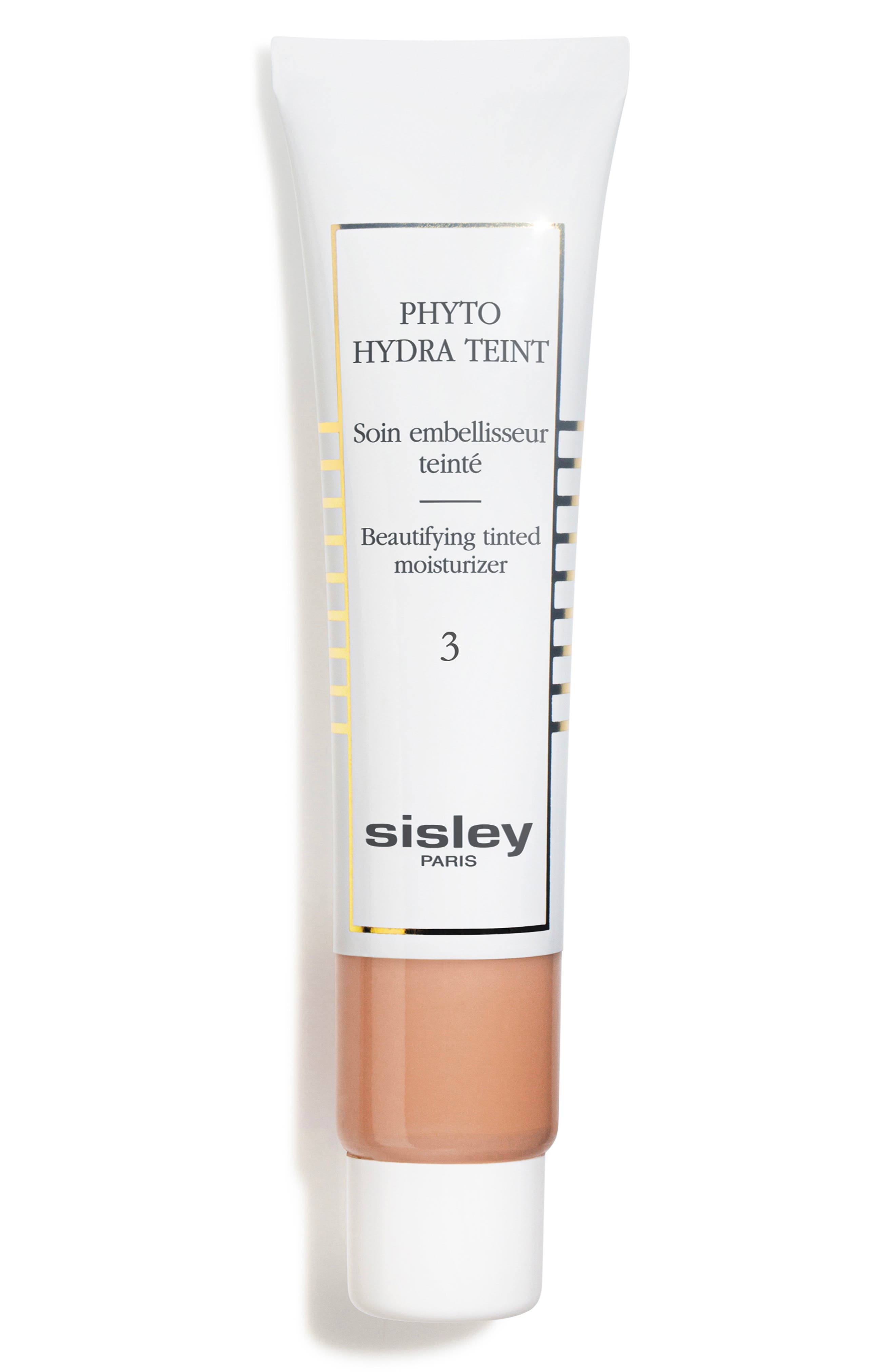

Sisley Paris Phyto-Hydra Teint Tinted Moisturizer 3 Golden
Analysis updated August 2026 · How Scout scores
At a glance
Summary
This tinted moisturizer contains beneficial ingredients like glycerin and tocopheryl acetate, which provide hydration and antioxidant protection. However, the presence of fragrance can be a concern for those with sensitive skin due to its potential to cause irritation. The product also includes synthetic components like dimethicone and acrylates, which contribute to a moderate level of processing.
Key ingredients 37
glycerinGood
Glycerin is a humectant that attracts moisture to the skin, helping to keep it hydrated. It is widely used in skincare for its moisturizing properties. It is generally safe and beneficial for all skin types.
Risks
Rarely, it may cause irritation in very sensitive skin.
Benefits
Excellent for maintaining skin hydration and improving skin barrier function.
tocopheryl acetateGood
Tocopheryl acetate is a form of vitamin E used for its antioxidant properties. It helps to protect the skin from free radical damage. It is beneficial for maintaining skin health and improving moisture retention.
Risks
Rarely, it may cause irritation in sensitive skin.
Benefits
Provides antioxidant protection and improves skin moisture.
polygonum fagopyrum (buckwheat) seed extractGood
Buckwheat seed extract is rich in antioxidants and helps to protect the skin from environmental stressors. It has soothing and anti-inflammatory properties. It is beneficial for sensitive and irritated skin.
Risks
Minimal risks, though it may cause mild irritation in very sensitive skin.
Benefits
Provides antioxidant protection and soothes irritated skin.
cydonia oblonga leaf extractGood
Quince leaf extract is known for its antioxidant and anti-inflammatory properties. It helps to protect the skin from oxidative stress and soothes irritation. It is beneficial for maintaining healthy skin.
Risks
Minimal risks, though it may cause mild irritation in very sensitive skin.
Benefits
Provides antioxidant protection and soothes skin irritation.
tocopherolGood
Tocopherol, or vitamin E, is an antioxidant that helps to protect the skin from free radical damage. It is beneficial for maintaining skin health and improving moisture retention. It is generally safe and beneficial for all skin types.
Risks
Rarely, it may cause irritation in sensitive skin.
Benefits
Provides antioxidant protection and improves skin moisture.
aqua/water/eauNeutral
Water is a common solvent used in cosmetics to dissolve other ingredients. It helps in the application and absorption of the product. It does not have any direct benefits or risks.
Benefits
Provides a base for other ingredients to be dissolved and applied smoothly.
titanium dioxide (nano)Neutral
Titanium dioxide is used as a physical sunscreen agent and pigment. In nano form, it provides UV protection without leaving a white cast. There are concerns about inhalation risks in powder form.
Risks
Potential inhalation risks if used in powder form.
Benefits
Provides effective broad-spectrum UV protection.
hydrogenated polyisobuteneNeutral
Hydrogenated polyisobutene is a synthetic polymer used as a skin conditioning agent. It provides a non-greasy emollient effect. It is generally considered safe for use in cosmetics.
Risks
Minimal risks, though it may cause mild irritation in sensitive skin.
Benefits
Acts as an effective emollient, providing a smooth and soft feel.
butylene glycolNeutral
Butylene glycol is a common solvent and conditioning agent in cosmetics. It helps to improve the texture and spreadability of products. It is generally safe but can cause irritation in sensitive skin.
Risks
May cause irritation or allergic reactions in sensitive individuals.
Benefits
Improves product texture and enhances moisture retention.
acrylates/ethylhexyl acrylate crosspolymerNeutral
This ingredient is used as a film-forming agent to improve the texture and longevity of cosmetic products. It helps in creating a smooth finish. It is generally considered safe for use in cosmetics.
Risks
May cause mild irritation in sensitive skin.
Benefits
Enhances product texture and longevity on the skin.
pentylene glycolNeutral
Pentylene glycol is a synthetic humectant and solvent that helps to retain moisture in the skin. It also enhances the penetration of other ingredients. It is generally safe for use in cosmetics.
Risks
May cause irritation in very sensitive skin.
Benefits
Improves skin hydration and enhances ingredient penetration.
lauryl peg-10 tris(trimethylsiloxy)silylethyl dimethiconeNeutral
This ingredient is a silicone-based surfactant that helps to improve the spreadability of products. It provides a smooth application and finish. It is generally considered safe for use in cosmetics.
Risks
May cause mild irritation in sensitive skin.
Benefits
Improves product spreadability and provides a smooth finish.
polyglyceryl-3 polydimethylsiloxyethyl dimethiconeNeutral
This ingredient is a silicone-based emulsifier that helps to stabilize formulations. It improves the texture and feel of products. It is generally considered safe for use in cosmetics.
Risks
May cause mild irritation in sensitive skin.
Benefits
Stabilizes formulations and improves product texture.
citrus grandis (grapefruit) fruit extractNeutral
Grapefruit extract is used for its antioxidant and astringent properties. It helps to tone the skin and reduce the appearance of pores. It is generally safe but can cause irritation in sensitive skin.
Risks
May cause irritation or photosensitivity in sensitive skin.
Benefits
Provides antioxidant benefits and helps to tone the skin.
actinidia chinensis (kiwi) fruit extractNeutral
Kiwi fruit extract is rich in vitamins and antioxidants, helping to protect the skin from environmental damage. It has moisturizing and soothing properties. It is generally safe for use in cosmetics.
Risks
May cause mild irritation in sensitive skin.
Benefits
Provides antioxidant protection and moisturizes the skin.
lilium candidum flower extractNeutral
White lily flower extract is known for its soothing and moisturizing properties. It helps to calm irritated skin and improve hydration. It is generally safe for use in cosmetics.
Risks
May cause mild irritation in sensitive skin.
Benefits
Soothes and moisturizes the skin, improving hydration.
aluminum hydroxideNeutral
Aluminum hydroxide is used as a thickening agent and to improve the opacity of products. It helps to stabilize formulations. It is generally considered safe for use in cosmetics.
Risks
Minimal risks, though it may cause mild irritation in sensitive skin.
Benefits
Stabilizes formulations and improves product opacity.
sodium chlorideNeutral
Sodium chloride, or salt, is used as a thickening agent and to improve product texture. It helps to stabilize formulations. It is generally safe for use in cosmetics.
Risks
May cause irritation in sensitive skin if used in high concentrations.
Benefits
Improves product texture and stabilizes formulations.
stearic acidNeutral
Stearic acid is a fatty acid used as an emulsifier and thickening agent. It helps to stabilize formulations and improve texture. It is generally considered safe for use in cosmetics.
Risks
May cause mild irritation in sensitive skin.
Benefits
Stabilizes formulations and improves product texture.
synthetic fluorphlogopiteNeutral
Synthetic fluorphlogopite is a synthetic mica used to add shimmer and improve texture. It provides a smooth and luminous finish. It is generally considered safe for use in cosmetics.
Risks
Minimal risks, though it may cause mild irritation in sensitive skin.
Benefits
Adds shimmer and improves product texture.
triethoxycaprylylsilaneNeutral
Triethoxycaprylylsilane is a silicone-based ingredient used to improve the adhesion of pigments. It helps to enhance the longevity of products. It is generally considered safe for use in cosmetics.
Risks
May cause mild irritation in sensitive skin.
Benefits
Improves pigment adhesion and enhances product longevity.
dipropylene glycolNeutral
Dipropylene glycol is a solvent and humectant used to improve texture and moisture retention. It helps to enhance the spreadability of products. It is generally safe for use in cosmetics.
Risks
May cause irritation in sensitive skin.
Benefits
Improves product texture and enhances moisture retention.
sodium hydroxideNeutral
Sodium hydroxide is used to adjust the pH of cosmetic formulations. It helps to maintain product stability. It is generally safe in low concentrations but can be irritating in higher amounts.
Risks
Can cause irritation or burns if used in high concentrations.
Benefits
Helps to maintain product stability by adjusting pH.
citric acidNeutral
Citric acid is used to adjust the pH of formulations and as a mild exfoliant. It helps to maintain product stability and improve skin texture. It is generally safe for use in cosmetics.
Risks
May cause irritation in sensitive skin.
Benefits
Improves skin texture and maintains product stability.
1,2-hexanediolNeutral
1,2-Hexanediol is a solvent and preservative used to improve product stability. It helps to enhance the texture and spreadability of products. It is generally considered safe for use in cosmetics.
Risks
May cause mild irritation in sensitive skin.
Benefits
Improves product stability and enhances texture.
sodium citrateNeutral
Sodium citrate is used to adjust the pH of formulations and as a chelating agent. It helps to stabilize products and improve their efficacy. It is generally safe for use in cosmetics.
Risks
May cause mild irritation in sensitive skin.
Benefits
Stabilizes formulations and improves product efficacy.
linalyl acetateNeutral
Linalyl acetate is a fragrance component used to impart a floral scent to products. It is generally safe but can cause irritation in sensitive skin. It is often used in combination with other fragrance ingredients.
Risks
May cause skin irritation or allergic reactions in sensitive individuals.
Benefits
Provides a pleasant floral scent to the product.
tetramethyl acetyloctahydronaphthalenesNeutral
This ingredient is a synthetic fragrance component used to impart scent to products. It is generally safe but can cause irritation in sensitive skin. It is often used in combination with other fragrance ingredients.
Risks
May cause skin irritation or allergic reactions in sensitive individuals.
Benefits
Provides a pleasant scent to the product.
isoeugenyl acetateNeutral
Isoeugenyl acetate is a fragrance component used to impart a spicy, clove-like scent to products. It is generally safe but can cause irritation in sensitive skin. It is often used in combination with other fragrance ingredients.
Risks
May cause skin irritation or allergic reactions in sensitive individuals.
Benefits
Provides a spicy, clove-like scent to the product.
dimethiconeBad
Occlusive silicone film-former — flagged under clean-beauty doctrine.
Risks
May cause skin irritation or breakouts in sensitive individuals.
Benefits
Helps to smooth skin texture and lock in moisture.
dimethicone/peg-10/15 crosspolymerBad
Processed additive flagged under Scout's ingredient doctrine.
Risks
May cause mild irritation in sensitive skin.
Benefits
Stabilizes formulations and improves product texture.
phenoxyethanolBad
Processed additive flagged under Scout's ingredient doctrine.
Risks
May cause irritation or allergic reactions in sensitive individuals.
Benefits
Prevents microbial growth and extends product shelf life.
sorbic acidBad
Processed additive flagged under Scout's ingredient doctrine.
Risks
May cause irritation or allergic reactions in sensitive individuals.
Benefits
Prevents mold and yeast growth, extending product shelf life.
sodium benzoateBad
Synthetic preservative that can form benzene in the presence of vitamin C.
Risks
May cause irritation or allergic reactions in sensitive individuals.
Benefits
Prevents microbial growth and extends product shelf life.
potassium sorbateBad
Synthetic preservative — flagged in daily-use products.
Risks
May cause irritation or allergic reactions in sensitive individuals.
Benefits
Prevents mold and yeast growth, extending product shelf life.
limoneneBad
Processed additive flagged under Scout's ingredient doctrine.
Risks
Can cause skin irritation or allergic reactions upon oxidation.
Benefits
Provides a fresh citrus scent to the product.
parfum/fragranceVery Bad
Fragrance is used to impart scent to cosmetic products. It can cause allergic reactions and irritation, especially in sensitive individuals. It is often criticized for its potential to cause skin sensitization.
Risks
High risk of causing allergic reactions and skin irritation.
Benefits
Provides a pleasant scent to the product.
Get the full breakdown in the Scout appTake Scout shopping
Scan any product to see lab results, healthy alternatives, and your personalized analysis.
Download on theApp Store GET IT ONGoogle PlayAmazon pricing & content
Amazon price as of . Product prices and availability are accurate as of the date/time indicated and are subject to change. Any price and availability information displayed on Amazon.com at the time of purchase will apply to the purchase of this product.
CERTAIN CONTENT THAT APPEARS ON THIS SITE COMES FROM AMAZON. THIS CONTENT IS PROVIDED “AS IS” AND IS SUBJECT TO CHANGE OR REMOVAL AT ANY TIME.