
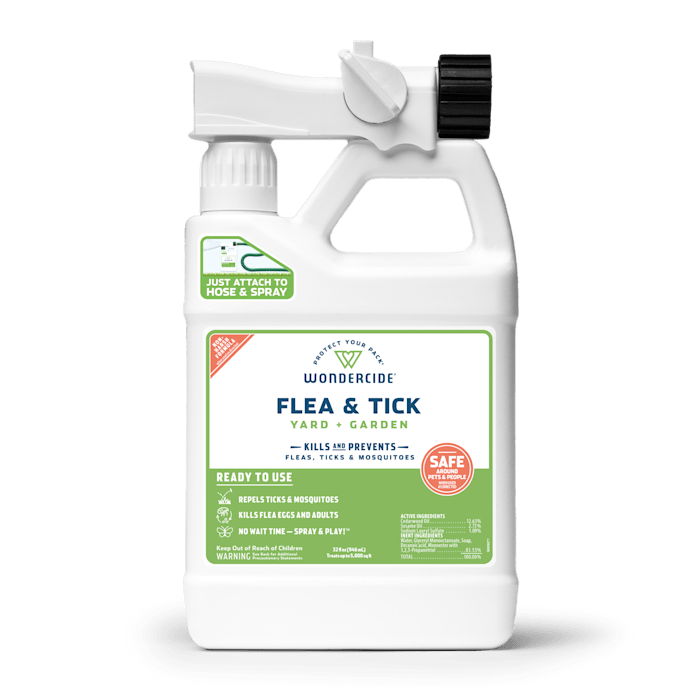

Wondercide Natural Ready to Use Yard Flea Tick and Mosquito Spray and Insect Killer
Analysis updated May 2026 · How Scout scores
At a glance
Summary
This product contains a mix of natural essential oils like cedarwood, clove, and lemongrass, which are beneficial for their insect-repelling properties and environmental friendliness. However, the presence of sodium lauryl sulfate, a heavily processed surfactant, introduces potential concerns due to its skin irritation risk. The overall processing level of the product limits its score, despite the predominance of natural ingredients.
Key ingredients 11
Cedarwood OilVery Good
Cedarwood oil is a natural essential oil known for its insect-repelling properties. It is derived from the wood of cedar trees and is considered environmentally friendly. Its use in home essentials is generally regarded as safe and beneficial.
Risks
There are minimal risks associated with cedarwood oil, though some individuals may experience skin irritation.
Benefits
Cedarwood oil is effective in repelling insects and is a natural alternative to synthetic chemicals.
Clove OilVery Good
Clove oil is a natural essential oil known for its antimicrobial and insect-repelling properties. It is derived from clove buds and is considered safe for use in home essentials. Its strong aroma also acts as a natural fragrance.
Risks
Skin irritation can occur in sensitive individuals.
Benefits
Clove oil is effective in repelling insects and has antimicrobial properties.
Lemongrass OilVery Good
Lemongrass oil is a natural essential oil with insect-repelling and antimicrobial properties. It is derived from the leaves of the lemongrass plant and is considered safe for use in home essentials. Its fresh scent is also a natural deodorizer.
Risks
May cause skin irritation in some individuals.
Benefits
Lemongrass oil is effective in repelling insects and provides a pleasant fragrance.
Cinnamon OilVery Good
Cinnamon oil is a natural essential oil known for its antimicrobial and insect-repelling properties. It is derived from the bark of cinnamon trees and is considered safe for use in home essentials. Its warm aroma also acts as a natural fragrance.
Risks
Potential skin irritation for sensitive individuals.
Benefits
Cinnamon oil is effective in repelling insects and has antimicrobial properties.
Sesame OilGood
Sesame oil is a natural oil extracted from sesame seeds, often used for its moisturizing properties. In home essentials, it can act as a carrier oil for other active ingredients. It is biodegradable and considered safe for use.
Risks
Allergic reactions are possible in individuals with sesame allergies.
Benefits
Sesame oil is moisturizing and can enhance the effectiveness of other active ingredients.
SoapGood
Soap is a traditional cleaning agent made from natural fats and oils. It is biodegradable and effective in breaking down grease and dirt. In home essentials, it is valued for its cleaning properties.
Risks
Excessive use can lead to skin dryness.
Benefits
Soap is effective in cleaning and is environmentally friendly.
WaterNeutral
Water is a universal solvent used as a base in many products. It helps to dissolve and distribute other ingredients evenly. In home essentials, it is essential for diluting active ingredients.
Risks
There are no significant risks associated with water in this context.
Benefits
Water is essential for the formulation and effectiveness of the product.
Glyceryl MonooctanoateNeutral
Glyceryl monooctanoate is an ester of glycerin and caprylic acid, used as an emulsifier. It helps to stabilize formulations by keeping oil and water components mixed. It is generally considered safe for use in home essentials.
Risks
There are minimal risks associated with glyceryl monooctanoate.
Benefits
It helps maintain product consistency and stability.
Isopropyl AlcoholNeutral
Isopropyl alcohol is a common solvent and disinfectant used in various products. It is effective in killing bacteria and viruses. In home essentials, it helps to dissolve other ingredients and enhance their effectiveness.
Risks
Can cause skin dryness and irritation with prolonged exposure.
Benefits
Isopropyl alcohol is effective in disinfecting and enhancing the solubility of other ingredients.
GlycerinNeutral
Standard formulation ingredient — neither beneficial nor harmful at typical use.
Risks
There are minimal risks associated with glycerin.
Benefits
Glycerin helps to retain moisture and improve product texture.
Sodium Lauryl SulfateVery Bad
Sodium lauryl sulfate is a surfactant commonly used in cleaning products for its ability to create lather. It is derived from coconut oil but is heavily processed. Its use is controversial due to potential skin irritation.
Risks
It can cause skin irritation and dryness, especially with prolonged exposure.
Benefits
It is effective in removing dirt and grease due to its surfactant properties.
Processing
Processed Foods
Get the full breakdown in the Scout appTake Scout shopping
Scan any product to see lab results, healthy alternatives, and your personalized analysis.
Download on theApp Store GET IT ONGoogle PlayAmazon pricing & content
Amazon price as of . Product prices and availability are accurate as of the date/time indicated and are subject to change. Any price and availability information displayed on Amazon.com at the time of purchase will apply to the purchase of this product.
CERTAIN CONTENT THAT APPEARS ON THIS SITE COMES FROM AMAZON. THIS CONTENT IS PROVIDED “AS IS” AND IS SUBJECT TO CHANGE OR REMOVAL AT ANY TIME.