
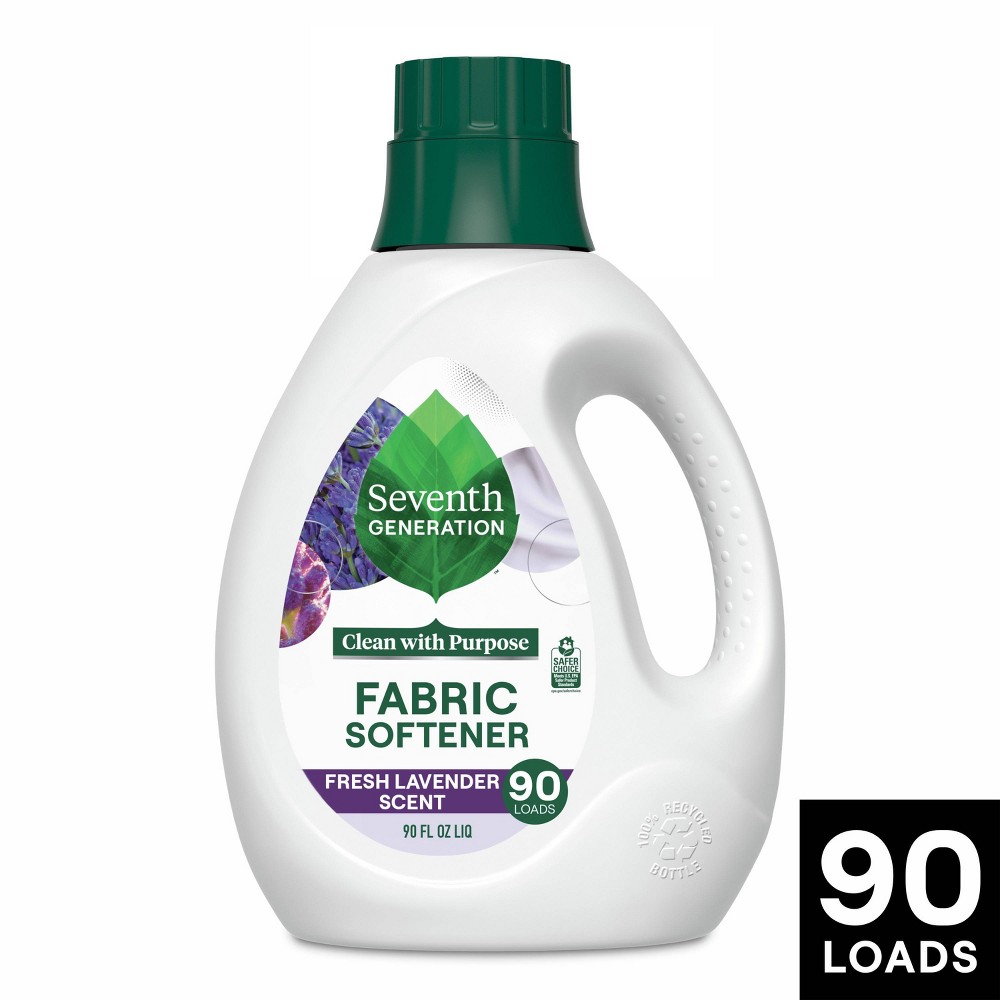
Seventh Generation Fabric Softener - Lavender - 90 fl oz: Hypoallergenic, Dye-Free, Phosphate-Free
Analysis updated June 2026 · How Scout scores
At a glance
Summary
This fabric softener uses plant-based and mineral-based ingredients, which are generally safer and more environmentally friendly than synthetic alternatives. However, the presence of sodium benzoate, a synthetic preservative, and the use of fragrance allergens slightly detract from its overall safety profile. The product is processed, which limits its score despite the use of natural fragrances and plant-derived components.
Key ingredients 7
Plant-derived fragrancesGood
These fragrances are derived from natural plant sources such as citrus and lavender oils. They provide a pleasant scent without synthetic chemicals. They are generally considered safer than synthetic fragrances.
Risks
Some individuals may experience allergic reactions.
Benefits
They offer a natural and pleasant aroma.
WaterNeutral
Water is a common solvent used in many products. It acts as a carrier for other ingredients. It is generally considered safe and non-reactive.
Risks
There are no significant risks associated with water in this context.
Benefits
Water helps to dissolve and distribute other ingredients evenly.
Dihydrogenated palmoylethyl hydroxyethylmonium methosulfateNeutral
This is a plant-based softener used to reduce static and soften fabrics. It is derived from palm oil and is biodegradable. It is generally considered safe for use in fabric softeners.
Risks
There may be environmental concerns related to palm oil sourcing.
Benefits
It effectively softens fabrics and reduces static cling.
Citric acidNeutral
Common acidulant and preservative — safe at typical use levels, neither beneficial nor harmful.
Risks
In rare cases, it may cause skin irritation.
Benefits
It helps to balance pH and acts as a natural preservative.
Calcium chlorideNeutral
Calcium chloride is a mineral-based viscosity modifier. It is used to control the thickness of the product. It is generally considered safe for use in household products.
Risks
Excessive exposure may cause skin irritation.
Benefits
It helps to maintain the desired consistency of the product.
Propylene glycolBad
Processed additive flagged under Scout's ingredient doctrine.
Risks
In large amounts, it may cause skin irritation.
Benefits
It helps to maintain moisture and improve product consistency.
Sodium benzoateBad
Sodium benzoate is a synthetic preservative used to prevent microbial growth. It is commonly used in food and household products. While effective, it can form benzene, a carcinogen, under certain conditions.
Risks
There is a potential risk of benzene formation, especially in acidic conditions.
Benefits
It effectively inhibits the growth of bacteria and fungi.
Processing
Processed Foods
Get the full breakdown in the Scout appTake Scout shopping
Scan any product to see lab results, healthy alternatives, and your personalized analysis.
Download on theApp Store GET IT ONGoogle PlayAmazon pricing & content
CERTAIN CONTENT THAT APPEARS ON THIS SITE COMES FROM AMAZON. THIS CONTENT IS PROVIDED “AS IS” AND IS SUBJECT TO CHANGE OR REMOVAL AT ANY TIME.