
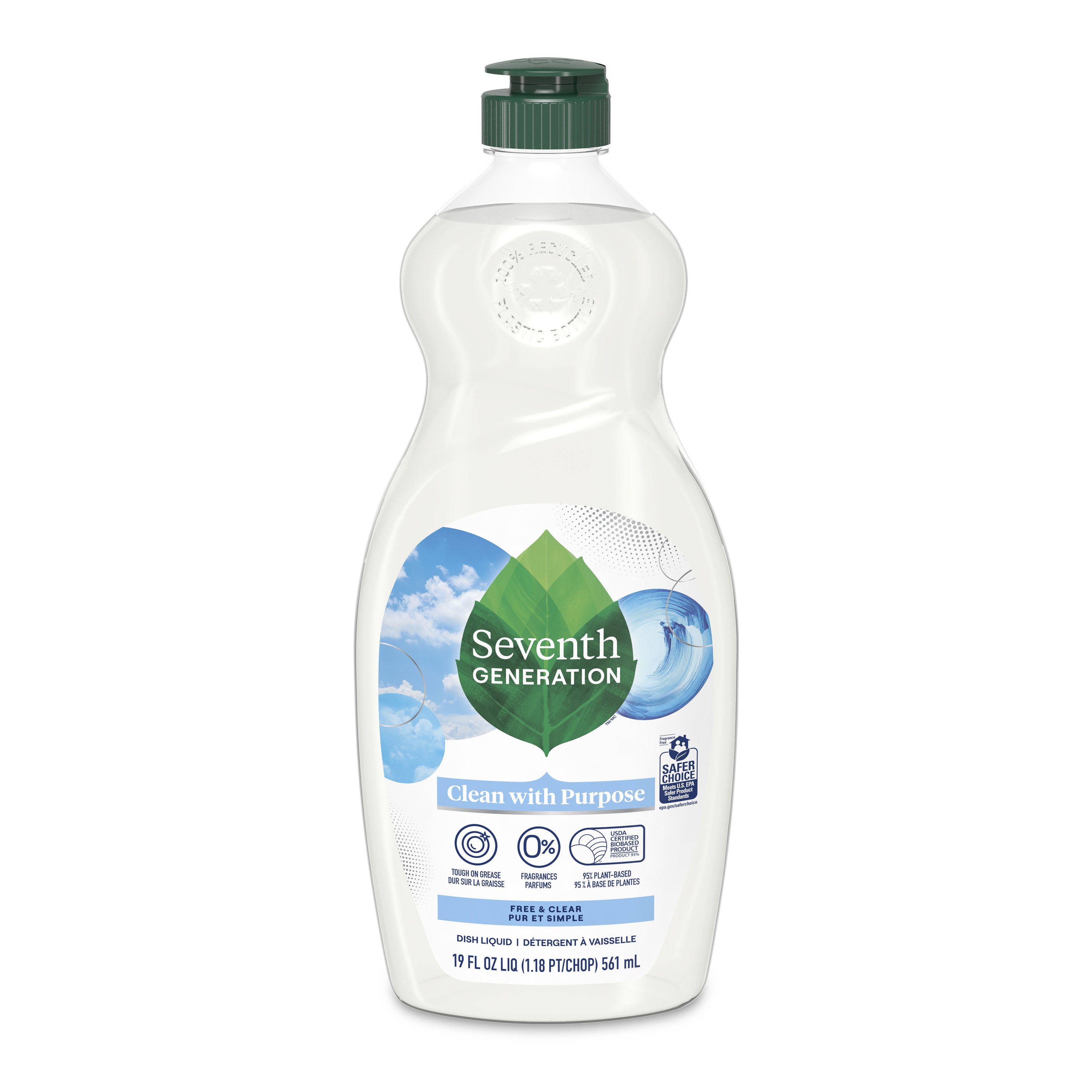

Seventh Generation Natural Liquid Dish Soap Lavender & Floral Mint 2-pack; 25 Oz
Analysis updated July 2026 · How Scout scores
At a glance
Summary
This dish soap contains a mix of natural and synthetic ingredients. Beneficial components like glycerin and essential oils contribute to its mildness and pleasant scent, while decyl glucoside enhances its cleansing properties. However, the presence of sodium lauryl sulfate, benzisothiazolinone, and methylisothiazolinone, which can cause skin irritation and allergic reactions, affects its overall safety and environmental impact.
Key ingredients 17
decyl glucosideGood
Decyl glucoside is a mild, non-ionic surfactant derived from glucose and coconut oil. It is biodegradable and gentle on the skin, making it suitable for sensitive skin. It is used to enhance the cleansing properties of the soap.
Risks
Low risk of irritation, generally safe for sensitive skin.
Benefits
Biodegradable and gentle, making it environmentally friendly and suitable for sensitive skin.
cananga odorata flower oilGood
Cananga odorata flower oil, also known as ylang-ylang oil, is a natural essential oil used for its fragrance. It is derived from the flowers of the Cananga tree and is considered safe for use in personal care products. It provides a pleasant, natural scent.
Risks
Generally considered safe with minimal risk.
Benefits
Provides a natural and pleasant fragrance.
citrus aurantifolia oilGood
Citrus aurantifolia oil, or lime oil, is a natural essential oil used for its fragrance and potential antimicrobial properties. It is derived from lime peels and is biodegradable. It adds a fresh, citrus scent to the product.
Risks
Generally considered safe with minimal risk.
Benefits
Provides a fresh, natural citrus fragrance and potential antimicrobial benefits.
citrus aurantium dulcis oilGood
Citrus aurantium dulcis oil, or orange oil, is a natural essential oil used for its fragrance and potential antimicrobial properties. It is derived from orange peels and is biodegradable. It adds a sweet, citrus scent to the product.
Risks
Generally considered safe with minimal risk.
Benefits
Provides a sweet, natural citrus fragrance and potential antimicrobial benefits.
lavandula hybrida oilGood
Lavandula hybrida oil, or lavender oil, is a natural essential oil used for its fragrance and calming properties. It is derived from lavender flowers and is biodegradable. It adds a soothing, floral scent to the product.
Risks
Generally considered safe with minimal risk.
Benefits
Provides a soothing, natural floral fragrance and calming effects.
mentha piperita oilGood
Mentha piperita oil, or peppermint oil, is a natural essential oil used for its fragrance and potential antimicrobial properties. It is derived from peppermint leaves and is biodegradable. It adds a refreshing, minty scent to the product.
Risks
Generally considered safe with minimal risk.
Benefits
Provides a refreshing, natural minty fragrance and potential antimicrobial benefits.
mentha viridis leaf oilGood
Mentha viridis leaf oil, or spearmint oil, is a natural essential oil used for its fragrance and potential antimicrobial properties. It is derived from spearmint leaves and is biodegradable. It adds a sweet, minty scent to the product.
Risks
Generally considered safe with minimal risk.
Benefits
Provides a sweet, natural minty fragrance and potential antimicrobial benefits.
waterNeutral
Water is a universal solvent used to dissolve other ingredients and create a liquid form. It is essential for the formulation of liquid soaps. It does not contribute to the cleaning action but helps in the application of the product.
Risks
There are no significant risks associated with water in this context.
Benefits
Water helps in diluting other ingredients, making the product easier to use.
lauramine oxideNeutral
Lauramine oxide is a surfactant and foam booster used in cleaning products. It helps in stabilizing foam and enhancing cleaning performance. It is considered mild compared to other surfactants.
Risks
May cause mild skin irritation in sensitive individuals.
Benefits
Enhances foam stability and cleaning efficiency.
glycerinNeutral
Standard formulation ingredient — neither beneficial nor harmful at typical use.
Risks
Generally considered safe with minimal risk.
Benefits
Helps to moisturize and protect the skin from drying.
magnesium chlorideNeutral
Magnesium chloride is used as a stabilizer in liquid formulations. It helps maintain the consistency and effectiveness of the product. It does not have a direct cleaning action.
Risks
Generally considered safe with no significant risks.
Benefits
Helps stabilize the formulation, ensuring consistent performance.
citric acidNeutral
Common acidulant and preservative — safe at typical use levels, neither beneficial nor harmful.
Risks
Low risk of irritation, generally safe.
Benefits
Helps maintain a balanced pH and acts as a natural preservative.
tetrasodium glutamate diacetateNeutral
Tetrasodium glutamate diacetate is a chelating agent that helps improve the stability and effectiveness of the product. It binds metal ions that can affect the performance of the soap. It is considered safe for use in cleaning products.
Risks
Generally considered safe with no significant risks.
Benefits
Enhances product stability and performance by binding metal ions.
sodium citrateNeutral
Standard formulation ingredient — neither beneficial nor harmful at typical use.
Risks
Generally considered safe with no significant risks.
Benefits
Helps maintain pH balance and enhances product stability.
benzisothiazolinoneBad
Benzisothiazolinone is a preservative used to prevent microbial growth in the product. It is effective in low concentrations but can cause skin sensitization. It is a synthetic compound with potential allergenic properties.
Risks
Potential skin sensitization and allergic reactions.
Benefits
Prevents microbial growth, extending the shelf life of the product.
sodium lauryl sulfateVery Bad
Sodium lauryl sulfate is a surfactant that helps in creating foam and removing dirt and grease. It is commonly used in cleaning products for its effectiveness. However, it can be harsh on the skin and cause irritation.
Risks
Potential skin irritation and dryness with prolonged exposure.
Benefits
Effective in removing grease and dirt due to its surfactant properties.
methylisothiazolinoneVery Bad
Methylisothiazolinone is a synthetic preservative used to prevent bacterial growth. It is effective but has been associated with skin sensitization and allergic reactions. It is considered a potential allergen.
Risks
High risk of skin sensitization and allergic reactions.
Benefits
Effective in preventing bacterial growth, extending product shelf life.
Get the full breakdown in the Scout appTake Scout shopping
Scan any product to see lab results, healthy alternatives, and your personalized analysis.
Download on theApp Store GET IT ONGoogle PlayAmazon pricing & content
Amazon price as of . Product prices and availability are accurate as of the date/time indicated and are subject to change. Any price and availability information displayed on Amazon.com at the time of purchase will apply to the purchase of this product.
CERTAIN CONTENT THAT APPEARS ON THIS SITE COMES FROM AMAZON. THIS CONTENT IS PROVIDED “AS IS” AND IS SUBJECT TO CHANGE OR REMOVAL AT ANY TIME.