
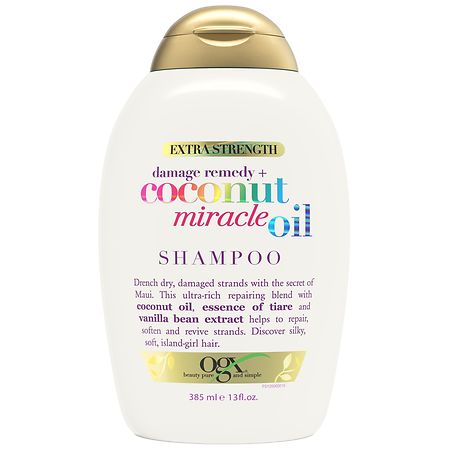
Pantene Pro-V Extra Strength Damage Remedy Coconut Oil Shampoo
Analysis updated August 2026 · How Scout scores
At a glance
Summary
This shampoo contains beneficial ingredients like coconut oil and glycerin, which provide moisturizing and conditioning benefits. However, it also includes sodium C14-16 olefin sulfonate, a harsh surfactant that can strip natural oils, and PEG-7 amodimethicone, a non-water-soluble silicone that can cause buildup. The presence of synthetic fragrance adds further concern due to potential allergens and undisclosed chemicals. These factors contribute to a moderate processing level and impact the overall score.
Key ingredients 24
cocos nucifera (coconut) oilVery Good
Coconut oil is known for its conditioning and moisturizing properties. It helps to nourish and strengthen hair, reducing protein loss. It is a natural ingredient that is well-regarded in hair care.
Risks
May weigh down hair if used in excess.
Benefits
Deeply conditions and moisturizes hair, improving its overall health and appearance.
gardenia taitensis flower extractGood
Gardenia taitensis flower extract is often used for its fragrance and potential antioxidant properties. It can add a pleasant scent to the product. It is generally considered safe for use in cosmetics.
Risks
Potential for allergic reactions in sensitive individuals.
Benefits
Provides a natural fragrance and may offer antioxidant benefits.
vanilla planifolia fruit extractGood
Vanilla planifolia fruit extract is used for its fragrance and potential antioxidant properties. It adds a sweet scent to the product and may help protect hair from environmental damage. It is a natural ingredient with a positive profile.
Risks
May cause allergic reactions in some individuals.
Benefits
Adds a pleasant fragrance and may provide antioxidant protection.
glycerinGood
Glycerin is a humectant that attracts moisture to the hair and scalp. It helps keep hair hydrated and improves its overall health. It is a well-regarded ingredient in hair care for its moisturizing properties.
Benefits
Attracts moisture, keeping hair hydrated and healthy.
water (aqua)Neutral
Water is the primary solvent in many cosmetic products. It helps dissolve other ingredients and provides a base for the formulation. It does not have any direct benefits or risks in the context of a shampoo.
Risks
There are no significant risks associated with water in cosmetic formulations.
Benefits
Water acts as a carrier for other ingredients, allowing them to be evenly distributed.
cocamidopropyl betaineNeutral
Cocamidopropyl betaine is a mild surfactant derived from coconut oil. It is used to reduce irritation caused by other surfactants. It is generally considered safe but can cause allergic reactions in some individuals.
Risks
May cause allergic reactions in sensitive individuals.
Benefits
Provides mild cleansing and helps to reduce irritation from harsher surfactants.
glycol distearateNeutral
Glycol distearate is used as an opacifying agent and to give the product a pearlescent appearance. It does not have significant benefits or risks in hair care products. It primarily serves an aesthetic purpose.
Benefits
Enhances the visual appeal of the product with a pearlescent effect.
polyquaternium-22Neutral
Polyquaternium-22 is a conditioning agent that helps improve hair texture and manageability. It forms a film on the hair, providing smoothness and reducing static. It is generally considered safe for use in hair care products.
Benefits
Improves hair texture and reduces static, enhancing manageability.
sodium hydrolyzed potato starch dodecenylsuccinateNeutral
This ingredient is used as a film-forming agent and thickener. It helps improve the texture and viscosity of the product. It does not have significant benefits or risks in hair care.
Benefits
Improves product texture and viscosity.
undeamidopropyl pg-dimonium chloride phosphateNeutral
This ingredient is used as a conditioning agent and antistatic agent. It helps improve hair manageability and reduces static. It is generally considered safe for use in hair care products.
Benefits
Improves hair manageability and reduces static.
polyquaternium-39Neutral
Polyquaternium-39 is a conditioning agent that helps improve hair texture and manageability. It forms a film on the hair, providing smoothness and reducing static. It is generally considered safe for use in hair care products.
Benefits
Improves hair texture and reduces static, enhancing manageability.
laureth-4Neutral
Laureth-4 is used as an emulsifier and surfactant. It helps blend oil and water-based ingredients and provides mild cleansing. It is generally considered safe for use in cosmetics.
Benefits
Helps blend ingredients and provides mild cleansing.
peg-150 pentaerythrityl tetrastearateNeutral
This ingredient is used as a thickener and emulsifier. It helps stabilize the formulation and improve texture. It does not have significant benefits or risks in hair care.
Benefits
Stabilizes formulation and improves texture.
ppg-2 hydroxyethyl cocamideNeutral
PPG-2 hydroxyethyl cocamide is used as a foam booster and thickener. It helps enhance the lather and texture of the product. It is generally considered safe for use in cosmetics.
Benefits
Enhances lather and texture of the product.
hexylene glycolNeutral
Hexylene glycol is used as a solvent and viscosity agent. It helps improve the texture and spreadability of the product. It does not have significant benefits or risks in hair care.
Benefits
Improves texture and spreadability of the product.
sodium citrateNeutral
Sodium citrate is used as a buffering agent to maintain pH balance. It helps stabilize the formulation and prevent degradation. It does not have significant benefits or risks in hair care.
Benefits
Maintains pH balance and stabilizes formulation.
sodium hydroxideNeutral
Sodium hydroxide is used to adjust the pH of the product. It is used in small amounts to ensure the product is not too acidic or alkaline. It does not have significant benefits or risks in hair care.
Benefits
Adjusts pH to ensure product stability and safety.
citric acidNeutral
Citric acid is used to adjust the pH and as a preservative. It helps maintain the stability and shelf life of the product. It does not have significant benefits or risks in hair care.
Benefits
Maintains stability and shelf life of the product.
sodium c14-16 olefin sulfonateBad
Sodium C14-16 Olefin Sulfonate is a surfactant used for its cleansing properties. It can be harsh and strip natural oils from the hair and scalp. This can lead to dryness and irritation for some users.
Risks
Potential to cause dryness and irritation due to its strong cleansing action.
Benefits
Effectively removes dirt and oil from the hair and scalp.
peg-7 amodimethiconeBad
PEG-7 amodimethicone is a silicone-based conditioning agent. It can cause buildup on the hair over time, leading to dullness and brittleness. It is not water-soluble, which can make it difficult to remove completely.
Risks
Can cause buildup on hair, leading to dullness and brittleness.
Benefits
Provides temporary smoothness and shine to hair.
acrylates/c10-30 alkyl acrylate crosspolymerBad
Processed additive flagged under Scout's ingredient doctrine.
Benefits
Improves viscosity and stability of the formulation.
propylene glycolBad
Processed additive flagged under Scout's ingredient doctrine.
Risks
May cause irritation in sensitive individuals.
Benefits
Helps retain moisture and enhances ingredient penetration.
sodium benzoateBad
Synthetic preservative that can form benzene in the presence of vitamin C.
Benefits
Prevents microbial growth, extending product shelf life.
fragrance (parfum)Very Bad
Fragrance is used to add scent to the product but can contain many undisclosed chemicals. It is a common cause of allergic reactions and sensitivities. The lack of transparency in its composition is a concern.
Risks
Potential to cause allergic reactions and sensitivities.
Benefits
Adds a pleasant scent to the product.
Processing
Processed Foods
Get the full breakdown in the Scout appTake Scout shopping
Scan any product to see lab results, healthy alternatives, and your personalized analysis.
Download on theApp Store GET IT ONGoogle PlayAmazon pricing & content
Amazon price as of . Product prices and availability are accurate as of the date/time indicated and are subject to change. Any price and availability information displayed on Amazon.com at the time of purchase will apply to the purchase of this product.
CERTAIN CONTENT THAT APPEARS ON THIS SITE COMES FROM AMAZON. THIS CONTENT IS PROVIDED “AS IS” AND IS SUBJECT TO CHANGE OR REMOVAL AT ANY TIME.