

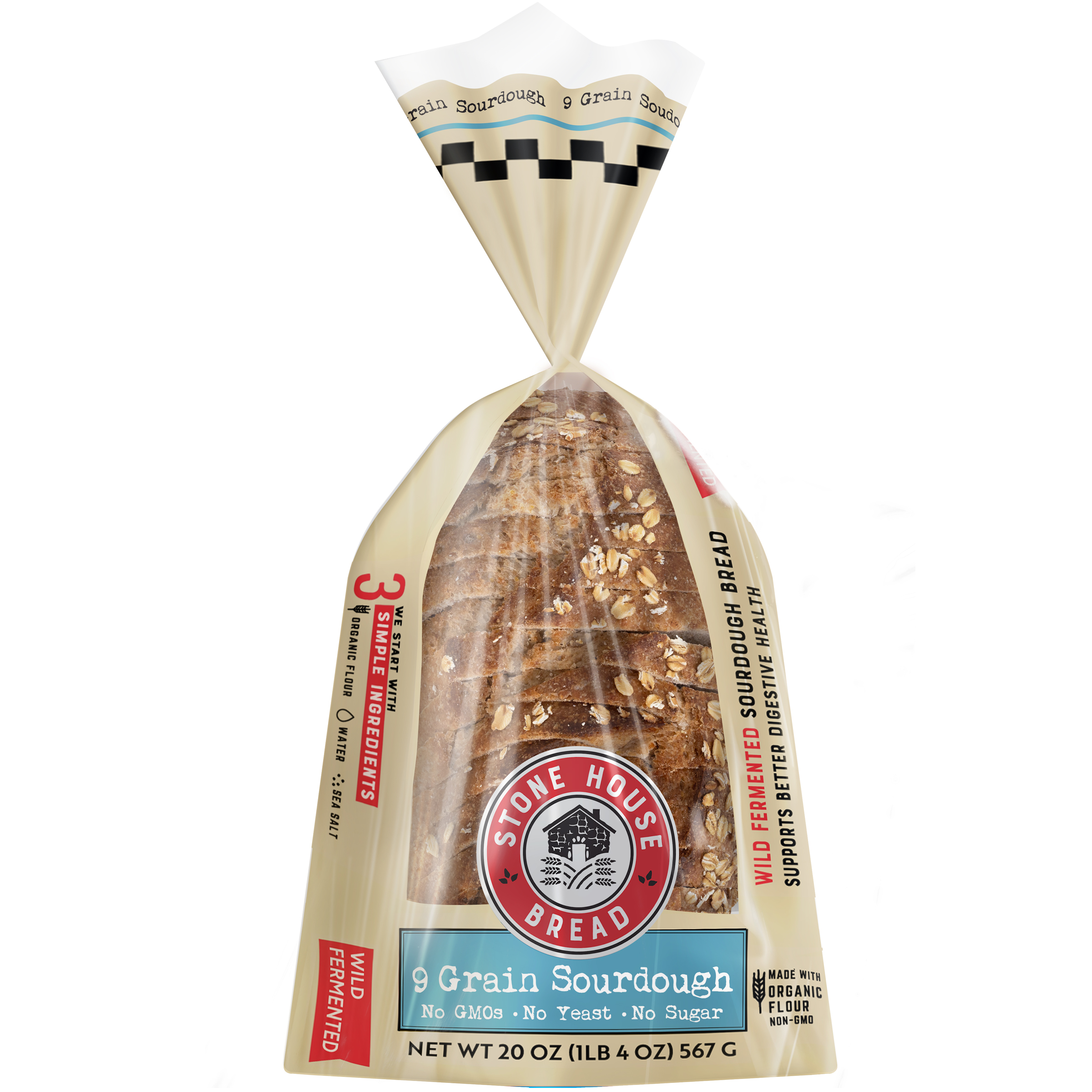


At a glance
Summary
This sourdough bread contains beneficial whole wheat flours, which provide more nutrients and fiber compared to refined flours, supporting heart health and digestion. However, it is made with enriched bread flour, which is more processed, and includes dough conditioners, indicating a moderate level of processing. The absence of harmful additives like artificial colors or seed oils is positive, but the processing level limits its score.
Key ingredients 7
Whole Wheat Coarse FlourGood
Whole wheat coarse flour is less processed and retains more nutrients and fiber than refined flours. It contributes to a healthier digestive system. It also provides a richer flavor and texture to baked goods.
Risks
May cause digestive discomfort in individuals with gluten sensitivity.
Benefits
Rich in dietary fiber and essential nutrients, supporting digestive health and providing sustained energy.
Whole Wheat FlourGood
Whole wheat flour is a whole grain flour that retains the bran and germ, providing more nutrients and fiber. It supports heart health and aids in digestion. It also has a lower glycemic index compared to refined flours.
Risks
Contains gluten, which can be problematic for those with celiac disease or gluten intolerance.
Benefits
High in fiber and essential nutrients, promoting heart health and aiding in digestion.
Bread FlourNeutral
Bread flour is a refined flour that provides structure and texture to baked goods. It is enriched with vitamins and minerals like niacin and iron. However, it lacks the fiber and nutrients found in whole grain flours.
Risks
May contribute to blood sugar spikes due to its refined nature.
Benefits
Provides essential vitamins and minerals through enrichment, supporting basic nutritional needs.
Filtered WaterNeutral
Filtered water is used as a solvent and to hydrate ingredients in baking. It is free from impurities and contaminants. It does not contribute any nutritional value.
Benefits
Ensures purity and safety in food preparation without adding any calories or nutrients.
SaltNeutral
Salt is used to enhance flavor and control yeast activity in bread. It is a refined ingredient without trace minerals. Excessive consumption can lead to health issues like hypertension.
Risks
High sodium intake can contribute to hypertension and cardiovascular issues.
Benefits
Enhances flavor and plays a role in the fermentation process of bread.
Dough ConditionerNeutral
Dough conditioners improve the texture and shelf life of bread. They often include natural enzymes and ascorbic acid. While they enhance product quality, they do not provide significant nutritional benefits.
Benefits
Improves dough elasticity and bread texture, enhancing the overall quality of the product.
YeastNeutral
Yeast is a microorganism used to ferment dough, producing carbon dioxide that leavens bread. It is a natural ingredient that contributes to the bread's flavor and texture. It does not provide significant nutritional value.
Benefits
Essential for fermentation, contributing to the bread's rise and flavor development.
Processing
Processed Foods
Get the full breakdown in the Scout appTake Scout shopping
Scan any product to see lab results, healthy alternatives, and your personalized analysis.
Download on theApp Store GET IT ONGoogle Play