
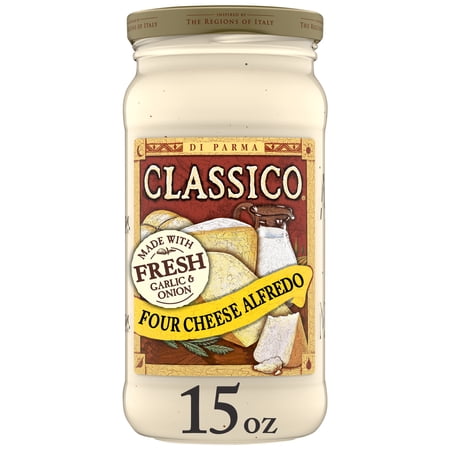

Classico Pasta Sauce
Summary
This pasta sauce contains several beneficial ingredients like cream and various cheeses, which provide protein and calcium. However, it is heavily processed, containing additives such as sodium phosphate and xanthan gum, and includes sugar and natural flavors, which are less desirable. The high level of processing and presence of synthetic additives limit its overall healthiness despite some nutritious components.
At a glance
Key ingredients 13
WaterNeutral
Water is a neutral ingredient used as a base in many food products. It provides no nutritional value but is essential for consistency and texture. It does not contribute to the caloric content of the product.
See more about Water →CreamGood
Cream is a dairy product that provides richness and flavor to foods. It contains beneficial fats and fat-soluble vitamins like A and D. When sourced from grass-fed cows, it may have higher omega-3 content.
Risks
High in saturated fats, which may be a concern for heart health if consumed in excess.
Benefits
Provides a source of energy and essential fat-soluble vitamins. May contain beneficial fatty acids if sourced from grass-fed cows.
Modified CornstarchNeutral
Modified cornstarch is used as a thickening agent in processed foods. It is chemically altered to improve stability and texture. It does not provide significant nutritional value.
Parmesan CheeseGood
Parmesan cheese is a hard, aged cheese known for its rich flavor and nutritional profile. It is a good source of protein and calcium. The aging process enhances its digestibility and flavor complexity.
Risks
Contains lactose, which may be a concern for individuals with lactose intolerance.
Benefits
Rich in protein and calcium, supporting bone health. Contains beneficial probiotics due to the fermentation process.
Romano CheeseGood
Romano cheese is a flavorful, hard cheese that adds depth to dishes. It is high in protein and calcium, essential for bone health. The cheese is aged, which enhances its flavor and digestibility.
Risks
Contains lactose, which may be problematic for those with lactose intolerance.
Benefits
Provides protein and calcium, supporting bone and muscle health. Aging process may contribute beneficial probiotics.
Unsalted ButterNeutral
Unsalted butter is used for its rich flavor and texture in cooking. It is a source of saturated fats and fat-soluble vitamins. The absence of salt allows for better control of sodium content in recipes.
Risks
High in saturated fats, which may impact heart health if consumed in large amounts.
Benefits
Provides fat-soluble vitamins and enhances flavor in culinary applications.
Ricotta CheeseGood
Ricotta cheese is a soft cheese known for its creamy texture and mild flavor. It is a good source of protein and calcium. Made from whey, it is lower in fat compared to other cheeses.
Risks
Contains lactose, which may be an issue for those with lactose intolerance.
Benefits
Rich in protein and calcium, supporting bone health. Lower in fat compared to many other cheeses.
SugarBad
Sugar is a refined carbohydrate that provides sweetness and energy. It lacks essential nutrients and can contribute to calorie overconsumption. Excessive intake is linked to various health issues.
Risks
High consumption can lead to weight gain, insulin resistance, and dental cavities.
Benefits
Provides quick energy but lacks essential nutrients.
SaltNeutral
Salt is used to enhance flavor and preserve food. It is essential for maintaining fluid balance and nerve function. However, excessive intake can lead to health issues.
Risks
High sodium intake is associated with increased blood pressure and cardiovascular risk.
Benefits
Essential for fluid balance and nerve function in the body.
Sodium PhosphateBad
Sodium phosphate is used as an emulsifier and preservative in processed foods. It helps maintain texture and extend shelf life. However, it is a synthetic additive with potential health concerns.
Risks
Excessive intake may lead to imbalances in phosphate levels, affecting bone health and kidney function.
Xanthan GumNeutral
Xanthan gum is a polysaccharide used as a thickening and stabilizing agent. It is produced through fermentation and is commonly used in gluten-free products. It does not provide significant nutritional value.
Risks
May cause digestive discomfort in sensitive individuals when consumed in large amounts.
Benefits
Helps improve texture and stability in food products, especially useful in gluten-free formulations.
Granulated GarlicGood
Granulated garlic is a dehydrated form of garlic that adds flavor and potential health benefits. It contains compounds like allicin, which have antimicrobial and antioxidant properties. It is a convenient way to incorporate garlic into dishes.
Benefits
Provides flavor and potential health benefits due to its antioxidant and antimicrobial properties.
Natural FlavorBad
Natural flavor is a catch-all term for flavoring agents derived from natural sources. It lacks transparency, making it difficult to assess its health impact. The term can encompass a wide range of substances, some of which may be heavily processed.
Risks
Lack of transparency can be concerning for individuals with allergies or sensitivities.
Processing
Ultra-Processed Foods
Get the full breakdown in the Scout app
Scan any product to see lab results, healthy alternatives, and your personalized analysis.
Download on theApp Store