
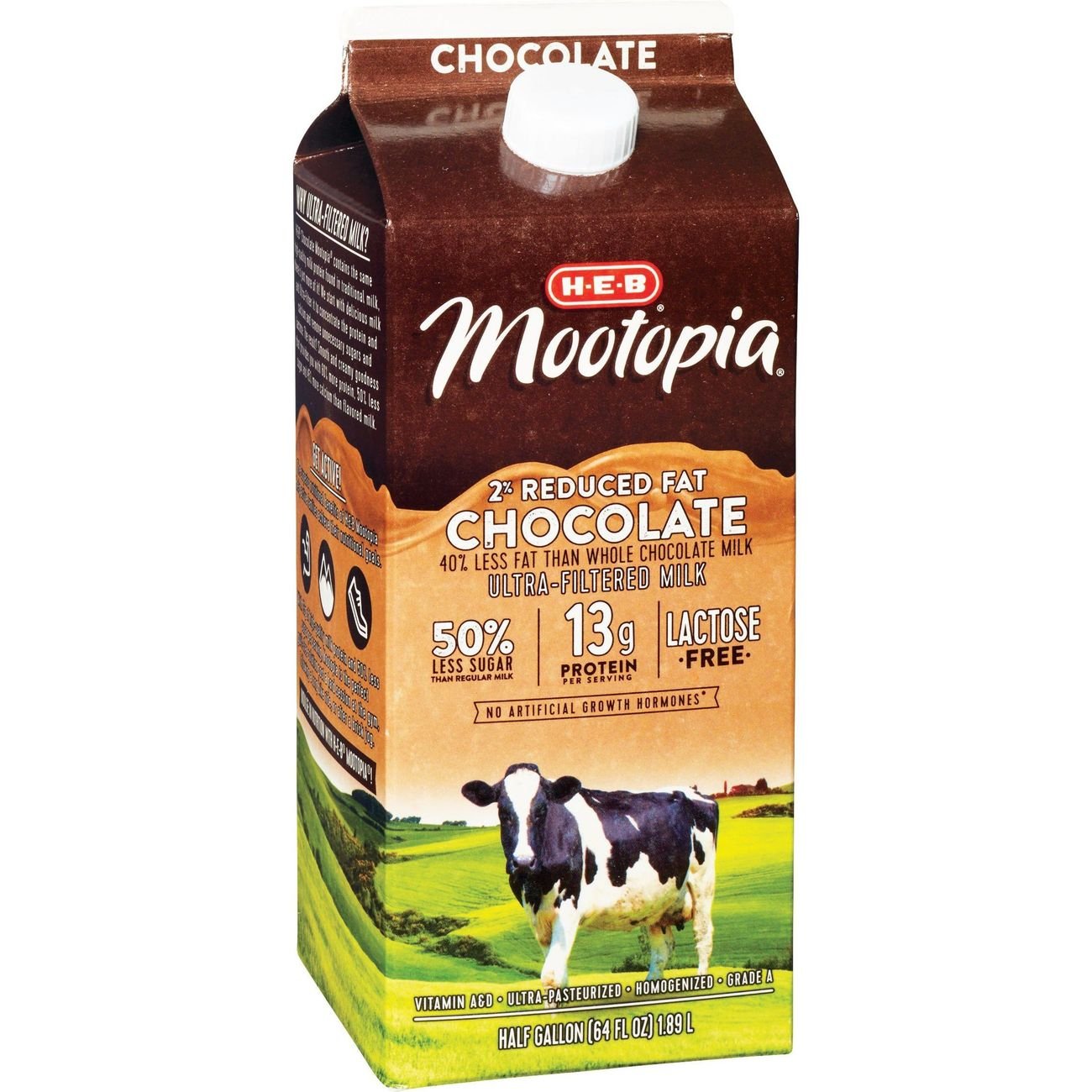


H-E-B Mootopia 2% reduced fat Chocolate
Summary
This product is heavily processed, containing multiple artificial additives such as acesulfame potassium and sucralose, which are artificial sweeteners with potential health concerns. While it includes beneficial ingredients like ultra-filtered milk and added vitamins, the presence of refined sugar and carrageenan further detracts from its nutritional profile. The high level of processing and use of artificial flavors and sweeteners significantly impact its overall healthiness.
At a glance
Key ingredients 11
Reduced fat ultra-filtered milkGood
This milk is processed to reduce fat content while retaining protein and calcium. Ultra-filtration enhances protein concentration and reduces lactose, making it suitable for lactose-sensitive individuals. It provides essential nutrients like calcium and vitamin D.
Benefits
Rich in protein and calcium, supporting bone health and muscle maintenance. Suitable for lactose-sensitive individuals due to reduced lactose content.
SugarBad
Refined sugar is added for sweetness but offers no nutritional benefits. Excessive consumption can lead to health issues such as obesity and diabetes. It is a source of empty calories with no essential nutrients.
Risks
High intake can contribute to obesity, diabetes, and dental cavities.
Cocoa (processed with alkali)Neutral
Cocoa processed with alkali, also known as Dutch-processed cocoa, has a milder flavor and darker color. The alkalization process reduces acidity but may also decrease antioxidant levels. It is used primarily for flavor and color in chocolate products.
Benefits
Provides flavor and color to chocolate products, though antioxidant levels may be reduced.
SaltNeutral
Salt is used to enhance flavor but should be consumed in moderation. Excessive salt intake can lead to hypertension and cardiovascular issues. It is a common seasoning in many food products.
Risks
Excessive consumption can lead to high blood pressure and cardiovascular diseases.
Benefits
Enhances flavor in food products.
CarrageenanBad
Carrageenan is used as a thickener and stabilizer in food products. Some studies suggest it may cause digestive issues and inflammation in sensitive individuals. It is derived from red seaweed and is commonly used in dairy and non-dairy products.
Risks
May cause digestive issues and inflammation in some individuals.
Acesulfame potassiumBad
Acesulfame potassium is an artificial sweetener used to provide sweetness without calories. It is often used in combination with other sweeteners to enhance sweetness. Some studies have raised concerns about its long-term health effects.
Risks
Potential long-term health effects are not fully understood.
Benefits
Provides sweetness without adding calories.
Artificial flavor (vanillin)Bad
Vanillin is an artificial flavor used to mimic the taste of vanilla. It is synthetically produced and lacks the complex flavor profile of natural vanilla extract. Artificial flavors are often criticized for being overly processed and lacking nutritional value.
Risks
May contribute to an overly processed diet with limited nutritional value.
Benefits
Provides vanilla flavor at a lower cost than natural vanilla.
SucraloseNeutral
Sucralose is a zero-calorie artificial sweetener used to replace sugar. It is widely used due to its high sweetness intensity and stability in heat. While generally considered safe, some studies suggest it may affect gut health.
Risks
Potential effects on gut health are not fully understood.
Benefits
Provides sweetness without calories, suitable for low-calorie diets.
Lactase enzymeGood
Lactase enzyme is added to break down lactose, making the product suitable for lactose-intolerant individuals. It helps improve digestion and absorption of dairy products. This enzyme is beneficial for those with lactose intolerance.
Benefits
Facilitates digestion of lactose, making dairy products accessible to lactose-intolerant individuals.
Vitamin A palmitateNeutral
Vitamin A palmitate is a synthetic form of vitamin A used to fortify foods. It is important for vision, immune function, and skin health. Fortification helps prevent vitamin A deficiency in populations with limited dietary intake.
Risks
Excessive intake can lead to hypervitaminosis A, a condition of vitamin A toxicity.
Benefits
Supports vision, immune function, and skin health.
Vitamin D3Good
Vitamin D3 is added to support bone health and calcium absorption. It is essential for maintaining healthy bones and immune function. Fortification helps prevent vitamin D deficiency, especially in regions with limited sunlight exposure.
Benefits
Supports bone health and immune function by enhancing calcium absorption.
Processing
Ultra-Processed Foods
Get the full breakdown in the Scout app
Scan any product to see lab results, healthy alternatives, and your personalized analysis.
Download on theApp Store