
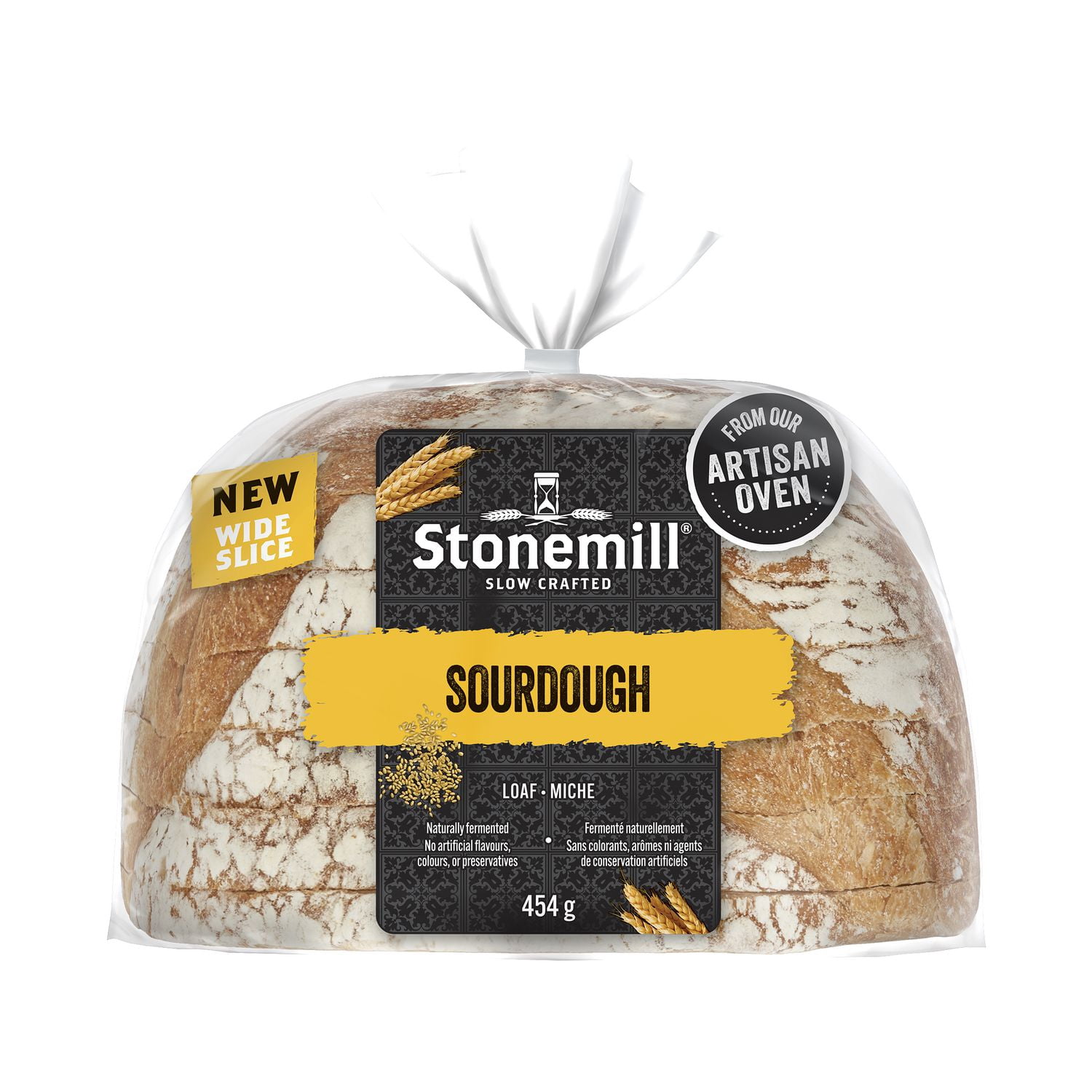


At a glance
Summary
The Stonemill Sourdough Loaf is a processed bread with a relatively clean ingredient list, featuring beneficial components like olive oil and fermented wheat flour, which enhance flavor and nutritional value. However, the use of enriched wheat flour and the processing level limit its score, as it does not reach the minimal processing standards of higher-scoring breads. Despite these factors, the absence of harmful additives and the inclusion of healthy fats contribute positively to its overall rating.
Key ingredients 10
Fermented Wheat FlourGood
Fermented wheat flour is used to enhance flavor and improve digestibility. The fermentation process can increase the availability of nutrients. It also contributes to the characteristic sourdough taste.
Benefits
Improves digestibility and enhances flavor through fermentation.
Olive OilGood
Olive oil is a healthy fat that provides monounsaturated fats and antioxidants. It supports heart health and adds flavor to the bread. Cold-pressed olive oil retains beneficial compounds.
Benefits
Rich in monounsaturated fats and antioxidants that support heart health.
Sea SaltGood
Sea salt is a natural source of sodium and trace minerals. It is less processed than table salt and adds flavor to the bread. It provides essential electrolytes in moderation.
Risks
Excessive consumption can lead to high blood pressure.
Benefits
Provides essential electrolytes and enhances flavor.
WaterNeutral
Water is a neutral ingredient used as a solvent and to provide moisture. It is essential for the dough formation and fermentation process. It does not contribute any nutritional value.
See more about Water →YeastNeutral
Baker's/nutritional yeast in standard use — benign.
Benefits
Contributes to the fermentation process, enhancing flavor and texture.
Wheat SemolinaNeutral
Wheat semolina is a coarse flour made from durum wheat. It is used to add texture and flavor to bread. While it provides some protein and fiber, it is not as nutrient-dense as whole grains.
Risks
May cause gluten-related issues for sensitive individuals.
Benefits
Adds texture and flavor to the bread.
Wheat GlutenNeutral
Wheat gluten is added to improve the elasticity and structure of the dough. It is a protein that helps bread maintain its shape. It is beneficial for bread texture but may cause issues for those with gluten intolerance.
Risks
Can cause adverse reactions in individuals with gluten intolerance or celiac disease.
Benefits
Enhances dough elasticity and bread structure.
Cultured Wheat FlourNeutral
Cultured wheat flour is used to enhance flavor and shelf life. It involves fermentation, which can improve nutrient availability. It is a common ingredient in sourdough bread.
Benefits
Enhances flavor and may improve nutrient availability.
VinegarNeutral
Vinegar is used to enhance flavor and act as a preservative. It can contribute to the sour taste in sourdough bread. It has minimal nutritional impact.
Benefits
Enhances flavor and acts as a natural preservative.
Enriched Wheat FlourBad
Refined grain flour stripped of bran and germ.
Risks
May contribute to blood sugar spikes due to its refined nature.
Benefits
Provides essential vitamins and minerals due to enrichment.
Processing
Processed Foods
Get the full breakdown in the Scout appTake Scout shopping
Scan any product to see lab results, healthy alternatives, and your personalized analysis.
Download on theApp Store GET IT ONGoogle Play