Atlantic salmon

At a glance
Summary
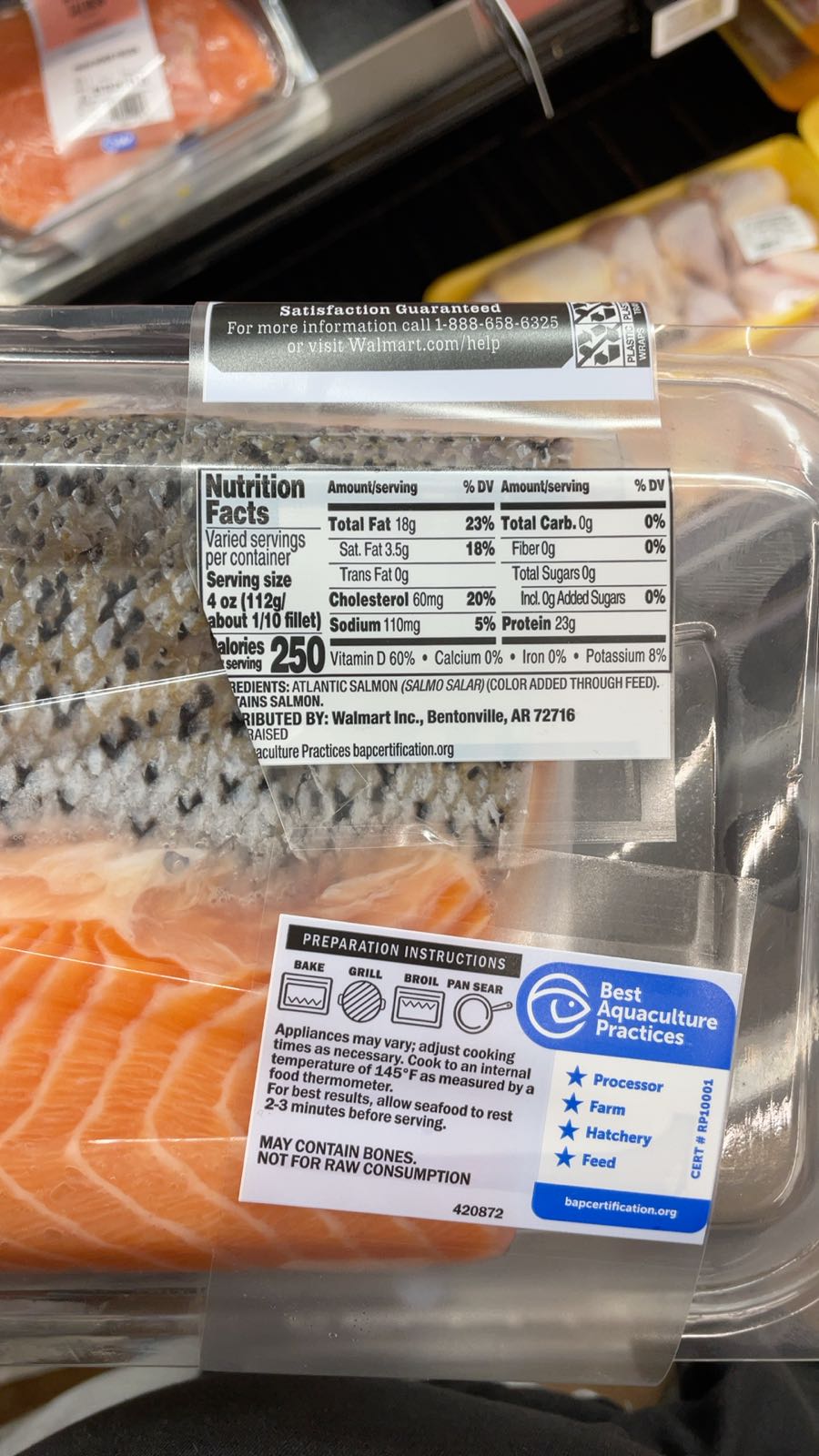
This product is a processed food due to the inclusion of color additives in the feed and the use of a seasoning dry rub. While the salmon itself is a nutritious source of protein and omega-3 fatty acids, the use of synthetic colorants raises concerns about artificial enhancement. The smoked sea salt is a positive addition, providing natural flavor without artificial additives, but the overall processing level limits the score. Its plastic packaging can shed microplastics into the food and lowers its score.
Key ingredients 7
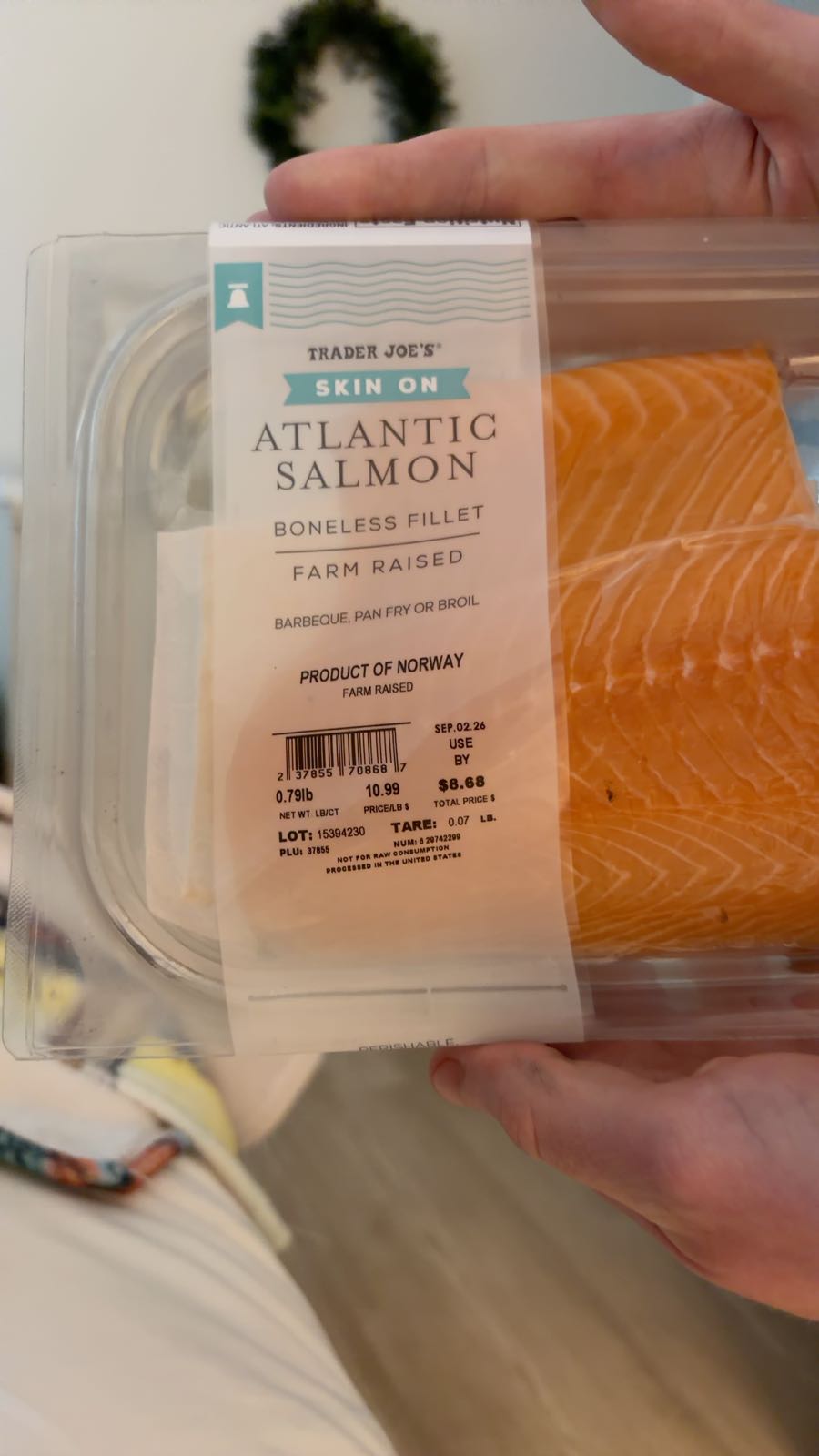
Farm raised Atlantic salmon filletGood
Salmon is a high-quality source of protein and omega-3 fatty acids, which are beneficial for heart and brain health. Farm-raised salmon may have a different nutrient profile compared to wild-caught, often containing higher levels of omega-6 fatty acids. Despite this, it remains a nutritious option rich in essential nutrients.
Risks
Farm-raised salmon may contain higher levels of contaminants and omega-6 fatty acids compared to wild-caught salmon.
Benefits
Rich in omega-3 fatty acids, which support cardiovascular health and cognitive function. Provides high-quality protein and essential vitamins and minerals.
Smoked sea saltGood
Smoked sea salt is a natural seasoning that adds flavor and trace minerals. The smoking process imparts a unique taste without the need for artificial additives. It is a minimally processed ingredient that enhances culinary applications.
Risks
Excessive sodium consumption can lead to health issues such as high blood pressure.
Benefits
Provides trace minerals and enhances flavor with natural smoke, supporting culinary diversity.
Mesquite smoked sea salt seasoning dry rub packetNeutral
This seasoning adds flavor through natural smoking processes and sea salt. While it enhances taste, it does not significantly alter the nutritional profile of the product. The use of sea salt provides trace minerals, but the overall impact is minimal.
Risks
Excessive sodium intake can contribute to hypertension and cardiovascular issues.
Benefits
Provides trace minerals from sea salt and enhances flavor through natural smoking.
Maple sugarNeutral
Maple sugar is a natural sweetener derived from maple sap, offering a unique flavor profile. It contains trace minerals but is primarily a source of sugar. While it is less processed than refined sugar, it should be consumed in moderation.
Risks
High sugar intake can lead to weight gain and increased risk of metabolic disorders.
Benefits
Contains trace minerals and provides a natural sweetening option with a distinct flavor.
WaterNeutral
Water is used as a processing aid and does not contribute to the nutritional profile of the product. It is essential for maintaining moisture and texture in food products. As a neutral ingredient, it poses no health risks or benefits.
See more about Water →SaltNeutral
Salt is a common seasoning used to enhance flavor and preserve food. While it is essential for bodily functions, excessive intake can lead to health issues. It is a neutral ingredient in terms of nutritional value.
Risks
High sodium intake is associated with increased risk of hypertension and cardiovascular diseases.
Benefits
Essential for maintaining electrolyte balance and enhancing food flavor.
Color added through feedBad
Color additives in feed are used to enhance the appearance of farmed salmon, often using synthetic astaxanthin. These additives do not provide nutritional benefits and may raise concerns about artificial enhancement. The use of synthetic colorants can be controversial due to potential health and environmental impacts.
Risks
Potential health concerns related to synthetic additives and environmental impact of aquaculture practices.
Processing
Processed Foods
Get the full breakdown in the Scout appTake Scout shopping
Scan any product to see lab results, healthy alternatives, and your personalized analysis.
Are you Sea Best? Fix an error Get the badge Get tested