

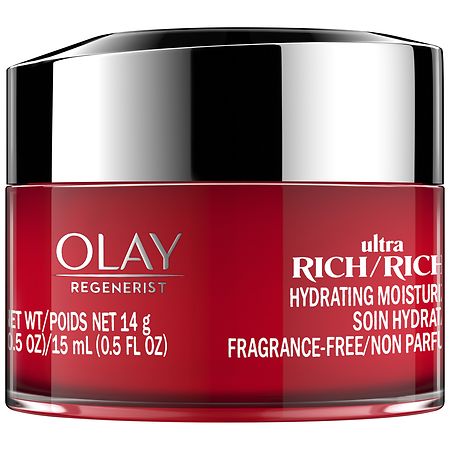
Olay Regenerist Deep Hydration Regenerating Cream Moisturizer 1.7 fl oz
Analysis updated August 2026 · How Scout scores
At a glance
Summary
This moisturizer contains several beneficial ingredients such as niacinamide, panthenol, and olive oil, which are known for their moisturizing and antioxidant properties. However, the presence of polyacrylamide, a controversial ingredient due to potential contamination risks, lowers the overall safety profile. The product is moderately processed, which also impacts its rating.
Key ingredients 22
PanthenolVery Good
Panthenol, also known as provitamin B5, is a moisturizing agent that helps to improve skin hydration and elasticity. It is known for its soothing and anti-inflammatory properties. It is widely used in skincare for its beneficial effects on the skin.
Risks
Panthenol is generally safe, but in rare cases, it may cause skin irritation.
Benefits
It improves skin hydration, elasticity, and has soothing properties.
Camellia Sinensis Leaf ExtractVery Good
Camellia Sinensis Leaf Extract, commonly known as green tea extract, is rich in antioxidants and has anti-inflammatory properties. It helps to protect the skin from environmental damage and soothe irritation. It is highly regarded in skincare for its multiple benefits.
Risks
There are minimal risks associated with Camellia Sinensis Leaf Extract.
Benefits
It provides antioxidant protection and soothes skin irritation.
Vitamin EVery Good
Vitamin E is a powerful antioxidant that helps to protect the skin from oxidative stress and environmental damage. It is known for its moisturizing and healing properties. It is widely used in skincare for its protective and nourishing benefits.
Risks
There are minimal risks associated with Vitamin E.
Benefits
It provides antioxidant protection and moisturizes the skin.
Olive OilVery Good
Olive Oil is a natural oil rich in antioxidants and fatty acids that help to nourish and moisturize the skin. It is known for its emollient properties and ability to improve skin barrier function. It is highly regarded in skincare for its natural and beneficial effects.
Risks
There are minimal risks associated with Olive Oil.
Benefits
It nourishes and moisturizes the skin, improving barrier function.
GlycerinGood
Glycerin is a humectant that attracts moisture to the skin, helping to keep it hydrated. It is widely used in skincare for its moisturizing properties. It is generally considered safe and beneficial for all skin types.
Risks
There are minimal risks associated with glycerin, though it may cause irritation in very rare cases.
Benefits
Glycerin helps to maintain skin hydration and improve skin barrier function.
NiacinamideGood
Niacinamide is a form of Vitamin B3 that is known for its anti-inflammatory and skin-brightening properties. It helps to improve skin texture and reduce the appearance of pores. It is well-tolerated by most skin types and offers multiple skin benefits.
Risks
Niacinamide is generally well-tolerated, but in rare cases, it may cause mild irritation.
Benefits
Niacinamide improves skin texture, reduces inflammation, and brightens the skin.
CarnosineGood
Carnosine is a dipeptide with antioxidant properties that helps to protect the skin from oxidative stress. It is known for its anti-aging benefits and ability to improve skin elasticity. It is generally considered safe and beneficial for skin health.
Risks
There are minimal risks associated with Carnosine.
Benefits
It provides antioxidant protection and improves skin elasticity.
Tocopheryl AcetateGood
Tocopheryl Acetate is a form of Vitamin E that acts as an antioxidant, protecting the skin from free radical damage. It helps to moisturize and improve skin texture. It is widely used in skincare for its protective and moisturizing properties.
Risks
There are minimal risks associated with Tocopheryl Acetate.
Benefits
It provides antioxidant protection and moisturizes the skin.
WaterNeutral
Water is a common solvent used in cosmetics to dissolve other ingredients. It helps in the application and absorption of the product. It does not provide direct benefits or risks.
Risks
There are no significant risks associated with water in cosmetics.
Benefits
Water helps in the application and absorption of the product.
Dimethicone CrosspolymerNeutral
Dimethicone Crosspolymer is used to enhance the texture and spreadability of cosmetic products. It provides a silky feel and helps to fill in fine lines. It is considered safe for use in cosmetics.
Risks
There are minimal risks associated with Dimethicone Crosspolymer, though it may cause irritation in sensitive skin.
Benefits
It improves the texture and spreadability of the product.
PolymethylsilsesquioxaneNeutral
Polymethylsilsesquioxane is a silicone that provides a smooth, powdery finish to the skin. It is used to improve the texture and feel of cosmetic products. It is generally considered safe for use in cosmetics.
Risks
There are minimal risks associated with Polymethylsilsesquioxane.
Benefits
It provides a smooth, powdery finish and improves product texture.
Isopropyl PalmitateNeutral
Isopropyl Palmitate is an emollient that helps to soften and smooth the skin. It is used to enhance the texture and spreadability of cosmetic products. It is generally considered safe for use in cosmetics.
Risks
It may cause breakouts in acne-prone skin due to its comedogenic nature.
Benefits
It softens and smooths the skin, improving product texture.
IsohexadecaneNeutral
Isohexadecane is used as an emollient and solvent in cosmetics, providing a lightweight, non-greasy feel. It helps to improve the spreadability of products. It is considered safe for use in cosmetics.
Risks
There are minimal risks associated with Isohexadecane.
Benefits
It provides a lightweight, non-greasy feel and improves product spreadability.
Stearyl AlcoholNeutral
Stearyl Alcohol is a fatty alcohol used as an emollient and thickener in cosmetics. It helps to stabilize formulations and improve texture. It is generally considered safe and non-irritating.
Risks
There are minimal risks associated with Stearyl Alcohol.
Benefits
It stabilizes formulations and improves texture.
Cetyl AlcoholNeutral
Cetyl Alcohol is a fatty alcohol used as an emollient and thickener in cosmetics. It helps to soften and smooth the skin while providing stability to formulations. It is generally considered safe and non-irritating.
Risks
There are minimal risks associated with Cetyl Alcohol.
Benefits
It softens and smooths the skin, providing stability to formulations.
Behenyl AlcoholNeutral
Behenyl Alcohol is a fatty alcohol used as an emollient and thickener in cosmetics. It helps to improve the texture and stability of products. It is generally considered safe and non-irritating.
Risks
There are minimal risks associated with Behenyl Alcohol.
Benefits
It improves texture and stability of cosmetic formulations.
Cetearyl AlcoholNeutral
Cetearyl Alcohol is a fatty alcohol used as an emollient and emulsifier in cosmetics. It helps to soften and smooth the skin while stabilizing formulations. It is generally considered safe and non-irritating.
Risks
There are minimal risks associated with Cetearyl Alcohol.
Benefits
It softens and smooths the skin, stabilizing formulations.
DimethiconeBad
Occlusive silicone film-former — flagged under clean-beauty doctrine.
Risks
Dimethicone can potentially cause breakouts in acne-prone skin due to its occlusive nature.
Benefits
Dimethicone provides a smooth application and helps to lock in moisture.
PhenoxyethanolBad
Processed additive flagged under Scout's ingredient doctrine.
Risks
It may cause irritation in sensitive skin or when used in high concentrations.
Benefits
It effectively prevents microbial growth, extending product shelf life.
Benzyl AlcoholBad
Processed additive flagged under Scout's ingredient doctrine.
Risks
It may cause irritation in sensitive skin or when used in high concentrations.
Benefits
It prevents microbial growth and improves product stability.
PolyacrylamideVery Bad
Polyacrylamide is used as a thickener and stabilizer in cosmetics. It is controversial due to potential contamination with acrylamide, a suspected carcinogen. Its use is heavily scrutinized in personal care products.
Risks
Potential contamination with acrylamide, a suspected carcinogen, poses significant health concerns.
Benefits
It acts as a thickener and stabilizer in formulations.
PolyethyleneVery Bad
Heavily flagged ingredient class under Scout's doctrine.
Risks
Environmental concerns exist due to its contribution to microplastic pollution.
Benefits
It provides texture and stability to cosmetic formulations.
Processing
Processed Foods
Get the full breakdown in the Scout appTake Scout shopping
Scan any product to see lab results, healthy alternatives, and your personalized analysis.
Download on theApp Store GET IT ONGoogle PlayAmazon pricing & content
Amazon price as of . Product prices and availability are accurate as of the date/time indicated and are subject to change. Any price and availability information displayed on Amazon.com at the time of purchase will apply to the purchase of this product.
CERTAIN CONTENT THAT APPEARS ON THIS SITE COMES FROM AMAZON. THIS CONTENT IS PROVIDED “AS IS” AND IS SUBJECT TO CHANGE OR REMOVAL AT ANY TIME.