
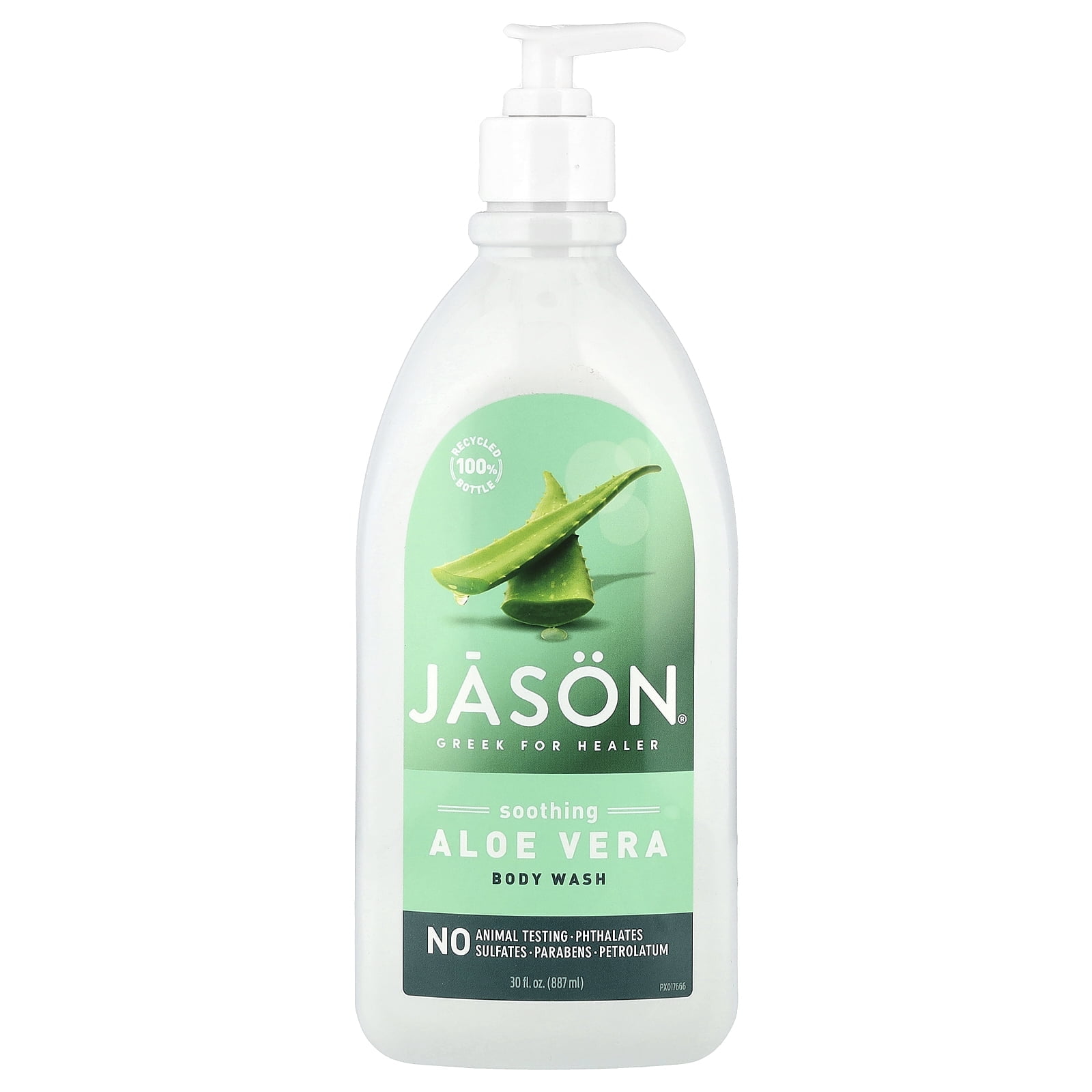
JASON Soothing Body Wash Aloe Vera 30 fl oz
Analysis updated September 2026 · How Scout scores
At a glance
Summary
This body wash contains several beneficial ingredients such as aloe vera, chamomile, and sunflower seed oil, which are known for their soothing and moisturizing properties. However, the presence of fragrance, which can contain undisclosed allergens or irritants, slightly detracts from its overall safety profile. The product avoids harsh surfactants and other major harmful chemicals, resulting in a mostly safe formulation with minor concerns.
Key ingredients 28
Helianthus Annuus (Sunflower) Seed OilVery Good
Sunflower seed oil is a natural oil rich in essential fatty acids and vitamin E. It is known for its moisturizing and skin-soothing properties. It is suitable for all skin types and helps improve skin barrier function.
Risks
There are minimal risks, though it may cause allergic reactions in individuals with sunflower allergies.
Benefits
Provides deep hydration and helps protect the skin from environmental damage.
Prunus Amygdalus Dulcis (Sweet Almond) OilVery Good
Sweet almond oil is a natural emollient that helps soften and smooth the skin. It is rich in vitamins and fatty acids, making it beneficial for dry and sensitive skin. It is well-tolerated and non-comedogenic.
Risks
May cause allergic reactions in individuals with nut allergies.
Benefits
Nourishes and moisturizes the skin, improving its overall texture and appearance.
Aloe Barbadensis Leaf JuiceVery Good
Aloe vera is known for its soothing and hydrating properties. It is commonly used to calm irritated skin and provide moisture. It is suitable for all skin types and is often used in products for sensitive skin.
Risks
There are minimal risks, though some individuals may experience allergic reactions.
Benefits
Helps soothe and hydrate the skin, reducing redness and irritation.
Calendula Officinalis Flower ExtractVery Good
Calendula extract is known for its anti-inflammatory and healing properties. It is often used to soothe irritated skin and promote healing. It is suitable for sensitive skin and is well-tolerated.
Risks
There are minimal risks, though it may cause allergic reactions in some individuals.
Benefits
Helps calm and soothe the skin, reducing inflammation and promoting healing.
Chamomilla Recutita (Matricaria) Flower ExtractVery Good
Chamomile extract is known for its calming and anti-inflammatory properties. It is often used to soothe irritated skin and reduce redness. It is suitable for sensitive skin and is well-tolerated.
Risks
There are minimal risks, though it may cause allergic reactions in individuals sensitive to chamomile.
Benefits
Helps soothe and calm the skin, reducing irritation and redness.
PanthenolVery Good
Panthenol, also known as provitamin B5, is a humectant that helps retain moisture in the skin. It is known for its soothing and healing properties. It is suitable for all skin types and is well-tolerated.
Risks
There are minimal risks, though it may cause mild irritation in very sensitive individuals.
Benefits
Helps hydrate and soothe the skin, promoting healing and improving skin texture.
Sodium Cocoyl IsethionateGood
Sodium Cocoyl Isethionate is a mild surfactant derived from coconut oil. It is known for its gentle cleansing properties and is less irritating than traditional sulfates. It is often used in formulations for sensitive skin.
Risks
There are minimal risks, though it may cause mild irritation in very sensitive individuals.
Benefits
It provides a rich, creamy lather and helps maintain the skin's natural moisture balance.
GlycerinGood
Glycerin is a humectant that attracts moisture to the skin, helping to keep it hydrated. It is a common ingredient in skincare due to its moisturizing properties. It is well-tolerated by most skin types.
Risks
There are no significant risks associated with glycerin.
Benefits
It helps maintain skin hydration and improves skin barrier function.
Spirulina Platensis ExtractGood
Spirulina extract is rich in nutrients and antioxidants, providing skin with essential vitamins and minerals. It is known for its anti-aging and skin-rejuvenating properties. It is suitable for all skin types.
Risks
There are minimal risks, though it may cause allergic reactions in some individuals.
Benefits
Provides antioxidant protection and helps improve skin vitality and appearance.
Tocopheryl AcetateGood
Tocopheryl acetate is a form of vitamin E, known for its antioxidant properties. It helps protect the skin from environmental damage and supports skin health. It is suitable for all skin types.
Risks
There are minimal risks, though it may cause mild irritation in very sensitive individuals.
Benefits
Provides antioxidant protection and helps improve skin health and appearance.
AllantoinGood
Allantoin is known for its soothing and skin-conditioning properties. It helps calm irritated skin and promotes healing. It is suitable for sensitive skin and is well-tolerated.
Risks
There are minimal risks, though it may cause mild irritation in very sensitive individuals.
Benefits
Helps soothe and protect the skin, promoting healing and improving skin texture.
Sodium PCAGood
Sodium PCA is a humectant that helps attract moisture to the skin. It is a naturally occurring component of the skin's natural moisturizing factor. It is well-tolerated and suitable for all skin types.
Risks
There are no significant risks associated with sodium PCA.
Benefits
Helps maintain skin hydration and improves skin barrier function.
Water (Aqua)Neutral
Water is a universal solvent used as a base in many cosmetic formulations. It helps dissolve other ingredients and provides a medium for them to function. It is generally considered safe and non-irritating.
Risks
There are no significant risks associated with water in cosmetic formulations.
Benefits
Water hydrates the skin and helps in the even distribution of other ingredients.
Cocamidopropyl HydroxysultaineNeutral
Cocamidopropyl Hydroxysultaine is a surfactant and foam booster derived from coconut oil. It is used to enhance the texture and feel of the product. It is generally considered safe for most skin types.
Risks
May cause irritation in some individuals with very sensitive skin.
Benefits
It helps create a stable foam and improves the overall cleansing experience.
Sodium Laurylglucosides HydroxypropylsulfonateNeutral
This ingredient is a mild surfactant used for its cleansing properties. It is less irritating than traditional sulfates and is suitable for sensitive skin. It is often used in formulations to improve texture and foam.
Risks
May cause mild irritation in very sensitive individuals.
Benefits
Provides gentle cleansing without stripping the skin of its natural oils.
Sorbitan Oleate Decylglucoside CrosspolymerNeutral
This ingredient is an emulsifier that helps blend oil and water-based ingredients. It is derived from natural sources and is considered safe for use in cosmetics. It helps stabilize formulations.
Risks
There are no significant risks associated with this ingredient.
Benefits
Improves the texture and stability of the product.
Citric AcidNeutral
Citric acid is used to adjust the pH of cosmetic formulations. It is a natural acid found in citrus fruits and is generally considered safe. It helps maintain the stability and effectiveness of the product.
Risks
May cause mild irritation in very sensitive individuals.
Benefits
Helps maintain the pH balance of the product, ensuring its stability and effectiveness.
Glyceryl DistearateNeutral
Glyceryl distearate is an emulsifier used to blend oil and water-based ingredients. It is derived from natural sources and is considered safe for use in cosmetics. It helps improve the texture and stability of the product.
Risks
There are no significant risks associated with this ingredient.
Benefits
Improves the texture and stability of the product.
Glyceryl StearateNeutral
Glyceryl stearate is an emulsifier and skin conditioning agent. It helps blend oil and water-based ingredients and provides a smooth texture. It is generally considered safe for use in cosmetics.
Risks
There are no significant risks associated with this ingredient.
Benefits
Improves the texture and feel of the product, providing a smooth application.
Guar Hydroxypropyltrimonium ChlorideNeutral
This ingredient is a conditioning agent derived from guar gum. It is used to improve the texture and feel of hair and skin products. It is generally considered safe for use in cosmetics.
Risks
There are no significant risks associated with this ingredient.
Benefits
Improves the texture and feel of the product, providing conditioning benefits.
Sodium ChlorideNeutral
Sodium chloride, or table salt, is used as a thickening agent in cosmetic formulations. It is generally considered safe and non-irritating. It helps improve the texture and viscosity of the product.
Risks
May cause mild irritation in very sensitive individuals.
Benefits
Helps improve the texture and viscosity of the product.
Stearic AcidNeutral
Stearic acid is a fatty acid used as an emulsifier and thickening agent. It is derived from natural sources and is considered safe for use in cosmetics. It helps improve the texture and stability of the product.
Risks
There are no significant risks associated with this ingredient.
Benefits
Improves the texture and stability of the product.
AlcoholNeutral
Alcohol is used as a solvent and preservative in cosmetic formulations. It helps dissolve other ingredients and ensures the product's stability. It is generally considered safe in low concentrations.
Risks
May cause dryness or irritation in sensitive skin when used in high concentrations.
Benefits
Helps dissolve ingredients and ensures product stability.
Hexyl CinnamalNeutral
Hexyl cinnamal is a fragrance ingredient used to impart a pleasant scent to cosmetic products. It is generally considered safe in low concentrations. It is used to enhance the sensory experience of the product.
Risks
May cause allergic reactions in sensitive individuals.
Benefits
Provides a pleasant fragrance to the product.
Benzyl AlcoholBad
Processed additive flagged under Scout's ingredient doctrine.
Risks
May cause irritation in sensitive skin when used in high concentrations.
Benefits
Helps preserve the product and prevent microbial growth.
Potassium SorbateBad
Synthetic preservative — flagged in daily-use products.
Risks
May cause mild irritation in very sensitive individuals.
Benefits
Helps preserve the product and prevent microbial growth.
Sodium BenzoateBad
Synthetic preservative that can form benzene in the presence of vitamin C.
Risks
May cause mild irritation in very sensitive individuals.
Benefits
Helps preserve the product and prevent microbial growth.
Fragrance (Parfum)Very Bad
Fragrance is a mixture of aromatic compounds used to impart scent to cosmetic products. It is often undisclosed and can contain allergens or irritants. It is a common cause of skin irritation and allergic reactions.
Risks
May cause skin irritation, allergic reactions, or sensitization in sensitive individuals.
Benefits
Provides a pleasant scent to the product, enhancing the user experience.
Get the full breakdown in the Scout appTake Scout shopping
Scan any product to see lab results, healthy alternatives, and your personalized analysis.
Download on theApp Store GET IT ONGoogle PlayAmazon pricing & content
Amazon price as of . Product prices and availability are accurate as of the date/time indicated and are subject to change. Any price and availability information displayed on Amazon.com at the time of purchase will apply to the purchase of this product.
CERTAIN CONTENT THAT APPEARS ON THIS SITE COMES FROM AMAZON. THIS CONTENT IS PROVIDED “AS IS” AND IS SUBJECT TO CHANGE OR REMOVAL AT ANY TIME.