
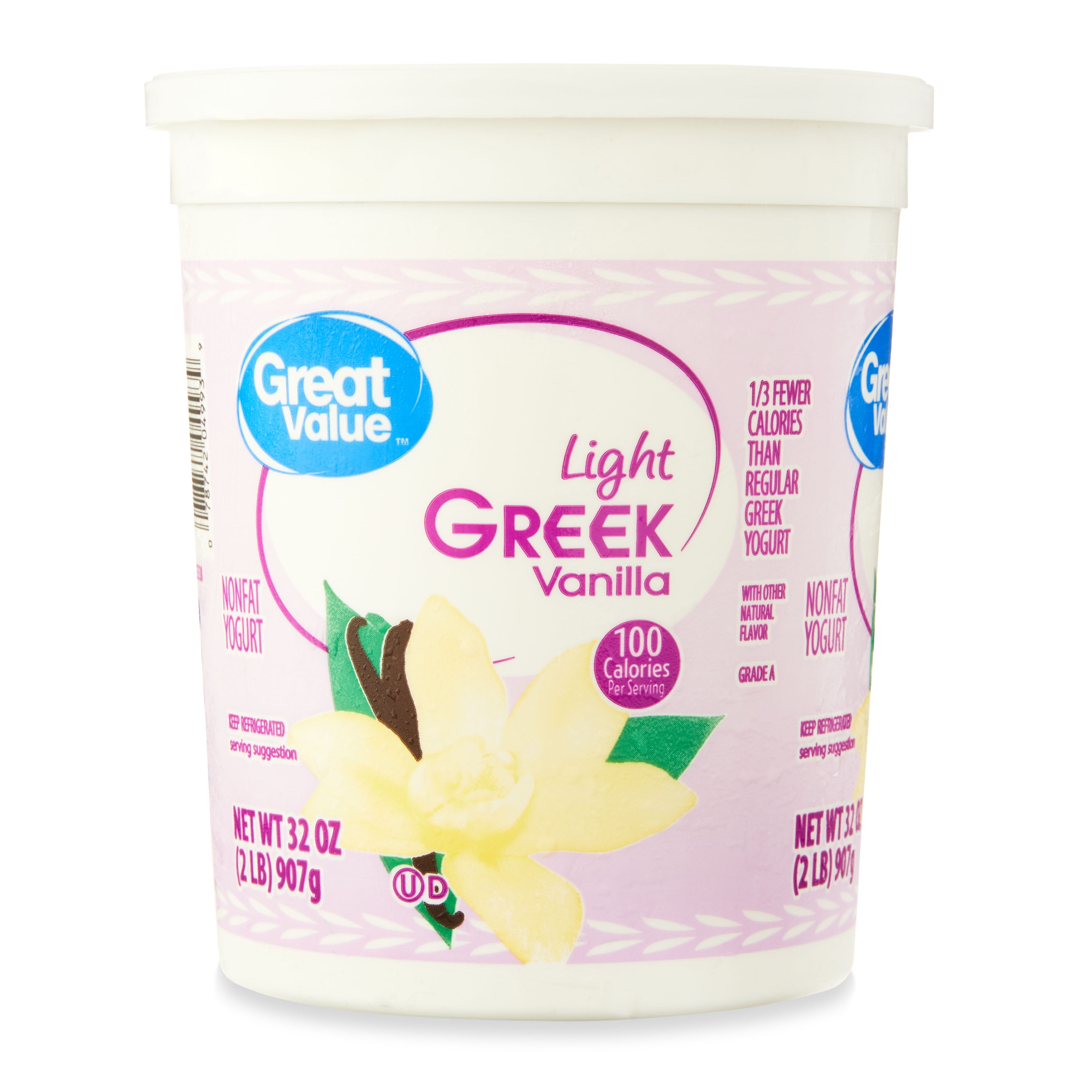

LIGHT GREEK VANILLA NONFAT YOGURT
Near you
Great Value is carried at Walmart stores. Find one within 25 miles.
Summary
This yogurt contains beneficial ingredients like cultured non-fat milk and active yogurt cultures, which support gut health and provide essential nutrients. However, it is heavily processed and includes artificial sweeteners such as acesulfame potassium and sucralose, as well as fructose and artificial flavors, which raise concerns about long-term health effects. The presence of these additives and the high level of processing significantly impact its overall healthiness.
At a glance
Key ingredients 11
Cultured grade a non fat milkGood
Cultured grade A non-fat milk is a primary source of protein and calcium, essential for bone health. It is fermented with live cultures, which can aid in digestion and improve gut health. The non-fat aspect reduces calorie intake while still providing essential nutrients.
Benefits
Provides high-quality protein and calcium, supporting bone health and muscle maintenance. Contains probiotics that may enhance gut health.
WaterNeutral
Water is used as a solvent and to adjust the consistency of the yogurt. It is a neutral ingredient with no direct nutritional benefits or risks. Its presence helps achieve the desired texture and moisture content in the product.
See more about Water →FructoseBad
Fructose is a simple sugar that can contribute to sweetness in foods. Excessive consumption of fructose is linked to metabolic issues such as insulin resistance and fatty liver disease. It is often used as a cheaper alternative to sucrose, but can have negative health impacts when consumed in large amounts.
Risks
High intake of fructose may lead to metabolic disorders and increased risk of obesity and diabetes.
Benefits
Provides sweetness to the product, enhancing flavor without the need for additional sugar.
Modified cornstarchNeutral
Modified cornstarch is used as a thickening agent to improve texture and stability. It undergoes chemical or physical modifications to enhance its properties. While it does not provide significant nutritional benefits, it is generally considered safe in small quantities.
Benefits
Improves texture and consistency of the yogurt, making it more palatable.
Citric acidNeutral
Citric acid is a natural preservative and flavor enhancer that adds acidity to foods. It is commonly used to maintain freshness and prevent spoilage. While generally safe, excessive consumption can lead to dental erosion.
Risks
Excessive consumption may contribute to dental erosion due to its acidic nature.
Benefits
Acts as a preservative and flavor enhancer, extending shelf life and improving taste.
Acesulfame potassiumBad
Acesulfame potassium is an artificial sweetener used to provide sweetness without calories. It is often used in combination with other sweeteners to enhance flavor. Concerns exist about its long-term health effects, although it is approved for use by regulatory agencies.
Risks
Potential long-term health effects are not fully understood, and some studies suggest possible links to metabolic disorders.
Benefits
Provides sweetness without adding calories, which can be beneficial for weight management.
SucraloseBad
Sucralose is a widely used artificial sweetener that is much sweeter than sugar. It is used to reduce calorie content while maintaining sweetness. Some studies suggest it may affect gut health and insulin response, raising concerns about its safety.
Risks
May negatively impact gut microbiota and insulin sensitivity, according to some studies.
Benefits
Provides intense sweetness without calories, aiding in calorie reduction.
Sodium citrateNeutral
Sodium citrate is used as an emulsifier and acidity regulator in foods. It helps maintain the stability and texture of the product. While generally recognized as safe, excessive intake can lead to an imbalance in electrolytes.
Risks
Excessive consumption may lead to electrolyte imbalance.
Benefits
Helps stabilize and maintain the texture of the yogurt.
Natural and artificial flavorsBad
Natural and artificial flavors are added to enhance the taste of the product. The term 'natural flavors' is a catch-all that can include many substances, and artificial flavors are synthetic compounds. Both can mask the quality of the base ingredients and may cause allergic reactions in sensitive individuals.
Risks
Potential for allergic reactions and masking of lower-quality ingredients.
Benefits
Enhances the flavor profile of the product, making it more appealing to consumers.
Vitamin D3Good
Vitamin D3 is added to fortify the yogurt, supporting bone health and immune function. It is essential for calcium absorption and maintaining healthy bones. Fortification helps address common deficiencies in the population.
Benefits
Supports bone health and immune function by enhancing calcium absorption.
Active yogurt culturesVery Good
Active yogurt cultures are beneficial bacteria that aid in digestion and improve gut health. They contribute to the fermentation process, enhancing the nutritional profile of the yogurt. Regular consumption can support a healthy microbiome and improve digestive health.
Benefits
Promotes gut health and aids digestion through beneficial probiotics.
Processing
Ultra-Processed Foods
Get the full breakdown in the Scout app
Scan any product to see lab results, healthy alternatives, and your personalized analysis.
Download on theApp Store