
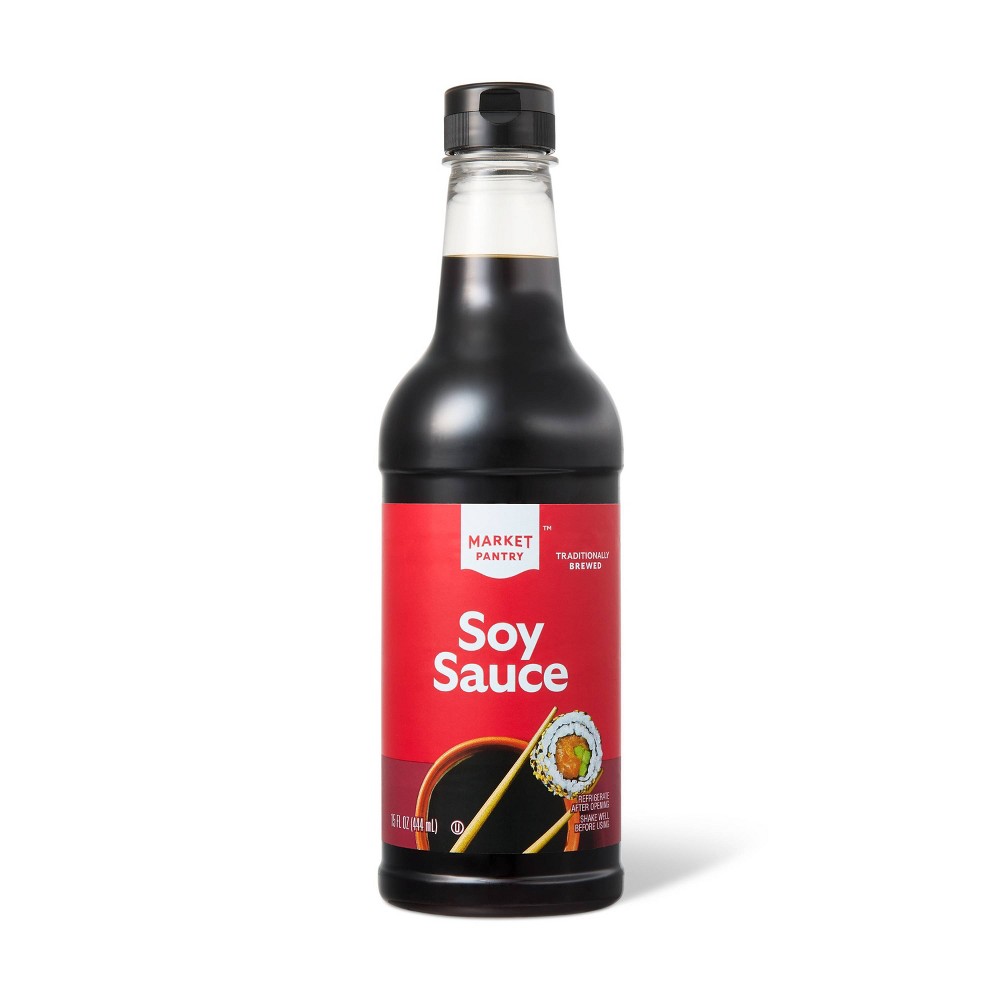

Soy Sauce Regular - 15oz - Market Pantry™
Analysis updated May 2026 · How Scout scores
At a glance
Summary
This soy sauce contains a simple ingredient list with water, wheat, soybeans, and salt, but includes sodium benzoate as a preservative, which is a moderate concern due to potential health risks. The product is processed, which limits its score, and the high salt content is another factor that affects its healthiness. Despite these issues, the absence of seed oils and artificial colors or flavors is a positive aspect.
Key ingredients 5
WaterNeutral
Water is a basic ingredient that helps dilute the other components and is generally safe for consumption.
See more about Water →SaltNeutral
Salt is a common preservative and flavor enhancer, but high intake can contribute to health issues like hypertension.
See more about Salt →WheatBad
Wheat can be problematic for individuals with gluten sensitivities or allergies, and its presence may contribute to negative health effects for some consumers.
See more about Wheat →Sodium BenzoateBad
Sodium benzoate is a preservative that has been associated with potential health concerns when consumed in large quantities.
See more about Sodium Benzoate →SoybeansVery Bad
Soybeans are a common allergen and may contain anti-nutrients; excessive consumption has been linked to hormonal effects in some individuals.
See more about Soybeans →Processing
Processed Foods
Get the full breakdown in the Scout appTake Scout shopping
Scan any product to see lab results, healthy alternatives, and your personalized analysis.
Download on theApp Store GET IT ONGoogle Play