
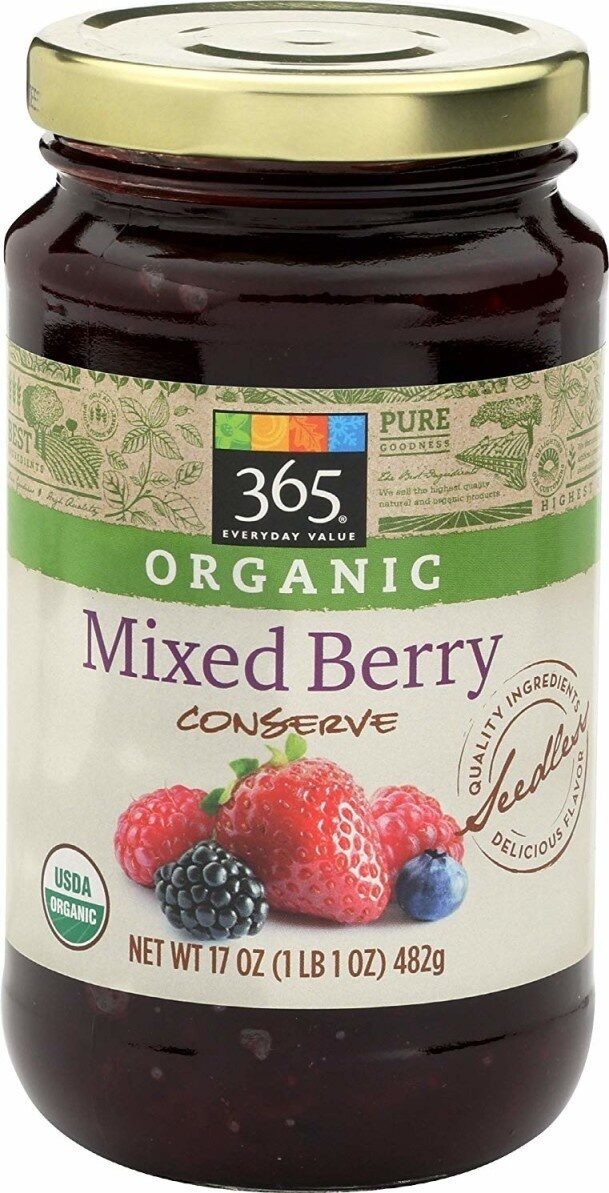



365 EVERYDAY VALUE, ORGANIC MIXED BERRY CONSERVE
Analysis updated September 2026 · How Scout scores
At a glance
Summary
This conserve is made with organic fruits, which are beneficial due to their antioxidant content and absence of synthetic pesticides. However, the product is heavily sweetened with organic cane sugar, which contributes to high sugar content and caloric intake. Despite the use of organic ingredients, the product is considered ultra-processed, which limits its health score.
Key ingredients 8
Organic blueberriesGood
Organic blueberries are rich in antioxidants and vitamins, supporting overall health. Being organic, they are free from synthetic pesticides and fertilizers. They provide natural sweetness and nutrients without added sugars.
Benefits
High in antioxidants, which may reduce oxidative stress and support heart health.
Organic strawberriesGood
Organic strawberries offer a good source of vitamin C and antioxidants. The organic certification ensures they are grown without harmful chemicals. They contribute to the product's flavor and nutritional profile.
Benefits
Rich in vitamin C and antioxidants, supporting immune function and skin health.
Organic seedless blackberry pureeGood
This puree provides fiber and vitamins, enhancing the nutritional value of the conserve. Being organic, it is free from synthetic additives. It adds natural sweetness and a rich flavor profile.
Benefits
Contains fiber and vitamins that support digestive health and provide antioxidant benefits.
Organic seedless raspberry pureeGood
Organic seedless raspberry puree is high in dietary fiber and antioxidants. The absence of seeds makes it smooth and easy to incorporate into the conserve. It enhances the product's flavor and nutritional content.
Benefits
Provides dietary fiber and antioxidants, which may support heart health and reduce inflammation.
Ascorbic acidGood
Vitamin C — beneficial even when serving as a preservative.
Benefits
Acts as a preservative and provides vitamin C, which supports immune health.
Natural fruit pectinNeutral
Natural fruit pectin is used as a gelling agent in preserves and jams. It is derived from fruits and is considered a natural additive. It helps achieve the desired texture without synthetic additives.
Benefits
Helps in achieving the desired consistency in jams and preserves without synthetic additives.
Citric acidNeutral
Citric acid is a natural preservative and flavor enhancer derived from citrus fruits. It is commonly used to add acidity and preserve freshness. It is generally recognized as safe when used in food products.
Benefits
Enhances flavor and acts as a preservative to extend shelf life.
Organic cane sugarBad
Organic cane sugar is a refined sugar that contributes to the product's sweetness. Despite being organic, it still impacts blood sugar levels and overall caloric intake. It is less processed than conventional sugar but still lacks significant nutritional benefits.
Risks
Excessive consumption may lead to increased blood sugar levels and contribute to weight gain.
Benefits
Provides sweetness to the product, enhancing flavor.
Processing
Ultra-Processed Foods
Get the full breakdown in the Scout appTake Scout shopping
Scan any product to see lab results, healthy alternatives, and your personalized analysis.
Download on theApp Store GET IT ONGoogle Play