
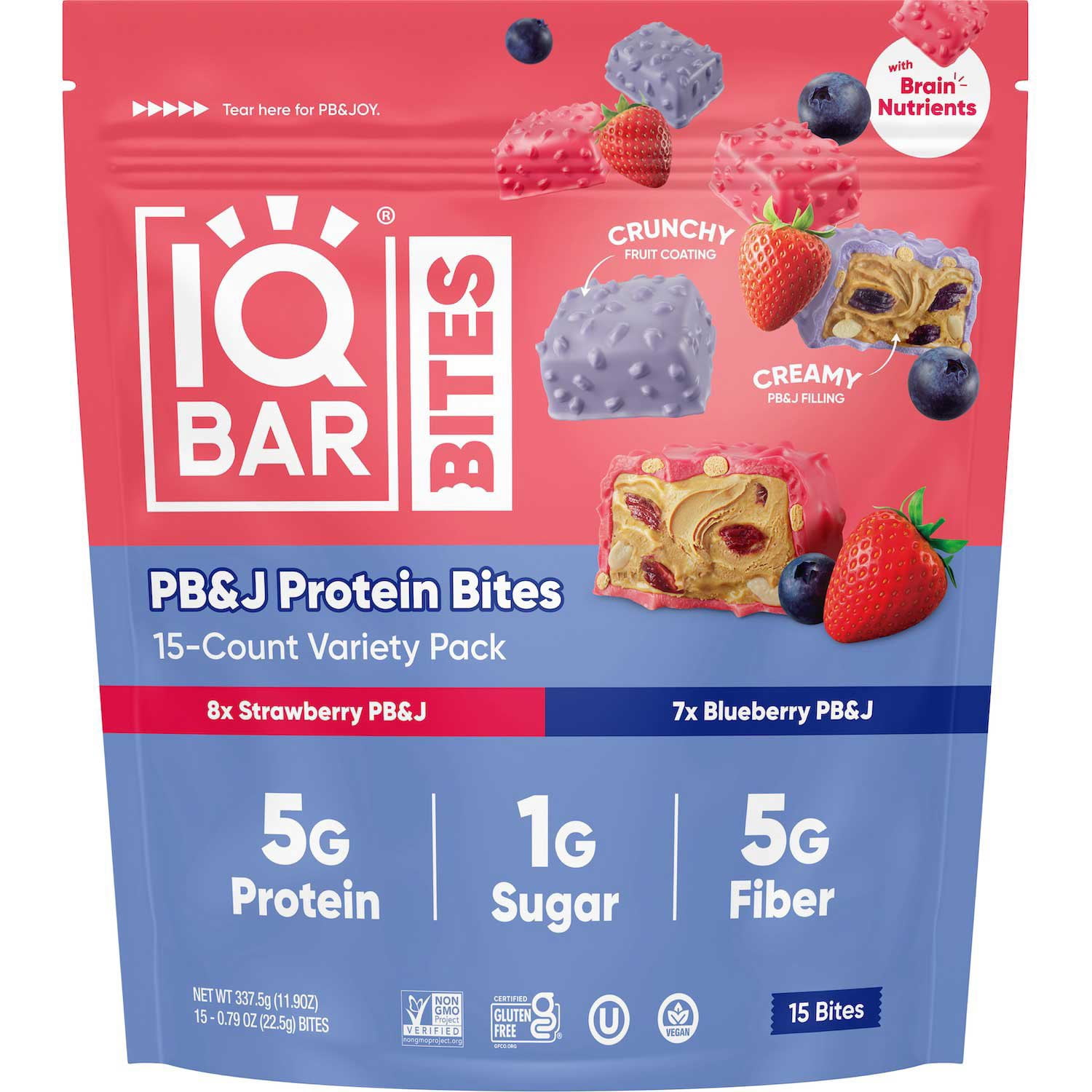
PB&J Protein Bites 15-Count Variety Pack

IQ Bar
80 Good
View on Amazon

Summary

The PB&J Protein Bites contain a variety of beneficial ingredients such as peanuts, almonds, and oat flour, which contribute healthy fats, fiber, and protein. The product is processed, but it avoids harmful additives like artificial sweeteners and seed oils, maintaining a relatively clean ingredient list. However, the presence of palm kernel oil and the processed nature of the product slightly limit its score.

At a glance

Beneficial ingredients 6
Harmful ingredients 0
Category Protein Bars

Key ingredients 11

Peanuts
Good

Peanuts are a good source of healthy fats and protein. They contain monounsaturated fats that support heart health. Additionally, they provide essential nutrients like magnesium and vitamin E.

Risks

Peanuts can be allergenic for some individuals, potentially causing severe allergic reactions.

Benefits

Rich in protein and healthy fats, supporting heart health and providing essential nutrients.

See more about Peanuts →
Almonds
Good

Almonds are nutrient-dense nuts rich in healthy fats, fiber, and protein. They provide vitamin E, magnesium, and antioxidants that support overall health. Their consumption is linked to improved heart health and weight management.

Risks

Almonds can cause allergic reactions in sensitive individuals.

Benefits

Provide healthy fats, fiber, and antioxidants, supporting heart health and weight management.

See more about Almonds →
Tapioca Fiber
Good

Tapioca fiber is a prebiotic fiber that supports digestive health. It helps in maintaining gut flora balance and can aid in digestion. It is derived from the cassava root and is minimally processed.

Benefits

Supports digestive health by promoting beneficial gut bacteria.

See more about Tapioca Fiber →
Pea Protein
Neutral

Pea protein is a plant-based protein source that provides essential amino acids. It is a good alternative for those avoiding animal proteins. However, it may not be as complete as animal-based proteins in terms of amino acid profile.

Risks

May not provide as complete an amino acid profile as animal-based proteins.

Benefits

Offers a plant-based protein option for those avoiding animal products.

See more about Pea Protein →
RSPO Palm Kernel Oil
Neutral

RSPO Palm Kernel Oil is a source of saturated fats and is certified by the Roundtable on Sustainable Palm Oil. It is used for its stability in processed foods. While sustainable, it still contains high levels of saturated fats.

Risks

High in saturated fats, which may impact heart health if consumed in excess.

Benefits

Certified sustainable, providing a stable fat source for food processing.

Vegetable Glycerine
Neutral

Vegetable glycerine is a sugar alcohol used as a sweetener and humectant. It helps retain moisture in food products. It is generally recognized as safe and has a low glycemic index.

Risks

Excessive consumption may cause digestive discomfort.

Benefits

Helps retain moisture and has a low glycemic index.

See more about Vegetable Glycerine →
PB2 Peanut Butter Powder
Good

PB2 Peanut Butter Powder is a low-fat alternative to traditional peanut butter. It retains the protein content while reducing fat through a pressing process. This makes it a versatile ingredient for adding peanut flavor without excess calories.

Benefits

Provides peanut flavor with reduced fat content, maintaining protein levels.

Oat Flour
Good

Oat flour is a whole grain flour that provides fiber and nutrients. It supports heart health and aids in digestion due to its beta-glucan content. It is minimally processed, retaining most of its nutritional benefits.

Benefits

Rich in fiber and nutrients, supporting heart health and digestion.

See more about Oat Flour →
Vanilla Protein Powder
Neutral

Vanilla protein powder is used to enhance protein content and flavor. It typically contains a blend of proteins and flavoring agents. The quality depends on the protein sources used, which are not specified here.

Risks

Quality and nutritional value depend on the specific protein sources used.

Benefits

Enhances protein content and provides flavor.

Maple Syrup
Neutral

Maple syrup is a natural sweetener derived from the sap of maple trees. It contains some minerals and antioxidants but is primarily a source of sugar. It is less processed than refined sugars, offering a more natural alternative.

Risks

High in sugars, which can contribute to weight gain and blood sugar spikes if consumed in excess.

Benefits

Provides a natural sweetening option with some minerals and antioxidants.

See more about Maple Syrup →
Almond Milk
Good

Almond milk is a plant-based milk alternative that is low in calories and contains healthy fats. It is often fortified with vitamins and minerals, making it a nutritious option for those avoiding dairy. It is minimally processed and suitable for lactose-intolerant individuals.

Benefits

Low in calories and provides healthy fats, often fortified with essential nutrients.

Processing

Group 3 · Processed

Processed Foods

Get the full breakdown in the Scout app

Scan any product to see lab results, healthy alternatives, and your personalized analysis.

Download on theApp Store