
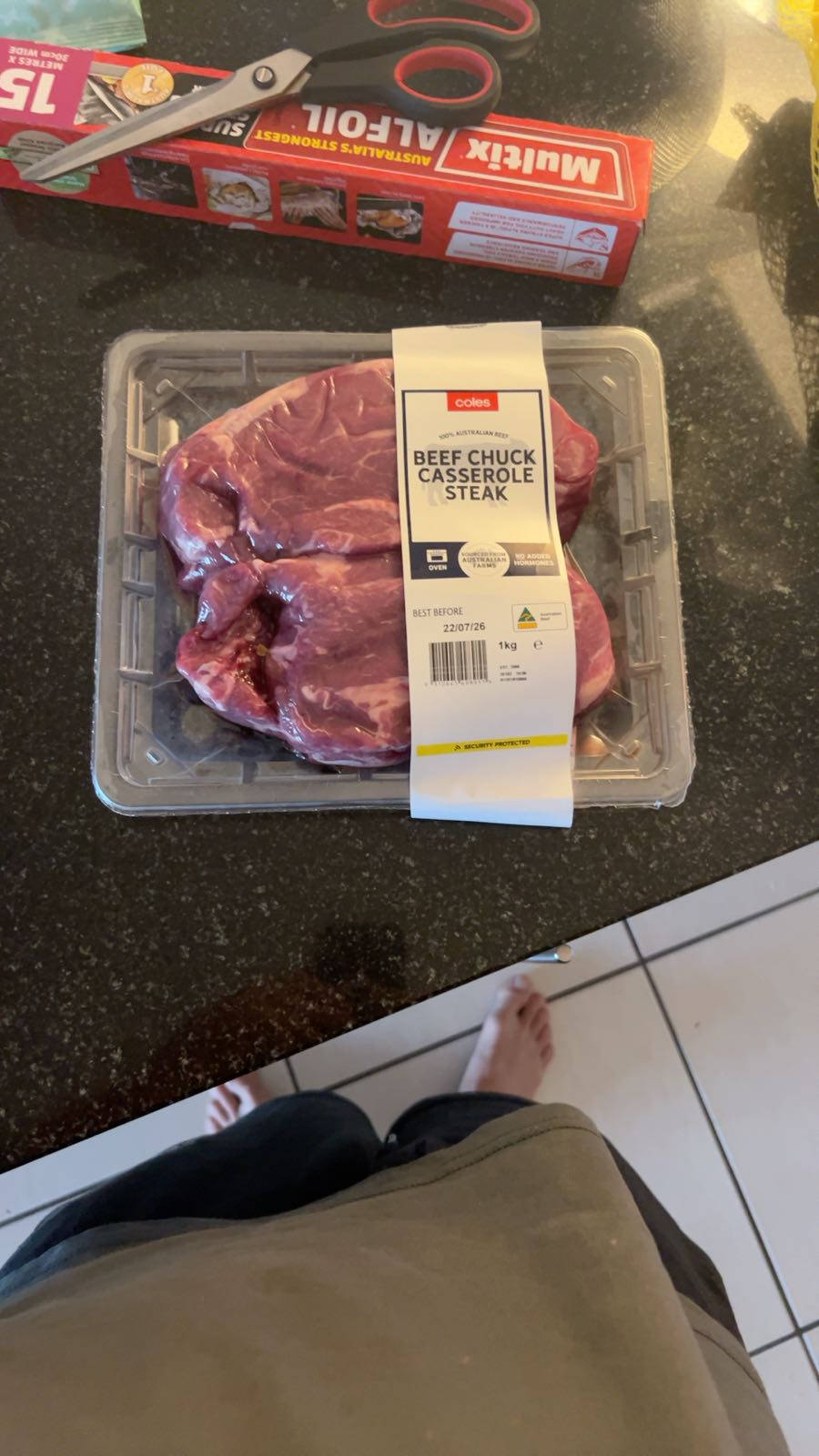


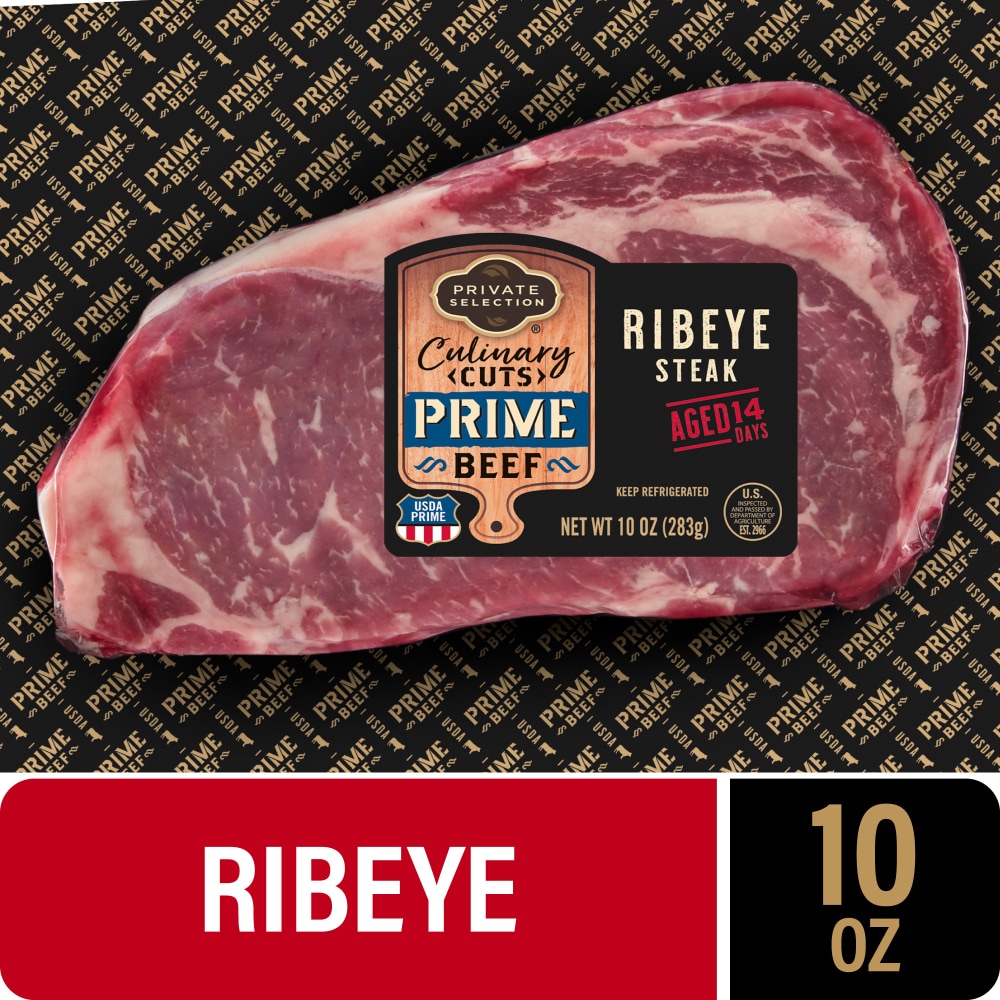
Australian Beef Sharing Steak
Analysis updated July 2026 · How Scout scores
At a glance
Summary
This product contains high-quality Australian beef, which is a good source of protein and essential nutrients. However, the presence of sugar and hydrolysed vegetable protein, a processed ingredient often containing MSG, detracts from its healthiness. The inclusion of additives like thickeners and gums further increases its processing level, limiting its score potential.
Key ingredients 9
Australian beefGood
Australian beef is a high-quality source of protein and essential nutrients. It provides a rich amino acid profile and is often grass-fed, enhancing its nutritional value. Grass-fed beef is known for higher omega-3 fatty acids and conjugated linoleic acid content.
Benefits
Rich in protein, iron, and B vitamins, supporting muscle growth and energy metabolism.
SpicesGood
Whole-food seasonings, antioxidant-bearing.
Benefits
May provide antioxidants and enhance flavor without adding calories.
Thickener 1442Neutral
Thickener 1442, also known as hydroxypropyl distarch phosphate, is a modified starch used to improve texture. It is generally considered safe for consumption but offers no nutritional benefits. It is used to stabilize and thicken food products.
Xanthan gumNeutral
Xanthan gum is a polysaccharide used as a thickening and stabilizing agent in foods. It is produced through fermentation and is generally recognized as safe. It helps improve texture and consistency in food products.
Risks
May cause digestive issues in sensitive individuals when consumed in large amounts.
SaltNeutral
Salt is a common seasoning and preservative used to enhance flavor. It is essential for maintaining fluid balance and nerve function. However, excessive intake can lead to hypertension and cardiovascular issues.
Risks
High sodium intake is linked to increased blood pressure and risk of heart disease.
Benefits
Provides essential sodium for electrolyte balance and nerve function.
Maize starchNeutral
Maize starch is a carbohydrate used as a thickening agent in foods. It is derived from corn and is generally considered safe. It provides no significant nutritional benefits but improves texture and consistency.
See more about Maize starch →Dehydrated vegetablesNeutral
Dehydrated vegetables retain most of their nutrients and are used to add flavor and texture. They are a convenient way to incorporate vegetables into processed foods. The nutritional value depends on the type of vegetables used.
Benefits
Provides some vitamins and minerals depending on the vegetables used.
SugarBad
Sugar is a refined carbohydrate that can contribute to various health issues when consumed in excess. It is associated with increased risk of obesity, type 2 diabetes, and dental cavities. Excessive sugar intake can lead to metabolic syndrome and other chronic conditions.
Risks
High consumption can lead to weight gain, insulin resistance, and increased risk of chronic diseases.
Hydrolysed vegetable proteinBad
Hydrolysed vegetable protein is a processed ingredient used to enhance flavor, often containing MSG. It is derived from soy or wheat and can trigger sensitivities in some individuals. The processing method may lead to the formation of undesirable compounds.
Risks
May contain MSG, which can cause headaches and other symptoms in sensitive individuals.
Benefits
Provides a source of amino acids but is inferior to whole protein sources.
Processing
Processed Foods
Get the full breakdown in the Scout appTake Scout shopping
Scan any product to see lab results, healthy alternatives, and your personalized analysis.
Download on theApp Store GET IT ONGoogle Play