
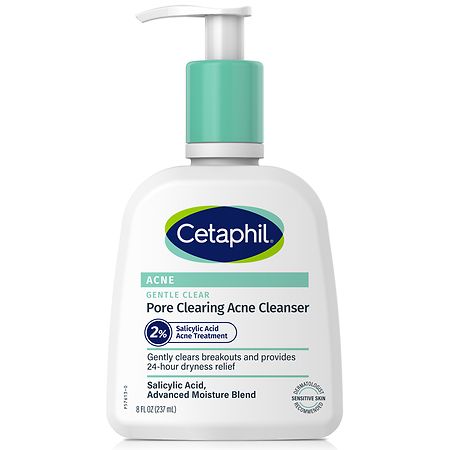
Cetaphil Gentle Clear Pore Cleansing 2% Salicylic Acid Acne Treatment Face Wash - 8 fl oz: Gel, Unscented, For Sensitive Skin
Analysis updated August 2026 · How Scout scores
At a glance
Summary
This face wash contains beneficial ingredients like salicylic acid, shea butter, and glycerin, which are known for their skin-clearing and moisturizing properties. However, the presence of phenoxyethanol and tetrasodium EDTA, which can cause skin irritation and have environmental concerns, affects its overall safety profile. The product is moderately processed, which also influences its rating.
Key ingredients 21
BUTYROSPERMUM PARKII (SHEA) BUTTERVery Good
Shea butter is a natural fat extracted from the nuts of the shea tree. It is rich in vitamins and fatty acids, making it an excellent moisturizer for the skin. It helps in soothing and nourishing dry skin.
Risks
Generally safe, but may cause allergic reactions in individuals with nut allergies.
Benefits
Provides deep moisturization and nourishment to the skin.
SALICYLIC ACID 2%Good
Salicylic acid is a beta hydroxy acid known for its ability to exfoliate the skin and clear pores. It is effective in treating acne by reducing inflammation and preventing future breakouts. Its keratolytic properties help in shedding dead skin cells.
Risks
May cause dryness or irritation, especially for sensitive skin types.
Benefits
Helps in reducing acne and improving skin texture.
GLYCERINGood
Glycerin is a humectant that attracts moisture to the skin, keeping it hydrated. It is widely used in skincare products for its ability to improve skin barrier function. It helps in maintaining skin softness and smoothness.
Risks
Generally considered safe with minimal risk of irritation.
Benefits
Enhances skin hydration and improves barrier function.
GLYCINE SOJA (SOYBEAN) OILGood
Soybean oil is rich in essential fatty acids and vitamin E, providing nourishment and moisture to the skin. It helps in maintaining skin elasticity and smoothness. It is often used in skincare for its emollient properties.
Risks
May cause allergic reactions in individuals with soy allergies.
Benefits
Nourishes and moisturizes the skin, improving texture.
COCAMIDOPROPYL BETAINENeutral
Cocamidopropyl betaine is a surfactant derived from coconut oil, used to create foam and cleanse the skin. It is milder than traditional sulfates and helps in reducing irritation. It is commonly used in personal care products for its gentle cleansing properties.
Risks
May cause skin irritation or allergic reactions in some individuals.
Benefits
Provides gentle cleansing without stripping natural oils.
GUAR HYDROXYPROPYL-TRIMONIUM CHLORIDENeutral
This ingredient is a conditioning agent derived from guar gum, used to improve the texture and feel of skincare products. It helps in reducing static and enhancing the spreadability of the product. It is generally considered safe for use in cosmetics.
Risks
Minimal risk of irritation; generally safe for most skin types.
Benefits
Improves product texture and enhances conditioning effects.
HYDROXYPROPYL STARCH PHOSPHATENeutral
This ingredient is a modified starch used as a thickening and stabilizing agent in cosmetics. It helps in improving the viscosity and stability of the product. It is generally considered safe for use in skincare formulations.
Risks
Minimal risk of irritation; generally safe for most skin types.
Benefits
Enhances product stability and texture.
LACTIC ACIDNeutral
Standard formulation ingredient — neither beneficial nor harmful at typical use.
Risks
May cause irritation or sensitivity, especially in higher concentrations.
Benefits
Exfoliates and hydrates the skin, improving texture and tone.
LAURIC ACIDNeutral
Lauric acid is a fatty acid used for its antimicrobial properties and as a surfactant in skincare products. It helps in cleansing the skin and reducing the presence of harmful bacteria. It is commonly used in formulations for its cleansing and foaming abilities.
Risks
May cause irritation in sensitive skin types.
Benefits
Provides antimicrobial benefits and enhances cleansing.
PALMITIC ACIDNeutral
Palmitic acid is a fatty acid used as an emollient and surfactant in skincare products. It helps in moisturizing the skin and improving product texture. It is generally considered safe for use in cosmetics.
Risks
Minimal risk of irritation; generally safe for most skin types.
Benefits
Moisturizes the skin and enhances product texture.
SODIUM CHLORIDENeutral
Sodium chloride, or table salt, is used as a thickening agent and to enhance the texture of skincare products. It helps in improving the viscosity and stability of formulations. It is generally considered safe for topical use.
Risks
Minimal risk of irritation; generally safe for most skin types.
Benefits
Enhances product texture and stability.
SODIUM HYDROXIDENeutral
Sodium hydroxide is used to adjust the pH of cosmetic formulations. It helps in maintaining the stability and effectiveness of the product. It is generally considered safe when used in low concentrations.
Risks
Can cause irritation or burns if used in high concentrations.
Benefits
Adjusts pH to ensure product stability and effectiveness.
SODIUM LAUROYL GLYCINATENeutral
Sodium lauroyl glycinate is a mild surfactant used for its cleansing and foaming properties. It is derived from amino acids and is known for being gentle on the skin. It is commonly used in formulations for sensitive skin.
Risks
Generally considered safe with minimal risk of irritation.
Benefits
Provides gentle cleansing suitable for sensitive skin.
SODIUM LAUROYL ISETHIONATENeutral
Sodium lauroyl isethionate is a mild surfactant used for its cleansing and foaming properties. It is known for being gentle on the skin and is often used in formulations for sensitive skin. It helps in creating a creamy lather without stripping natural oils.
Risks
Generally considered safe with minimal risk of irritation.
Benefits
Provides gentle cleansing and creamy lather.
STEARIC ACIDNeutral
Stearic acid is a fatty acid used as an emulsifier and thickening agent in skincare products. It helps in stabilizing formulations and improving texture. It is generally considered safe for use in cosmetics.
Risks
Minimal risk of irritation; generally safe for most skin types.
Benefits
Stabilizes formulations and enhances product texture.
WATERNeutral
Water is used as a solvent in cosmetic formulations, helping to dissolve other ingredients and create a suitable consistency. It is a fundamental component in many skincare products. It is generally considered safe and non-irritating.
Benefits
Acts as a solvent and provides hydration to the skin.
BENZYL ALCOHOLBad
Processed additive flagged under Scout's ingredient doctrine.
Risks
Can cause skin irritation or allergic reactions in sensitive individuals.
Benefits
Acts as a preservative to extend product shelf life.
PHENOXYETHANOLBad
Phenoxyethanol is a preservative used to prevent microbial growth in cosmetics. It is effective in extending the shelf life of products. However, it can cause skin irritation and allergic reactions in some individuals.
Risks
Potential skin irritant and allergen, especially in sensitive individuals.
Benefits
Prevents microbial growth, extending product shelf life.
SODIUM BENZOATEBad
Synthetic preservative that can form benzene in the presence of vitamin C.
Risks
May cause irritation or allergic reactions in sensitive individuals.
Benefits
Prevents microbial growth, ensuring product safety.
TETRASODIUM EDTABad
Tetrasodium EDTA is a chelating agent used to improve the stability and efficacy of cosmetic formulations. It binds to metal ions, preventing them from affecting the product. However, it can cause skin irritation and is not biodegradable, raising environmental concerns.
Risks
Potential skin irritant and environmental pollutant.
Benefits
Improves product stability and efficacy by binding metal ions.
HYDROGENATED SOYBEAN OILVery Bad
Heavily flagged ingredient class under Scout's doctrine.
Risks
May cause allergic reactions in individuals with soy allergies.
Benefits
Acts as an emollient, improving product texture and skin feel.
Processing
Processed Foods
Get the full breakdown in the Scout appTake Scout shopping
Scan any product to see lab results, healthy alternatives, and your personalized analysis.
Download on theApp Store GET IT ONGoogle PlayAmazon pricing & content
Amazon price as of . Product prices and availability are accurate as of the date/time indicated and are subject to change. Any price and availability information displayed on Amazon.com at the time of purchase will apply to the purchase of this product.
CERTAIN CONTENT THAT APPEARS ON THIS SITE COMES FROM AMAZON. THIS CONTENT IS PROVIDED “AS IS” AND IS SUBJECT TO CHANGE OR REMOVAL AT ANY TIME.