
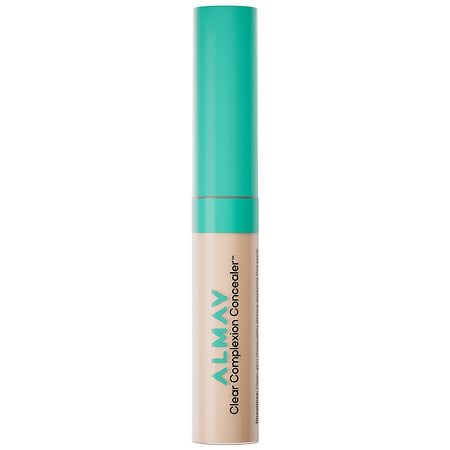

Almay Clear Complexion Concealer, Makeup for Acne-Prone Skin - 100 - 0.3 fl oz: Full Coverage, Semi-Matte Finish, Vegan Formula
Analysis updated September 2026 · How Scout scores
At a glance
Summary
This concealer contains beneficial ingredients like glycerin, kaolin, salicylic acid, and aloe vera, which are known for their moisturizing, oil-absorbing, and soothing properties. However, the presence of PEG compounds and phenoxyethanol, which can cause irritation in some individuals, slightly lowers its safety profile. The product is moderately processed with a mix of natural and synthetic ingredients, which impacts its overall rating.
Key ingredients 34
Salicylic AcidVery Good
Salicylic Acid is a beta hydroxy acid that helps to exfoliate the skin and clear pores. It is effective in treating acne and improving skin texture. It is widely used in acne-prone skincare products.
Risks
May cause dryness or irritation if overused.
Benefits
Helps to clear pores and reduce acne.
Aloe Barbadensis Leaf JuiceVery Good
Aloe Vera is known for its soothing and moisturizing properties. It helps to calm irritated skin and provide hydration. It is widely used in skincare for its beneficial effects.
Risks
There are minimal risks, though some may experience allergic reactions.
Benefits
Soothes and hydrates the skin.
GlycerinGood
Glycerin is a humectant that attracts moisture to the skin, helping to keep it hydrated. It is widely used in skincare for its moisturizing properties. It is considered safe and beneficial for most skin types.
Risks
There are minimal risks, though excessive use can lead to a sticky feel.
Benefits
Glycerin helps to maintain skin hydration and improve skin barrier function.
KaolinGood
Kaolin is a natural clay that absorbs excess oil and impurities from the skin. It is often used in products for oily or acne-prone skin. It is gentle and suitable for sensitive skin.
Risks
Overuse can lead to dryness in some skin types.
Benefits
Kaolin helps to control oil and cleanse the skin without irritation.
Maris Sal/Sea Salt/Sel MarinGood
Beneficial ingredient — whole-food or functional value in this product class.
Risks
Overuse can lead to dryness in some skin types.
Benefits
Exfoliates and refreshes the skin.
Tocopheryl AcetateGood
Tocopheryl Acetate is a form of Vitamin E used in cosmetics for its antioxidant properties. It helps to protect the skin from free radical damage and improve skin health. It is considered safe and beneficial for most skin types.
Risks
There are minimal risks, though some may experience allergic reactions.
Benefits
Protects the skin from free radical damage and improves skin health.
Zinc Oxide (CI 77947)Good
Zinc Oxide is used as a UV filter and skin protectant in cosmetics. It provides broad-spectrum sun protection and is gentle on the skin. It is considered safe and beneficial for most skin types.
Risks
There are minimal risks associated with its use.
Benefits
Provides broad-spectrum sun protection and is gentle on the skin.
Aqua/Water/EauNeutral
Water is a common solvent used in cosmetics to dissolve other ingredients. It helps in the application and absorption of the product. It does not have any direct benefits or risks associated with its use in cosmetics.
Risks
There are no significant risks associated with water in cosmetics.
Benefits
Water helps in the even distribution of other ingredients.
CyclopentasiloxaneNeutral
Cyclopentasiloxane is a silicone-based compound used to provide a smooth application. It evaporates quickly, leaving a silky feel on the skin. It is generally considered safe for use in cosmetics.
Risks
There are minimal risks, though some may experience skin irritation.
Benefits
It provides a smooth, silky texture and helps in even application.
Boron NitrideNeutral
Boron Nitride is used in cosmetics for its ability to improve texture and provide a soft-focus effect. It enhances the spreadability of products. It is considered safe for use in cosmetics.
Risks
There are minimal risks associated with its use.
Benefits
Improves product texture and provides a soft-focus effect.
TribeheninNeutral
Tribehenin is an emollient that helps to condition and soften the skin. It is often used in formulations to improve texture and moisture retention. It is considered safe for use in cosmetics.
Risks
There are minimal risks associated with its use.
Benefits
Helps to condition and soften the skin.
PEG/PPG-18/18 DimethiconeNeutral
This compound is used as an emulsifier and conditioning agent in cosmetics. It helps to stabilize formulations and improve texture. It is generally considered safe for use in cosmetics.
Risks
May cause irritation in sensitive individuals.
Benefits
Improves product stability and texture.
TrimethylsiloxysilicateNeutral
Trimethylsiloxysilicate is a film-forming agent that provides water resistance and long-lasting wear. It is commonly used in makeup products for its durability. It is considered safe for use in cosmetics.
Risks
May cause skin irritation in sensitive individuals.
Benefits
Provides long-lasting wear and water resistance.
Methyl Methacrylate CrosspolymerNeutral
This ingredient is used to improve the texture and spreadability of cosmetic products. It provides a matte finish and enhances the product's feel. It is considered safe for use in cosmetics.
Risks
There are minimal risks associated with its use.
Benefits
Improves texture and provides a matte finish.
Cetyl PEG/PPG-10/1 DimethiconeNeutral
This ingredient acts as an emulsifier and conditioning agent in cosmetics. It helps to stabilize formulations and improve texture. It is generally considered safe for use in cosmetics.
Risks
May cause irritation in sensitive individuals.
Benefits
Improves product stability and texture.
PEG-10 DimethiconeNeutral
PEG-10 Dimethicone is used as an emulsifier and conditioning agent in cosmetics. It helps to stabilize formulations and improve texture. It is generally considered safe for use in cosmetics.
Risks
May cause irritation in sensitive individuals.
Benefits
Improves product stability and texture.
Hydrolyzed Vegetable ProteinNeutral
Hydrolyzed Vegetable Protein is used in cosmetics for its conditioning properties. It helps to improve the texture and feel of the skin. It is considered safe for use in cosmetics.
Risks
There are minimal risks associated with its use.
Benefits
Improves skin texture and feel.
SilicaNeutral
Silica is used in cosmetics to improve texture and absorb excess oil. It provides a matte finish and enhances the feel of the product. It is considered safe for use in cosmetics.
Risks
There are minimal risks associated with its use.
Benefits
Improves texture and provides a matte finish.
1,2-HexanediolNeutral
1,2-Hexanediol is used as a solvent and preservative in cosmetics. It helps to improve the stability and shelf life of products. It is considered safe for use in cosmetics.
Risks
There are minimal risks associated with its use.
Benefits
Improves product stability and shelf life.
Alpha-Glucan OligosaccharideNeutral
Alpha-Glucan Oligosaccharide is used in cosmetics for its moisturizing and prebiotic properties. It helps to support the skin's natural microbiome. It is considered safe for use in cosmetics.
Risks
There are minimal risks associated with its use.
Benefits
Supports skin hydration and microbiome health.
Caprylyl GlycolNeutral
Caprylyl Glycol is used as a skin conditioning agent and preservative in cosmetics. It helps to improve the texture and shelf life of products. It is considered safe for use in cosmetics.
Risks
There are minimal risks associated with its use.
Benefits
Improves product texture and shelf life.
LactobacillusNeutral
Lactobacillus is used in cosmetics for its probiotic properties. It helps to support the skin's natural microbiome and improve skin health. It is considered safe for use in cosmetics.
Risks
There are minimal risks associated with its use.
Benefits
Supports skin microbiome and health.
MaltodextrinNeutral
Maltodextrin is used as a binding and stabilizing agent in cosmetics. It helps to improve the texture and stability of products. It is considered safe for use in cosmetics.
Risks
There are minimal risks associated with its use.
Benefits
Improves product texture and stability.
PerliteNeutral
Perlite is used in cosmetics for its exfoliating and oil-absorbing properties. It helps to improve the texture and appearance of the skin. It is considered safe for use in cosmetics.
Risks
There are minimal risks associated with its use.
Benefits
Exfoliates and absorbs excess oil.
PolyisobuteneNeutral
Polyisobutene is used as a film-forming agent in cosmetics. It helps to improve the texture and longevity of products. It is considered safe for use in cosmetics.
Risks
There are minimal risks associated with its use.
Benefits
Improves product texture and longevity.
Polymnia Sonchifolia Root JuiceNeutral
Polymnia Sonchifolia Root Juice is used in cosmetics for its moisturizing properties. It helps to hydrate and condition the skin. It is considered safe for use in cosmetics.
Risks
There are minimal risks associated with its use.
Benefits
Hydrates and conditions the skin.
Tetrasodium EDTANeutral
Tetrasodium EDTA is used as a chelating agent in cosmetics. It helps to improve the stability and efficacy of products by binding metal ions. It is considered safe for use in cosmetics.
Risks
There are minimal risks associated with its use.
Benefits
Improves product stability and efficacy.
TriethoxycaprylylsilaneNeutral
Triethoxycaprylylsilane is used as a surface modifier in cosmetics. It helps to improve the dispersion of pigments and enhance product stability. It is considered safe for use in cosmetics.
Risks
There are minimal risks associated with its use.
Benefits
Improves pigment dispersion and product stability.
TrisiloxaneNeutral
Trisiloxane is used as a conditioning agent in cosmetics. It helps to provide a smooth application and improve product texture. It is considered safe for use in cosmetics.
Risks
There are minimal risks associated with its use.
Benefits
Provides a smooth application and improves texture.
Iron Oxides (CI 77491, CI 77492, CI 77499)Neutral
Iron Oxides are used as pigments in cosmetics to provide color. They are stable and non-toxic, making them suitable for use in a variety of products. They are considered safe for use in cosmetics.
Risks
There are minimal risks associated with their use.
Benefits
Provide stable and non-toxic color to cosmetics.
Titanium Dioxide (CI 77891)Neutral
Titanium Dioxide is used as a pigment and UV filter in cosmetics. It provides opacity and sun protection in formulations. It is considered safe for use in cosmetics.
Risks
There are minimal risks associated with its use.
Benefits
Provides opacity and sun protection.
DimethiconeBad
Occlusive silicone film-former — flagged under clean-beauty doctrine.
Risks
May cause breakouts in some individuals with sensitive skin.
Benefits
Provides a smooth, even application and helps to lock in moisture.
PhenoxyethanolBad
Phenoxyethanol is used as a preservative in cosmetics to prevent microbial growth. It is effective in extending the shelf life of products. However, it can cause irritation and allergic reactions in some individuals.
Risks
May cause skin irritation and allergic reactions.
Benefits
Prevents microbial growth and extends product shelf life.
PolyethyleneVery Bad
Heavily flagged ingredient class under Scout's doctrine.
Risks
There are minimal risks associated with its use.
Benefits
Improves product texture and stability.
Get the full breakdown in the Scout appTake Scout shopping
Scan any product to see lab results, healthy alternatives, and your personalized analysis.
Download on theApp Store GET IT ONGoogle PlayAmazon pricing & content
Amazon price as of . Product prices and availability are accurate as of the date/time indicated and are subject to change. Any price and availability information displayed on Amazon.com at the time of purchase will apply to the purchase of this product.
CERTAIN CONTENT THAT APPEARS ON THIS SITE COMES FROM AMAZON. THIS CONTENT IS PROVIDED “AS IS” AND IS SUBJECT TO CHANGE OR REMOVAL AT ANY TIME.