
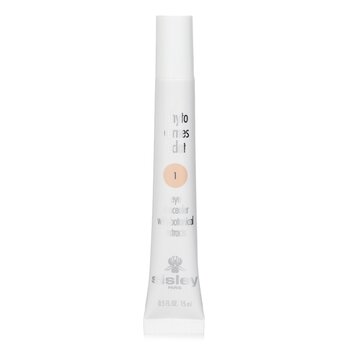



Sisley Paris Phyto-Cernes Éclat Eye Concealer in 1 at Nordstrom
Analysis updated September 2026 · How Scout scores
At a glance
Summary
This concealer contains beneficial ingredients like glycerin, caffeine, and bisabolol, which provide hydration, reduce puffiness, and soothe the skin. However, the presence of phenoxyethanol, a preservative that can cause irritation, slightly lowers its safety profile. The product is mostly composed of safe ingredients with some natural extracts, but the inclusion of a synthetic preservative affects its overall rating.
Key ingredients 32
BisabololVery Good
Bisabolol is a soothing agent derived from chamomile that helps to calm and reduce skin irritation. It is beneficial for sensitive skin.
Risks
There are no significant risks associated with bisabolol.
Benefits
It provides anti-inflammatory and soothing benefits, making it ideal for sensitive skin.
GlycerinGood
Glycerin is a humectant that attracts moisture to the skin, helping to keep it hydrated. It is widely used in skincare for its moisturizing properties.
Risks
There are minimal risks associated with glycerin, though it can be sticky in high concentrations.
Benefits
Glycerin helps maintain skin hydration and improves skin barrier function.
Hydrolyzed Soy ProteinGood
Hydrolyzed Soy Protein is used for its conditioning properties, helping to improve skin texture and elasticity. It is beneficial in anti-aging formulations.
Risks
There are minimal risks, though it can cause allergic reactions in those sensitive to soy.
Benefits
It enhances skin texture and provides anti-aging benefits.
Arnica Montana Flower ExtractGood
Arnica Montana Flower Extract is known for its anti-inflammatory and healing properties. It is used to reduce swelling and bruising.
Risks
There are minimal risks, though it can cause irritation in sensitive skin.
Benefits
It helps reduce inflammation and promotes healing.
Daucus Carota Sativa (Carrot) Root ExtractGood
Carrot Root Extract is rich in antioxidants and vitamins, providing nourishment and protection to the skin. It is beneficial for maintaining skin health.
Risks
There are minimal risks associated with this ingredient.
Benefits
It provides antioxidant protection and nourishment to the skin.
Ginkgo Biloba Leaf ExtractGood
Ginkgo Biloba Leaf Extract is known for its antioxidant and anti-inflammatory properties. It helps to protect the skin from environmental damage.
Risks
There are minimal risks, though it can cause irritation in sensitive skin.
Benefits
It provides antioxidant protection and reduces inflammation.
Equisetum Arvense ExtractGood
Equisetum Arvense Extract, also known as horsetail extract, is rich in silica and helps to strengthen and improve skin elasticity. It is beneficial for skin health.
Risks
There are minimal risks associated with this ingredient.
Benefits
It strengthens skin and improves elasticity.
Vitis Vinifera (Grape) Leaf ExtractGood
Grape Leaf Extract is rich in antioxidants, helping to protect the skin from free radical damage. It is beneficial for maintaining skin health.
Risks
There are minimal risks associated with this ingredient.
Benefits
It provides antioxidant protection and supports skin health.
ArginineGood
Arginine is an amino acid that helps to improve skin hydration and elasticity. It is beneficial for maintaining healthy skin.
Risks
There are no significant risks associated with arginine.
Benefits
It enhances skin hydration and elasticity.
Water/Eau (Aqua)Neutral
Water is a common solvent used in cosmetics to dissolve other ingredients. It is essential for the formulation but does not provide direct skin benefits.
Risks
There are no significant risks associated with water in cosmetics.
Benefits
Water helps in the application and absorption of the product.
Isodecyl NeopentanoateNeutral
Isodecyl Neopentanoate is an emollient that provides a smooth application and a silky feel. It is used to enhance the texture of cosmetic products.
Risks
There are no significant risks associated with this ingredient.
Benefits
It improves the spreadability and feel of the product on the skin.
Nylon-12Neutral
Nylon-12 is used in cosmetics to improve the texture and provide a matte finish. It helps in absorbing excess oil and reducing shine.
Risks
There are no significant risks associated with Nylon-12.
Benefits
It provides a smooth, matte finish and helps in oil control.
OctyldodecanolNeutral
Octyldodecanol is a fatty alcohol used as an emollient and thickener in cosmetics. It helps to improve the texture and spreadability of products.
Risks
There are minimal risks, though it can cause irritation in very sensitive skin.
Benefits
It enhances the texture and provides a moisturizing effect.
Butylene GlycolNeutral
Butylene Glycol is a solvent and conditioning agent that helps to improve the texture and spreadability of products. It also acts as a humectant.
Risks
In rare cases, it can cause irritation or allergic reactions.
Benefits
It helps in maintaining moisture and improving product texture.
Hydroxyethyl Acrylate/Sodium Acryloyldimethyl Taurate CopolymerNeutral
This copolymer is used as a thickening agent and stabilizer in cosmetics. It helps to improve the texture and consistency of the product.
Risks
There are no significant risks associated with this ingredient.
Benefits
It provides stability and improves the texture of the formulation.
CaffeineNeutral
Standard formulation ingredient — neither beneficial nor harmful at typical use.
Risks
There are minimal risks, though it can cause irritation in sensitive skin.
Benefits
Caffeine helps reduce puffiness and dark circles, providing a more refreshed appearance.
Octyldodecyl XylosideNeutral
Octyldodecyl Xyloside is used as an emulsifier and surfactant in cosmetics. It helps to stabilize formulations and improve texture.
Risks
There are no significant risks associated with this ingredient.
Benefits
It stabilizes formulations and improves texture.
Peg-30 DipolyhydroxystearateNeutral
Peg-30 Dipolyhydroxystearate is an emulsifier that helps to blend oil and water-based ingredients. It is commonly used in cosmetics for its stabilizing properties.
Risks
There are minimal risks, though PEG compounds can sometimes be contaminated with impurities.
Benefits
It helps to stabilize and blend formulations.
Isostearyl SebacateNeutral
Isostearyl Sebacate is an emollient that provides a smooth application and enhances the texture of cosmetic products. It is used to improve spreadability.
Risks
There are no significant risks associated with this ingredient.
Benefits
It improves texture and provides a smooth application.
EthylhexylglycerinNeutral
Ethylhexylglycerin is used as a preservative and skin conditioning agent. It helps to enhance the efficacy of other preservatives.
Risks
There are minimal risks, though it can cause irritation in sensitive skin.
Benefits
It acts as a preservative and enhances skin conditioning.
Sorbitan IsostearateNeutral
Sorbitan Isostearate is an emulsifier used to stabilize formulations and improve texture. It helps to blend oil and water-based ingredients.
Risks
There are no significant risks associated with this ingredient.
Benefits
It stabilizes formulations and improves texture.
Disodium Stearoyl GlutamateNeutral
Disodium Stearoyl Glutamate is an emulsifier and surfactant used to stabilize formulations. It helps to improve the texture and consistency of products.
Risks
There are no significant risks associated with this ingredient.
Benefits
It stabilizes formulations and improves texture.
Pentylene GlycolNeutral
Pentylene Glycol is a humectant and solvent that helps to retain moisture in the skin. It is used to improve the texture and spreadability of products.
Risks
There are minimal risks, though it can cause irritation in sensitive skin.
Benefits
It helps to retain moisture and improve product texture.
Aluminum HydroxideNeutral
Aluminum Hydroxide is used as a thickening agent and opacifier in cosmetics. It helps to improve the texture and appearance of products.
Risks
There are minimal risks, though it can cause irritation in sensitive skin.
Benefits
It improves texture and provides opacity.
Citric AcidNeutral
Citric Acid is used to adjust the pH of cosmetic formulations. It also acts as a mild exfoliant and antioxidant.
Risks
There are minimal risks, though it can cause irritation in sensitive skin.
Benefits
It helps to balance pH and provides mild exfoliation.
Titanium Dioxide (Ci 77891)Neutral
Titanium Dioxide is used as a pigment and UV filter in cosmetics. It provides opacity and sun protection.
Risks
There are minimal risks, though inhalation of fine particles can be harmful.
Benefits
It provides sun protection and opacity in formulations.
Iron Oxides (Ci 77491, Ci 77492, Ci 77499)Neutral
Iron Oxides are used as pigments in cosmetics to provide color. They are stable and non-reactive.
Risks
There are no significant risks associated with iron oxides.
Benefits
They provide stable and non-reactive color to formulations.
Polysorbate 60Bad
Processed additive flagged under Scout's ingredient doctrine.
Risks
There are minimal risks, though it can cause irritation in sensitive skin.
Benefits
It helps to stabilize and blend formulations.
Sorbic AcidBad
Processed additive flagged under Scout's ingredient doctrine.
Risks
There are minimal risks, though it can cause irritation in sensitive skin.
Benefits
It acts as a preservative and extends product shelf life.
Sodium BenzoateBad
Synthetic preservative that can form benzene in the presence of vitamin C.
Risks
There are minimal risks, though it can cause irritation in sensitive skin.
Benefits
It acts as a preservative and extends product shelf life.
Potassium SorbateBad
Synthetic preservative — flagged in daily-use products.
Risks
There are minimal risks, though it can cause irritation in sensitive skin.
Benefits
It acts as a preservative and extends product shelf life.
PhenoxyethanolBad
Phenoxyethanol is a preservative used to prevent microbial growth in cosmetics. It is effective but can cause irritation and allergic reactions in some individuals.
Risks
It can cause skin irritation and allergic reactions, especially in sensitive individuals.
Benefits
It acts as a preservative and helps to extend product shelf life.
Get the full breakdown in the Scout appTake Scout shopping
Scan any product to see lab results, healthy alternatives, and your personalized analysis.
Download on theApp Store GET IT ONGoogle PlayAmazon pricing & content
Amazon price as of . Product prices and availability are accurate as of the date/time indicated and are subject to change. Any price and availability information displayed on Amazon.com at the time of purchase will apply to the purchase of this product.
CERTAIN CONTENT THAT APPEARS ON THIS SITE COMES FROM AMAZON. THIS CONTENT IS PROVIDED “AS IS” AND IS SUBJECT TO CHANGE OR REMOVAL AT ANY TIME.