
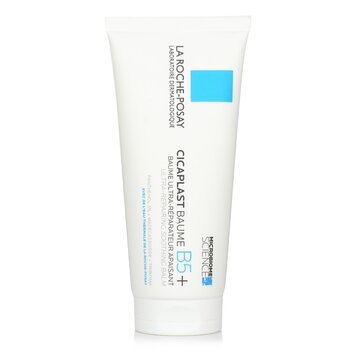


La Roche PosayCicaplast Baume B5 Soothing Repairing Balm(Random Packaging) 100ml/97g/3.3oz
Analysis updated August 2026 · How Scout scores
At a glance
Summary
This balm contains beneficial ingredients like shea butter, panthenol, and centella asiatica leaf extract, which are known for their moisturizing and soothing properties. However, the presence of synthetic ingredients such as dimethicone and cetyl PEG, along with a processed formulation, slightly lowers its score. The product does not contain any major harmful substances, but the processing level and inclusion of some synthetic components prevent it from achieving a higher rating.
Key ingredients 33
SHEA BUTTERVery Good
Shea Butter is a natural fat extracted from the nuts of the shea tree, known for its moisturizing and anti-inflammatory properties. It is rich in vitamins and fatty acids, making it an excellent emollient for dry skin. It is widely used in skincare for its nourishing benefits.
Risks
There is a low risk of allergic reactions, particularly for those with nut allergies.
Benefits
It deeply moisturizes the skin and provides anti-inflammatory benefits.
PANTHENOLVery Good
Panthenol, also known as provitamin B5, is a moisturizing agent that helps to improve skin hydration and elasticity. It is known for its soothing and healing properties, making it beneficial for sensitive or irritated skin. It is considered safe and effective in skincare formulations.
Risks
There are minimal risks associated with panthenol, though it may cause mild irritation in rare cases.
Benefits
It enhances skin hydration and promotes healing of the skin barrier.
CENTELLA ASIATICA LEAF EXTRACTVery Good
Centella Asiatica Leaf Extract is a botanical ingredient known for its soothing and healing properties. It is rich in antioxidants and helps to improve skin hydration and elasticity. It is widely used in skincare for its anti-inflammatory and wound-healing benefits.
Risks
There are minimal risks associated with Centella Asiatica, though it may cause irritation in very sensitive skin.
Benefits
It soothes irritated skin and promotes healing and hydration.
MADECASSOSIDEVery Good
Madecassoside is a compound derived from Centella Asiatica, known for its anti-inflammatory and healing properties. It helps to soothe irritated skin and promote skin barrier repair. It is considered safe and effective for sensitive skin.
Risks
There are minimal risks associated with madecassoside, though it may cause irritation in very sensitive skin.
Benefits
It soothes and repairs the skin barrier, reducing inflammation.
TOCOPHEROLVery Good
Tocopherol, also known as Vitamin E, is a powerful antioxidant that helps to protect the skin from oxidative stress. It is widely used in skincare for its moisturizing and anti-aging benefits. It is considered safe and beneficial for most skin types.
Risks
There are minimal risks associated with tocopherol, though it may cause irritation in very sensitive skin.
Benefits
It provides antioxidant protection and improves skin hydration.
GLYCERINGood
Glycerin is a humectant that attracts moisture to the skin, helping to keep it hydrated. It is a common ingredient in skincare products due to its effectiveness and safety. It is derived from natural sources and is well-tolerated by most skin types.
Risks
There are minimal risks associated with glycerin, though it may cause irritation in very sensitive skin.
Benefits
It helps to maintain skin hydration and improve skin barrier function.
ZINC GLUCONATEGood
Zinc Gluconate is a zinc salt used for its anti-inflammatory and antimicrobial properties. It helps to soothe irritated skin and reduce acne-related inflammation. It is considered safe and beneficial for acne-prone skin.
Risks
There are minimal risks associated with zinc gluconate, though it may cause irritation in sensitive skin.
Benefits
It reduces inflammation and has antimicrobial benefits.
EAUNeutral
EAU, or water, is a common solvent used in cosmetics to dissolve other ingredients. It is essential for the formulation but does not provide direct skin benefits. It is generally considered safe and non-irritating.
Risks
There are no significant risks associated with water in cosmetic formulations.
Benefits
Water helps to hydrate the skin by providing moisture.
HYDROGENATED POLYISOBUTENENeutral
Hydrogenated Polyisobutene is a synthetic polymer used as an emollient and moisturizer. It provides a smooth application and helps to lock in moisture. It is generally considered safe for use in cosmetics.
Risks
There are minimal risks associated with this ingredient, though it is a synthetic polymer.
Benefits
It helps to improve skin texture and retain moisture.
CORN STARCHNeutral
Corn Starch is used in cosmetics as an absorbent and thickening agent. It helps to improve the texture and consistency of the product. It is generally considered safe and non-irritating.
Risks
There are minimal risks associated with corn starch, though it may cause irritation in very sensitive skin.
Benefits
It helps to absorb excess oil and improve product texture.
PROPANEDIOLNeutral
Propanediol is a glycol used as a solvent and skin-conditioning agent. It enhances the absorption of other ingredients and provides a smooth application. It is considered safe for use in cosmetics.
Risks
There are minimal risks associated with propanediol, though it may cause irritation in sensitive skin.
Benefits
It improves the texture and absorption of the product.
BUTYLENE GLYCOLNeutral
Butylene Glycol is a common solvent and conditioning agent in cosmetics. It helps to improve the texture and spreadability of products. It is generally considered safe and non-irritating.
Risks
There are minimal risks associated with butylene glycol, though it may cause irritation in sensitive skin.
Benefits
It enhances product texture and helps to retain moisture.
CETYL PEGNeutral
Cetyl PEG is an emulsifying agent that helps to blend oil and water-based ingredients. It improves the stability and texture of cosmetic formulations. It is generally considered safe for use in cosmetics.
Risks
There are minimal risks associated with cetyl PEG, though it may cause irritation in sensitive skin.
Benefits
It stabilizes emulsions and improves product texture.
TRIHYDROXYSTEARINNeutral
Trihydroxystearin is a thickening agent used to improve the consistency of cosmetic products. It helps to stabilize formulations and provide a smooth texture. It is considered safe for use in cosmetics.
Risks
There are minimal risks associated with trihydroxystearin, though it may cause irritation in sensitive skin.
Benefits
It enhances product texture and stability.
POLYMNIA SONCHIFOLIA ROOT JUICENeutral
Polymnia Sonchifolia Root Juice is used as a natural moisturizer and skin-conditioning agent. It helps to improve skin hydration and texture. It is considered safe for use in cosmetics.
Risks
There are minimal risks associated with this ingredient, though it may cause irritation in sensitive skin.
Benefits
It enhances skin hydration and improves texture.
MANGANESE GLUCONATENeutral
Manganese Gluconate is a manganese salt used for its antioxidant properties. It helps to protect the skin from oxidative stress and improve skin health. It is considered safe for use in cosmetics.
Risks
There are minimal risks associated with manganese gluconate, though it may cause irritation in sensitive skin.
Benefits
It provides antioxidant protection and supports skin health.
ALPHA-GLUCAN OLIGOSACCHARIDENeutral
Alpha-Glucan Oligosaccharide is a prebiotic ingredient that helps to support the skin's natural microbiome. It enhances skin barrier function and improves hydration. It is considered safe for use in cosmetics.
Risks
There are minimal risks associated with this ingredient, though it may cause irritation in sensitive skin.
Benefits
It supports the skin's microbiome and improves hydration.
SILICANeutral
Silica is used as an absorbent and thickening agent in cosmetics. It helps to improve the texture and mattify the skin. It is generally considered safe for use in cosmetics.
Risks
There are minimal risks associated with silica, though it may cause irritation in sensitive skin.
Benefits
It improves product texture and provides a mattifying effect.
ALUMINUM HYDROXIDENeutral
Aluminum Hydroxide is used as a thickening and opacifying agent in cosmetics. It helps to improve the texture and appearance of products. It is considered safe for use in cosmetics.
Risks
There are minimal risks associated with aluminum hydroxide, though it may cause irritation in sensitive skin.
Benefits
It enhances product texture and appearance.
MAGNESIUM SULFATENeutral
Magnesium Sulfate, also known as Epsom salt, is used as a thickening agent and to improve product texture. It is generally considered safe for use in cosmetics.
Risks
There are minimal risks associated with magnesium sulfate, though it may cause irritation in sensitive skin.
Benefits
It improves product texture and consistency.
MANNOSENeutral
Mannose is a sugar used for its moisturizing properties in cosmetics. It helps to improve skin hydration and texture. It is considered safe for use in cosmetics.
Risks
There are minimal risks associated with mannose, though it may cause irritation in sensitive skin.
Benefits
It enhances skin hydration and improves texture.
CAPRYLOYL GLYCINENeutral
Capryloyl Glycine is used for its antimicrobial and skin-conditioning properties. It helps to improve skin texture and reduce the growth of harmful bacteria. It is considered safe for use in cosmetics.
Risks
There are minimal risks associated with capryloyl glycine, though it may cause irritation in sensitive skin.
Benefits
It provides antimicrobial benefits and improves skin texture.
CAPRYLYL GLYCOLNeutral
Caprylyl Glycol is used as a skin-conditioning agent and preservative booster. It helps to improve skin hydration and enhance the efficacy of preservatives. It is considered safe for use in cosmetics.
Risks
There are minimal risks associated with caprylyl glycol, though it may cause irritation in sensitive skin.
Benefits
It enhances skin hydration and preservative efficacy.
VITREOSCILLA FERMENTNeutral
Vitreoscilla Ferment is used for its skin-conditioning and soothing properties. It helps to improve skin health and reduce irritation. It is considered safe for use in cosmetics.
Risks
There are minimal risks associated with vitreoscilla ferment, though it may cause irritation in sensitive skin.
Benefits
It soothes the skin and improves skin health.
CITRIC ACIDNeutral
Citric Acid is used to adjust the pH of cosmetic formulations. It helps to maintain the stability and efficacy of the product. It is generally considered safe for use in cosmetics.
Risks
There are minimal risks associated with citric acid, though it may cause irritation in sensitive skin.
Benefits
It helps to maintain product stability and efficacy.
TRISODIUM ETHYLENEDIAMINE DISUCCINATENeutral
Trisodium Ethylenediamine Disuccinate is used as a chelating agent to improve the stability of cosmetic formulations. It helps to prevent the degradation of active ingredients. It is considered safe for use in cosmetics.
Risks
There are minimal risks associated with this ingredient, though it may cause irritation in sensitive skin.
Benefits
It enhances product stability and prevents degradation.
LACTOBACILLUSNeutral
Lactobacillus is used for its probiotic properties in cosmetics. It helps to support the skin's natural microbiome and improve skin health. It is considered safe for use in cosmetics.
Risks
There are minimal risks associated with lactobacillus, though it may cause irritation in sensitive skin.
Benefits
It supports the skin's microbiome and improves skin health.
ACETYLATED GLYCOL STEARATENeutral
Acetylated Glycol Stearate is used as an emulsifier and thickening agent in cosmetics. It helps to improve the texture and stability of formulations. It is considered safe for use in cosmetics.
Risks
There are minimal risks associated with this ingredient, though it may cause irritation in sensitive skin.
Benefits
It enhances product texture and stability.
MALTODEXTRINNeutral
Maltodextrin is used as a binding and film-forming agent in cosmetics. It helps to improve the texture and consistency of products. It is generally considered safe for use in cosmetics.
Risks
There are minimal risks associated with maltodextrin, though it may cause irritation in sensitive skin.
Benefits
It enhances product texture and consistency.
POLYGLYCERYL-4 ISOSTEARATENeutral
Polyglyceryl-4 Isostearate is used as an emulsifier in cosmetics. It helps to blend oil and water-based ingredients and improve product stability. It is considered safe for use in cosmetics.
Risks
There are minimal risks associated with this ingredient, though it may cause irritation in sensitive skin.
Benefits
It stabilizes emulsions and improves product texture.
PENTAERYTHRITYL TETRA-DI-T-BUTYL HYDROXYHYDROCINNAMATENeutral
Pentaerythrityl Tetra-Di-T-Butyl Hydroxyhydrocinnamate is used as an antioxidant in cosmetics to prevent the oxidation of ingredients. It helps to improve the stability and shelf life of products. It is considered safe for use in cosmetics.
Risks
There are minimal risks associated with this ingredient, though it may cause irritation in sensitive skin.
Benefits
It enhances product stability and prevents oxidation.
CI 77891Neutral
CI 77891, also known as Titanium Dioxide, is used as a pigment and UV filter in cosmetics. It helps to provide coverage and protect the skin from UV radiation. It is considered safe for use in cosmetics.
Risks
There are minimal risks associated with titanium dioxide, though it may cause irritation in sensitive skin.
Benefits
It provides UV protection and improves product coverage.
DIMETHICONEBad
Occlusive silicone film-former — flagged under clean-beauty doctrine.
Risks
Some individuals may experience irritation or allergic reactions to silicones.
Benefits
It provides a protective barrier and improves the texture of the product.
Processing
Processed Foods
Get the full breakdown in the Scout appTake Scout shopping
Scan any product to see lab results, healthy alternatives, and your personalized analysis.
Download on theApp Store GET IT ONGoogle Play