
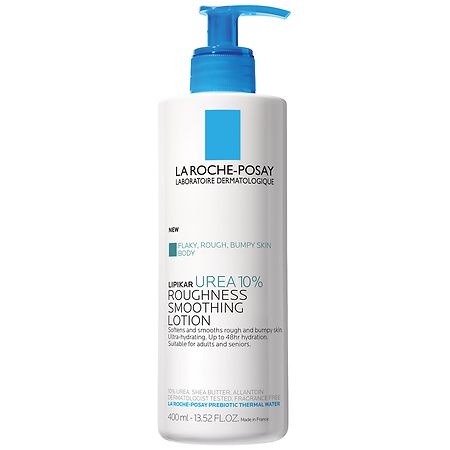


La Roche Posay Lipikar Urea - 13.52oz: Noncomedogenic, With Shea Butter, For Dry Skin, Whole Body Application
La Roche-PosayAnalysis updated August 2026 · How Scout scores
At a glance
Summary
This lotion contains beneficial ingredients like urea, shea butter, and allantoin, which are excellent for moisturizing and soothing dry skin. However, the presence of PEG compounds and acrylates, which are synthetic emulsifiers and thickeners, slightly lowers its rating. The product is moderately processed, but the inclusion of natural oils and humectants helps maintain a balanced formulation.
Key ingredients 35
Butyrospermum Parkii Butter / Shea ButterVery Good
Shea butter is a natural fat extracted from the nuts of the shea tree. It is rich in vitamins and fatty acids, making it an excellent moisturizer and emollient for the skin.
Risks
Shea butter is generally safe, but individuals with nut allergies should use it with caution.
Benefits
Shea butter deeply moisturizes and nourishes the skin, improving its elasticity and softness.
UreaGood
Urea is a natural moisturizing factor that helps to maintain skin hydration. It is known for its keratolytic properties, which help to exfoliate and soften the skin.
Risks
In rare cases, urea can cause irritation in sensitive individuals.
Benefits
Urea effectively hydrates and exfoliates the skin, improving its texture and appearance.
GlycerinGood
Glycerin is a humectant that attracts moisture to the skin, helping to keep it hydrated. It is widely used in skincare for its ability to improve skin barrier function.
Risks
Glycerin is generally safe, but in very high concentrations, it may cause irritation.
Benefits
Glycerin helps to maintain skin hydration and improve its barrier function.
Brassica Campestris Seed Oil / Rapeseed Seed OilGood
Rapeseed oil is a plant-derived oil rich in omega-3 and omega-6 fatty acids. It helps to nourish and moisturize the skin.
Risks
Rapeseed oil is generally safe, but it may cause allergic reactions in sensitive individuals.
Benefits
Rapeseed oil provides essential fatty acids that help to maintain skin health and hydration.
GlycineGood
Beneficial ingredient — whole-food or functional value in this product class.
Risks
There are no significant risks associated with glycine in cosmetics.
Benefits
Glycine helps to condition the skin, improving its texture and hydration levels.
AllantoinGood
Allantoin is a skin-soothing agent that helps to protect and heal the skin. It is known for its ability to promote cell regeneration and improve skin texture.
Risks
Allantoin is generally safe, with minimal risk of irritation.
Benefits
It soothes and protects the skin, promoting healing and improving texture.
TocopherolGood
Tocopherol, or Vitamin E, is an antioxidant that helps to protect the skin from oxidative damage. It is widely used in skincare for its moisturizing and protective properties.
Risks
Tocopherol is generally safe, but may cause irritation in very sensitive skin.
Benefits
It helps to protect the skin from oxidative damage and improve its overall health.
Aqua / Water / EauNeutral
Water is a common solvent used in cosmetics to dissolve other ingredients. It is essential for hydrating the skin and ensuring the product spreads easily.
Risks
There are no significant risks associated with water in cosmetics.
Benefits
Water helps to hydrate the skin and acts as a carrier for other beneficial ingredients.
Dicaprylyl CarbonateNeutral
Dicaprylyl carbonate is an emollient that helps to improve the spreadability of skincare products. It leaves a non-greasy, silky feel on the skin.
Risks
There are no significant risks associated with dicaprylyl carbonate.
Benefits
It enhances the texture of skincare products, making them more pleasant to use.
Isopropyl PalmitateNeutral
Isopropyl palmitate is an emollient that helps to soften and smooth the skin. It is commonly used to improve the texture of cosmetic formulations.
Risks
In some cases, it may cause acne or irritation in sensitive skin types.
Benefits
It provides a smooth, soft feel to the skin and enhances the product's texture.
Pentylene GlycolNeutral
Pentylene glycol is a synthetic humectant and solvent that helps to retain moisture in the skin. It also enhances the penetration of other ingredients.
Risks
Pentylene glycol is generally safe, but it may cause irritation in sensitive individuals.
Benefits
It helps to keep the skin hydrated and improves the efficacy of other active ingredients.
Cetearyl AlcoholNeutral
Cetearyl alcohol is a fatty alcohol used as an emollient and thickening agent in cosmetics. It helps to stabilize emulsions and improve product texture.
Risks
It is generally safe, but may cause irritation in very sensitive skin.
Benefits
Cetearyl alcohol helps to soften the skin and improve the texture of cosmetic formulations.
SilicaNeutral
Silica is used in cosmetics as a thickening agent and to improve the texture of products. It also helps to absorb excess oil on the skin.
Risks
Inhalation of silica dust can be harmful, but this is not a concern in topical applications.
Benefits
Silica helps to improve the texture of products and control oiliness on the skin.
Stearic AcidNeutral
Stearic acid is a fatty acid used as an emulsifier and thickener in cosmetics. It helps to stabilize formulations and improve texture.
Risks
Stearic acid is generally safe, but may cause irritation in sensitive skin.
Benefits
It helps to stabilize emulsions and improve the texture of cosmetic products.
Sorbitan OleateNeutral
Sorbitan oleate is an emulsifier used to stabilize cosmetic formulations. It helps to blend oil and water components in products.
Risks
There are no significant risks associated with sorbitan oleate.
Benefits
It helps to stabilize emulsions, ensuring a consistent product texture.
Sorbitan TristearateNeutral
Sorbitan tristearate is an emulsifier that helps to stabilize cosmetic formulations. It is used to blend oil and water components in products.
Risks
There are no significant risks associated with sorbitan tristearate.
Benefits
It helps to stabilize emulsions, ensuring a consistent product texture.
Glyceryl StearateNeutral
Glyceryl stearate is an emulsifier and emollient used in cosmetics to stabilize formulations and improve texture. It helps to soften and smooth the skin.
Risks
Glyceryl stearate is generally safe, but may cause irritation in sensitive skin.
Benefits
It helps to stabilize emulsions and improve the texture of cosmetic products.
PEG-100 StearateNeutral
PEG-100 stearate is an emulsifier used to stabilize cosmetic formulations. It helps to blend oil and water components in products.
Risks
There is a potential risk of contamination with ethylene oxide and 1,4-dioxane, but this is minimized in well-regulated products.
Benefits
It helps to stabilize emulsions, ensuring a consistent product texture.
PEG-20 Methyl Glucose SesquistearateNeutral
PEG-20 methyl glucose sesquistearate is an emulsifier used to stabilize cosmetic formulations. It helps to blend oil and water components in products.
Risks
There is a potential risk of contamination with ethylene oxide and 1,4-dioxane, but this is minimized in well-regulated products.
Benefits
It helps to stabilize emulsions, ensuring a consistent product texture.
IsohexadecaneNeutral
Isohexadecane is a lightweight emollient used to improve the texture and spreadability of cosmetic products. It leaves a non-greasy feel on the skin.
Risks
There are no significant risks associated with isohexadecane.
Benefits
It enhances the texture of skincare products, making them more pleasant to use.
Sodium HydroxideNeutral
Sodium hydroxide is used to adjust the pH of cosmetic formulations. It is a strong base that helps to neutralize acidic components.
Risks
In high concentrations, sodium hydroxide can be irritating, but it is used in safe amounts in cosmetics.
Benefits
It helps to maintain the stability and efficacy of cosmetic formulations by adjusting pH.
Sodium LactateNeutral
Sodium lactate is a humectant that helps to retain moisture in the skin. It is derived from lactic acid and is used to improve skin hydration.
Risks
There are no significant risks associated with sodium lactate.
Benefits
It helps to keep the skin hydrated and improve its overall texture.
Myristic AcidNeutral
Myristic acid is a fatty acid used as an emulsifier and thickener in cosmetics. It helps to stabilize formulations and improve texture.
Risks
Myristic acid is generally safe, but may cause irritation in sensitive skin.
Benefits
It helps to stabilize emulsions and improve the texture of cosmetic products.
Palmitic AcidNeutral
Palmitic acid is a fatty acid used as an emollient and thickener in cosmetics. It helps to stabilize formulations and improve texture.
Risks
Palmitic acid is generally safe, but may cause irritation in sensitive skin.
Benefits
It helps to stabilize emulsions and improve the texture of cosmetic products.
MannoseNeutral
Mannose is a sugar used in cosmetics for its moisturizing properties. It helps to improve skin hydration and texture.
Risks
There are no significant risks associated with mannose.
Benefits
Mannose helps to keep the skin hydrated and improve its overall texture.
HydroxyacetophenoneNeutral
Hydroxyacetophenone is an antioxidant used in cosmetics to protect formulations from oxidation. It helps to stabilize products and extend their shelf life.
Risks
There are no significant risks associated with hydroxyacetophenone.
Benefits
It helps to protect cosmetic formulations from oxidation, maintaining their efficacy.
Hydroxyethylpiperazine Ethane Sulfonic AcidNeutral
This ingredient is used as a buffering agent to maintain the pH of cosmetic formulations. It helps to ensure product stability and efficacy.
Risks
There are no significant risks associated with this ingredient.
Benefits
It helps to maintain the stability and efficacy of cosmetic formulations by adjusting pH.
Caprylyl GlycolNeutral
Caprylyl glycol is a humectant and skin conditioning agent used in cosmetics. It helps to retain moisture in the skin and improve product texture.
Risks
There are no significant risks associated with caprylyl glycol.
Benefits
It helps to keep the skin hydrated and improve the texture of cosmetic products.
Citric AcidNeutral
Citric acid is used to adjust the pH of cosmetic formulations and as a mild exfoliant. It helps to maintain product stability and improve skin texture.
Risks
In high concentrations, citric acid can be irritating, but it is used in safe amounts in cosmetics.
Benefits
It helps to maintain the stability and efficacy of cosmetic formulations by adjusting pH.
Trisodium Ethylenediamine DisuccinateNeutral
This ingredient is a chelating agent used to bind metal ions in cosmetic formulations. It helps to stabilize products and prevent degradation.
Risks
There are no significant risks associated with this ingredient.
Benefits
It helps to stabilize cosmetic formulations by binding metal ions, preventing degradation.
Xanthan GumNeutral
Xanthan gum is a natural thickening agent used in cosmetics to improve texture and stability. It helps to create a smooth, consistent product.
Risks
There are no significant risks associated with xanthan gum.
Benefits
It helps to improve the texture and stability of cosmetic formulations.
Acrylamide / Sodium Acryloyldimethyltaurate CopolymerNeutral
This copolymer is used as a thickening agent in cosmetics to improve texture and stability. It helps to create a smooth, consistent product.
Risks
There are concerns about acrylamide exposure, but this is minimized in cosmetic applications.
Benefits
It helps to improve the texture and stability of cosmetic formulations.
Pentaerythrityl Tetra-Di-T-Butyl HydroxyhydrocinnamateNeutral
This ingredient is an antioxidant used to protect cosmetic formulations from oxidation. It helps to stabilize products and extend their shelf life.
Risks
There are no significant risks associated with this ingredient.
Benefits
It helps to protect cosmetic formulations from oxidation, maintaining their efficacy.
Polysorbate 80Bad
Processed additive flagged under Scout's ingredient doctrine.
Risks
There is a potential risk of contamination with ethylene oxide and 1,4-dioxane, but this is minimized in well-regulated products.
Benefits
It helps to stabilize emulsions, ensuring a consistent product texture.
Acrylates / C10-30 Alkyl Acrylate CrosspolymerBad
Processed additive flagged under Scout's ingredient doctrine.
Risks
There are no significant risks associated with this ingredient.
Benefits
It helps to improve the texture and stability of cosmetic formulations.
Processing
Processed Foods
Get the full breakdown in the Scout appTake Scout shopping
Scan any product to see lab results, healthy alternatives, and your personalized analysis.
Download on theApp Store GET IT ONGoogle PlayAmazon pricing & content
Amazon price as of . Product prices and availability are accurate as of the date/time indicated and are subject to change. Any price and availability information displayed on Amazon.com at the time of purchase will apply to the purchase of this product.
CERTAIN CONTENT THAT APPEARS ON THIS SITE COMES FROM AMAZON. THIS CONTENT IS PROVIDED “AS IS” AND IS SUBJECT TO CHANGE OR REMOVAL AT ANY TIME.